


A pot of supermarket basil costs around £1.50 and lasts about a week before it collapses. A packet of basil seeds costs 80p and produces plants all summer. Multiply that across parsley, coriander, mint, rosemary and thyme and you are saving real money every month on ingredients you already buy.
Growing herbs at home is one of the cheapest, easiest and most rewarding things you can do with even the smallest outdoor space. You do not need a big garden. A windowsill, a few pots on a patio, or a single raised bed is enough to keep your kitchen stocked with fresh herbs from spring through to autumn, and with the right choices, year-round.
Here are seven practical tips for getting started without spending more than you need to.
Want a herb garden set up for you? Our planting service covers plant selection, sourcing, delivery and installation. Tell us what you want to grow and we will handle the rest.
1. Start With Herbs You Actually Use in the Kitchen
This sounds obvious, but most beginners buy whatever looks good at the garden centre and end up with herbs they never cook with. Before you spend anything, open your kitchen cupboard and check what dried herbs and spices you use most often. Those are the ones worth growing fresh.
For most households in the UK, that list looks something like this: basil, coriander, parsley, mint, rosemary, thyme and chives. All of these grow well in SE London's climate and can be started cheaply from seed or small plants.
Avoid the temptation to grow 15 different herbs in your first year. Three to five varieties is plenty to start with. You can always expand once you know what works in your specific garden.
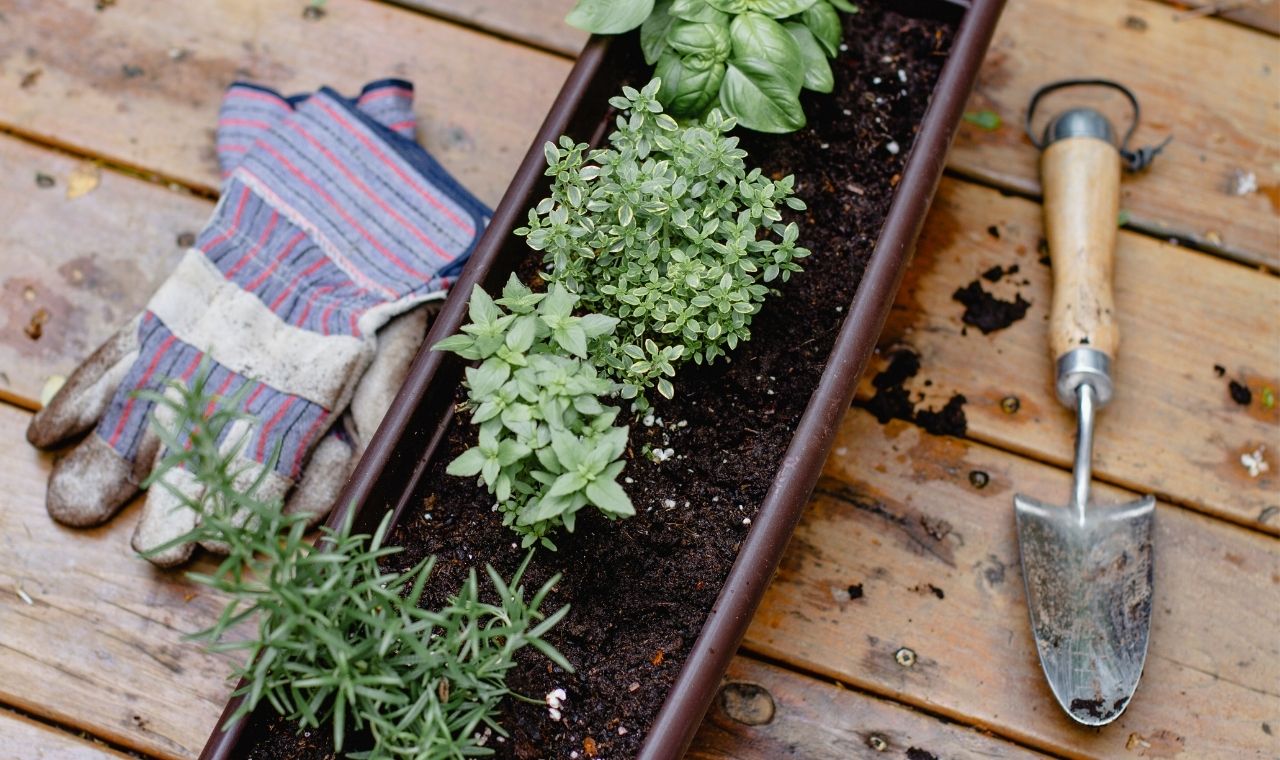
2. Grow From Seed, Not Shop-Bought Plants
A packet of herb seeds costs between 50p and £2 from any garden centre or online supplier. Each packet contains enough seeds to grow dozens of plants. Compare that to buying young potted herbs at £3-5 each, and the savings are obvious.
Most common herbs are easy to start from seed on a sunny windowsill. Sow them in small pots of peat-free compost from March onwards, keep the compost moist, and you will have usable plants within 4-8 weeks depending on the variety.
The herbs that are easiest to grow from seed are basil, coriander, parsley, chives and dill. Rosemary and thyme are slower to germinate and can be fiddly, so for those two it is often worth buying a small plant and letting it establish. A single rosemary plant bought for £3 will last years and grow into a substantial bush.
If you want to spend almost nothing, ask friends, family or neighbours who garden whether they have spare herb plants or cuttings. Most gardeners end up with far more than they need and are happy to share. Rosemary, mint, thyme and sage all propagate easily from cuttings placed in water until roots form, then planted into pots or beds.
3. Use Containers You Already Have
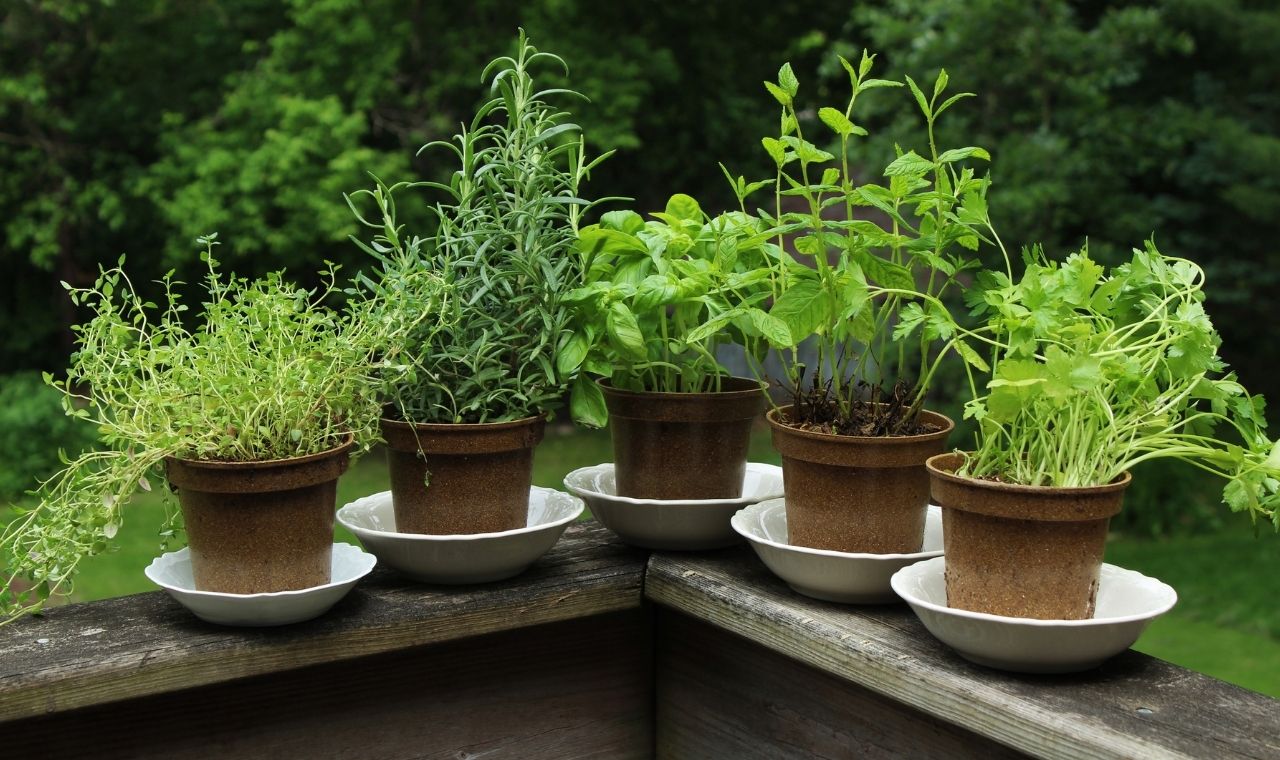
You do not need to buy fancy planters. Herbs grow perfectly well in old food tins with drainage holes punched in the bottom, recycled plastic pots, wooden crates lined with landscape fabric, or even grow bags laid flat on a patio.
The only requirements are that the container is at least 15cm deep, has drainage holes so roots do not sit in water, and is filled with decent compost. Peat-free multipurpose compost from any garden centre works fine.
If you do want to buy containers, the cheapest option is basic plastic pots from a garden centre or B&Q. Terracotta looks better but dries out faster and costs more. For a first herb garden on a budget, function matters more than aesthetics.
One container that is genuinely worth buying is a strawberry planter or a tiered pot system. These vertical planters hold multiple herbs in a small footprint, which is ideal for patios and balconies across SE London where ground space is limited.
4. Pick the Right Spot for SE London Conditions
Most herbs are Mediterranean plants that want sun, warmth and good drainage. In a south-facing or west-facing SE London garden, you can grow almost any herb successfully. Place your pots or bed against a sunny wall and they will thrive.
North-facing gardens are trickier, but not hopeless. Parsley, chives, mint and coriander all tolerate partial shade. They will grow a bit slower but still produce enough to be useful in the kitchen.
If you are growing directly in the ground rather than in containers, SE London's heavy clay soil needs attention. Clay holds too much moisture for most herbs, which prefer free-draining conditions. The simplest fix is to grow herbs in raised beds or containers filled with compost mixed with some grit or perlite for drainage. Do not plant rosemary, thyme or sage directly into waterlogged clay because they will rot over winter.
If drainage is a wider issue in your garden, our guide on dealing with poor drainage in SE London explains the options.
5. Know Which Herbs Come Back Every Year
This is where the real budget savings kick in. Some herbs are perennial, meaning you buy or plant them once and they return year after year. Others are annual, meaning they complete their life cycle in one season and need to be resown.
Perennial herbs (plant once, harvest for years):
Rosemary, thyme, sage, chives, oregano and mint. These survive SE London's mild winters outdoors without any protection. A single rosemary bush planted this year will still be producing in five or ten years. Thyme spreads to form a low mat and needs almost no care. Chives die back in winter but reappear reliably every spring.
Mint deserves a special warning: always grow it in a pot, never directly in the ground. Mint spreads aggressively through underground runners and will take over an entire bed within a season. Keep it contained and it is one of the most productive, low-cost herbs you can grow.
Annual herbs (resow each year):
Basil, coriander, dill and parsley (technically biennial but best treated as annual). These need to be started fresh each spring. The good news is that seeds are cheap and they grow quickly, so the ongoing cost is minimal.
A smart budget strategy is to invest in perennial herbs first. They cost more upfront (a rosemary plant vs a packet of basil seeds) but they pay for themselves many times over because you never need to replace them. Fill in the gaps with annual herbs grown from seed each spring.
6. Harvest Regularly to Keep Plants Productive
The more you cut, the more they grow. This is true for almost every herb and it is the single most important thing beginners get wrong. People treat their herb plants like ornamental display items and are afraid to cut them, which causes the plants to bolt (go to seed), become leggy and stop producing fresh leaves.
Basil should be pinched at the tips regularly to encourage bushy growth. If you let it flower, it stops producing good leaves. Coriander bolts fast in warm weather, so sow small batches every 2-3 weeks from April to August for a continuous supply rather than one big planting that all bolts at once.
Rosemary and thyme can be trimmed whenever you need them. Taking sprigs for cooking is all the pruning they need. Chives should be cut down to a few centimetres above soil level when they start looking tired, and they will produce a fresh flush of growth within a couple of weeks.
Regular harvesting also means you are getting maximum value from every plant, which is the whole point of growing on a budget. A single basil plant that is well-maintained can produce enough leaves to replace weekly supermarket purchases all summer.
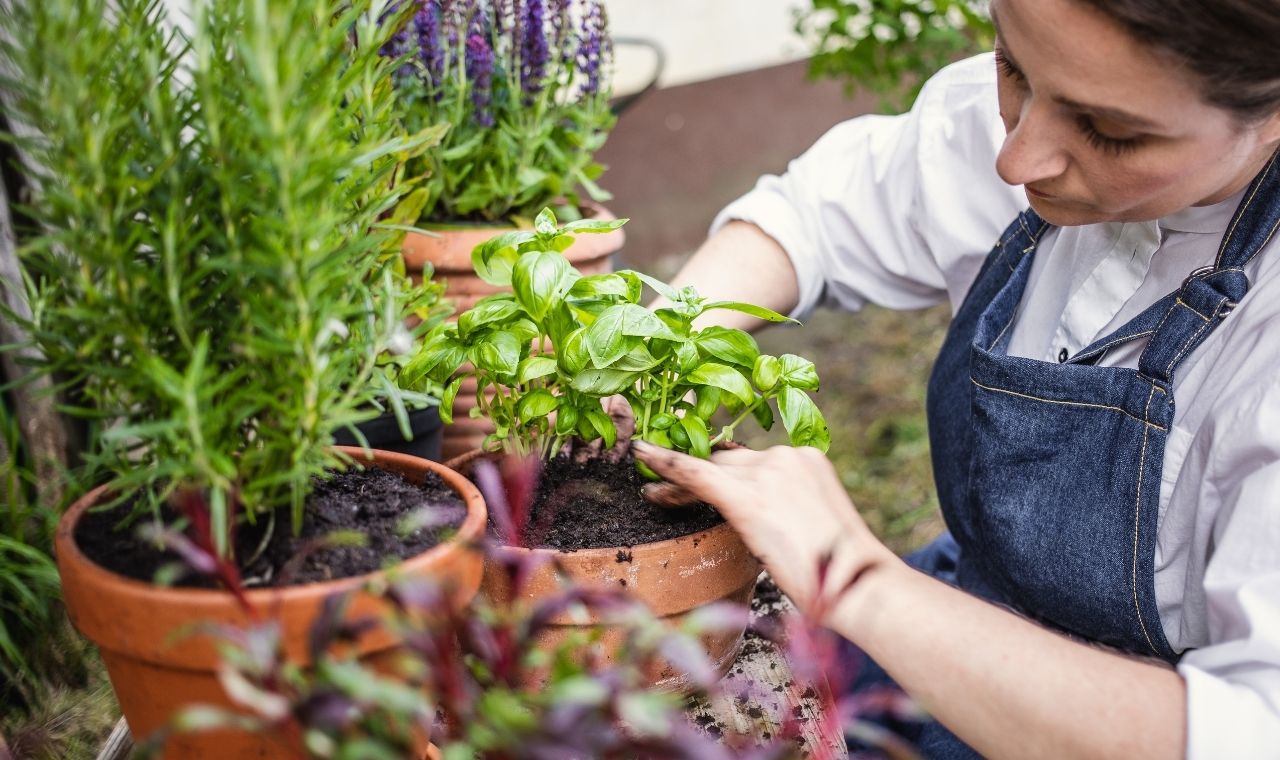
7. Extend the Season With a Windowsill Garden
The outdoor growing season for most herbs in SE London runs from around April to October. After that, annual herbs die off and perennials slow down or go dormant.
But you can keep growing herbs indoors on a sunny windowsill through winter. Basil, coriander, parsley and chives all grow reasonably well indoors if they get enough light. A south-facing kitchen window is ideal. East or west-facing windows work for parsley and chives but may not provide enough light for basil in the darkest months.
Start a few pots on the windowsill in September, before your outdoor plants finish, so you have indoor herbs ready to take over when the outdoor season ends. This gives you a near-continuous supply of fresh herbs for the cost of a few pots of compost and some seeds.
If your kitchen does not get much natural light, an inexpensive LED grow light (available for under £15) can make a significant difference. Clip it above your herbs and set it on a timer for 12-14 hours a day.
For more on keeping your garden productive through the cooler months, see our guide on autumn garden tips for SE London.
How Much Does a Budget Herb Garden Cost?
Here is a realistic breakdown for a simple starter setup:
| Item | Estimated Cost |
|---|---|
| 5 packets of herb seeds | £3 - £8 |
| Peat-free multipurpose compost (1 bag) | £5 - £8 |
| 5-6 basic plastic pots with saucers | £5 - £10 |
| 1 rosemary plant (perennial, lasts years) | £3 - £5 |
| 1 thyme plant (perennial, lasts years) | £3 - £5 |
| Total | £19 - £36 |
That is enough to keep your kitchen stocked with fresh herbs from spring through autumn. Compare that to buying fresh supermarket herbs every week at £1-2 per pack, and the herb garden pays for itself within a month or two.
If you want herb beds or containers professionally set up as part of a garden project, our planting service covers everything from sourcing plants to installation. Check our pricing page for rates.
Common Mistakes to Avoid
Overwatering. Most herbs prefer to dry out slightly between waterings. Rosemary, thyme and sage are drought-tolerant Mediterranean plants that actively dislike wet roots. On SE London's clay soil, overwatering combined with poor drainage is the most common way people kill their herbs.
Planting mint in the ground. It will spread everywhere and become almost impossible to remove. Always use a pot.
Buying supermarket herb plants and expecting them to last. Supermarket basil and coriander are grown in greenhouses under artificial conditions and crammed into pots. They are designed to be used within days, not to survive long-term. If you want to rescue a supermarket plant, gently separate the seedlings, repot them individually into larger containers with fresh compost, and give them a sunny spot. Some will survive, but growing from seed is more reliable and far cheaper.
Not feeding container herbs. Herbs in pots use up the nutrients in compost within a few weeks. A liquid feed every two weeks during the growing season (any general purpose or tomato feed) keeps them producing strong, flavourful leaves.
Your Herb Garden Checklist
Here is a quick summary of the best herbs to start with in a small SE London garden, rated by ease and value:
| Herb | Type | Light | Key Notes |
|---|---|---|---|
| Rosemary | Perennial | Full sun | Drought-tolerant. Buy one plant and it lasts for years. Best value herb you can grow. |
| Thyme | Perennial | Full sun | Spreads naturally. Almost impossible to kill once established. |
| Chives | Perennial | Sun or partial shade | Comes back every spring. Flowers attract pollinators. See our blog on bees and pollinators. |
| Mint | Perennial | Sun or shade | Incredibly productive. Always grow in a pot to prevent spreading. |
| Basil | Annual | Full sun | Grow from seed indoors from March. Pinch tips regularly for bushy growth. |
| Coriander | Annual | Partial shade preferred | Bolts in full sun. Sow in batches every 2-3 weeks for continuous supply. |
| Parsley | Biennial (treat as annual) | Sun or partial shade | Slow to germinate but reliable once established. |
Ready to Get Growing?
Whether you want a few pots on your patio or a dedicated herb bed built into your garden, we can help. Our team works across all SE London postcodes including Greenwich, Lewisham, Bromley, Eltham, Blackheath, Charlton, Woolwich and Sidcup.
Get in touch for a free quote, or call us on 07760 800 457. We typically respond within a few hours.
Posts You Might Like
How Much Does Hedge Trimming Cost in South East London? (2026 Price Guide)
If your hedges have gone from "neat boundary" to "the neighbours can't
End of Tenancy Garden Clearance in South East London: What Landlords Need to Know (2026 Cost Guide)

How Much Does Garden Maintenance Cost in South East London? (2026 Price Guide)

Tree & Hedge Pruning South East London
Preparing your garden for winter is not about cosmetics. It’s about strategy,
Communal Garden Maintenance in South East London: Who Pays and What It Costs

The Importance of Well-Shaped and Trimmed Hedges and Bushes
In the world of gardening, the beauty of a landscape is often

Garden Tidy Up in South East London: 7 Things We Do (And What It Costs)
Your garden should feel like a place to breathe. A tidy outdoor

0 comments