

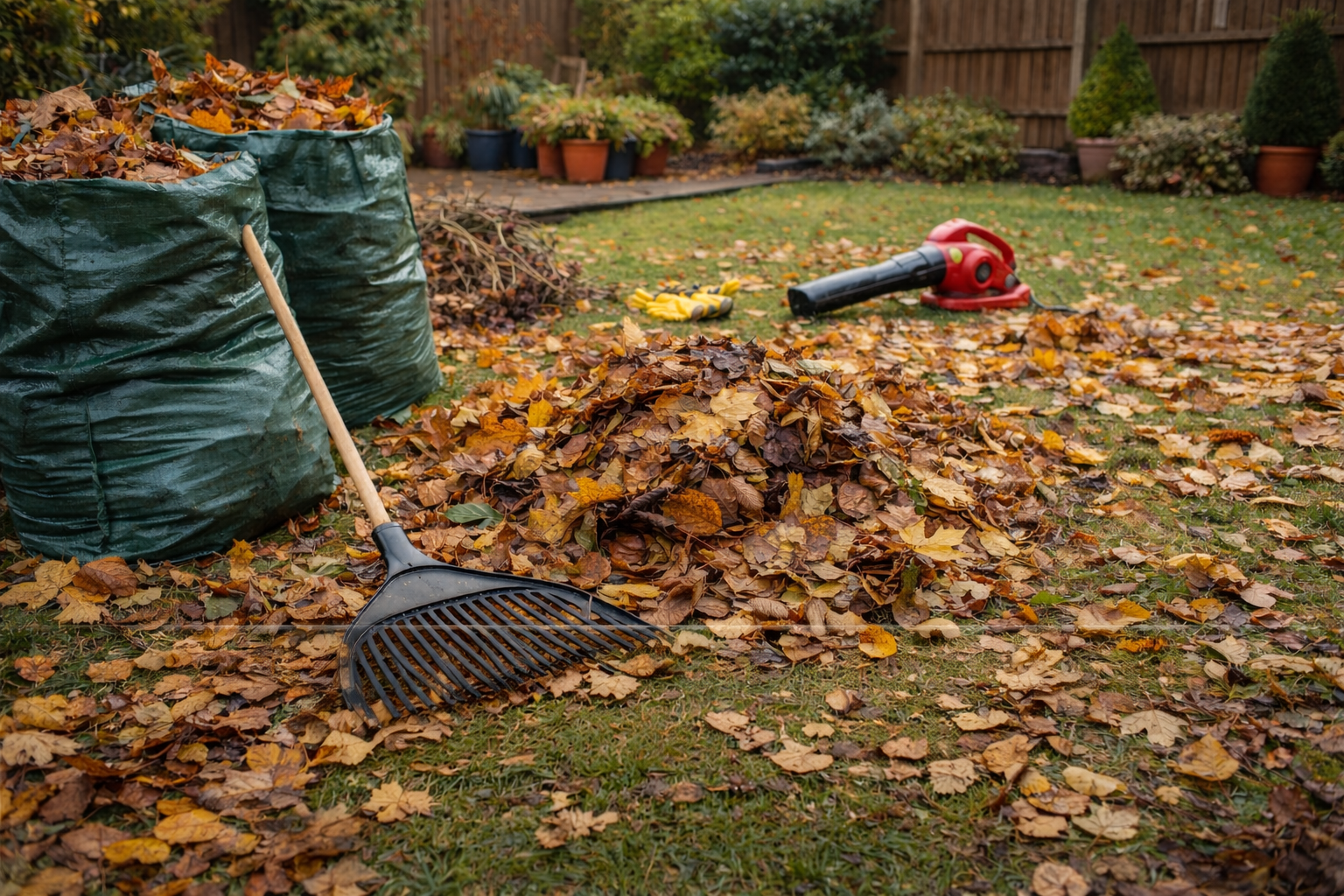
As summer fades and the air turns cooler, London gardens change fast. Leaves drop daily. Plants slow down. At the same time, rain and damp weather increase. Because of that, autumn is the moment to tidy up.
An autumn tidy up is not just about looking neat. Instead, it protects your lawn, beds, and plants before winter. If you skip it, problems often build quietly. Then, spring starts with patchy grass, pests, and plant disease.
Below, you’ll learn why an autumn tidy up matters in South East London. You’ll also see how leaf clearance helps your garden stay healthy all winter.
The Critical Importance of Autumn Tidying
A clean garden handles winter better. In addition, it becomes easier to manage once spring arrives. Autumn prep focuses on three things: removing debris, protecting plants, and improving soil.
Preventing disease and pests from overwintering
Fallen leaves and dying plant matter trap moisture. As a result, they create the perfect home for fungal disease and pests. For example, black spot on roses and mildew often thrive in damp debris.
If you leave infected leaves on the ground, spores can survive the winter. Then, they spread again in spring. Likewise, pest eggs can hide in the same sheltered mess. Because of that, clearing debris breaks the cycle early.
So, a proper autumn tidy up removes rotting material. This is your first and simplest defence.
Protecting Vulnerable Soil and Beds
Wet leaf layers can smother perennials. Over time, this weakens plants before winter even starts. Also, heavy debris compacts the soil surface. That reduces airflow and slows water movement.
Once the beds are clear, you can add mulch. For instance, compost or well-rotted manure works well. As a result, mulch insulates roots and helps soil structure. In addition, it reduces frost damage and prevents sudden temperature swings.
Healthy soil is the base of a healthy garden. Therefore, clearing and mulching in autumn sets you up for spring success.
Why Fallen Leaves Are a Threat to Your Lawn
Leaf clearance is one of the most important autumn jobs. Many people underestimate it. However, a thick layer of wet leaves can damage turf quickly in a British winter.
Smothering and Photosynthesis Blockage
Even in winter, grass still needs light. While growth slows, the plant still uses photosynthesis to stay alive. Unfortunately, wet leaves block that light completely.
When grass cannot get light, it weakens fast. Then, it turns yellow or brown. After that, bare patches appear. Those patches take time and money to repair in spring. Because of this, regular leaf clearance protects your lawn’s health.
Promoting Lawn Disease (Snow Mould)
Wet leaves create a damp layer that holds moisture on the grass. As a result, oxygen levels drop at the surface. This environment helps fungal disease take hold.
One common issue is Microdochium nivale, also known as snow mould (or Fusarium patch). It can show up as circular patches where grass mats down and dies. Even without snow, the damp conditions are enough.
So, when you remove leaves, you remove the moisture trap. In turn, you reduce the chance of lawn disease.
Attracting Pests and Encouraging Waterlogging
Leaves slow evaporation. Therefore, the soil stays soggy for longer. Over time, that can cause waterlogging. Then, grass roots struggle because they cannot “breathe” properly.
Also, decomposing leaves attract pests like slugs. In addition, more earthworms can mean more fox activity. As a result, lawns sometimes get dug up.
Leaf removal is a direct way to cut down these risks. Plus, it helps your lawn dry out faster after rain.
The Efficiency of Hiring a Professional Clean-Up Service
Autumn tidy ups take time, especially in London where leaf fall can be heavy. So, many homeowners choose professional help. That choice often saves effort and improves results.
Saving Time and Physical Effort
A pro team arrives with the right equipment. For example, they use high-power blowers, vacuums, and heavy-duty bags. Because of that, a job that takes you weekends can take them hours.
This is especially helpful if you have lots of trees nearby. In that case, leaf fall can feel endless.
Proper Disposal and Recycling of Green Waste
Garden waste disposal is a real headache. Council collections can be limited. Also, leaf volume adds up fast.
A professional service removes the waste and disposes of it responsibly. In many cases, green waste is composted or recycled. Therefore, your garden stays tidy without you doing multiple trips.
Expert Pruning and Plant Protection
An autumn clean-up is more than just raking. It requires an expert eye to identify which plants need protection, Autumn is not only about raking. It also requires smart decisions. For example, some plants should be cut back now, while others should wait until spring.
A professional can:
- Remove dead or diseased branches to reduce infection risk.
- Protect tender plants with fleece or covers before frost arrives.
- Aerate the lawn to improve drainage and airflow.
Because of that, a pro tidy up often improves the whole garden, not just the surface.
Quick autumn tidy up checklist for South East London gardens
Use this as a simple plan:
- First, rake and remove leaves weekly.
- Next, clear drains, gullies, and grates.
- Then, cut back dead or diseased growth.
- After that, weed beds and borders.
- Also, mulch beds with compost or well-rotted manure.
- Finally, aerate compacted lawn areas to help drainage.
Conclusion: Investing in Next Spring’s Bloom
Autumn is your garden’s preparation season. A thorough tidy up prevents lawn damage, reduces disease risk, and limits pest problems. In addition, it helps your beds stay healthier through winter.
Don’t let leaves and debris undo your hard work. Instead, clear the garden now and protect it before the worst weather arrives. As a result, spring will be easier, greener, and far more enjoyable.
Ready to get your garden winter-ready? Contact us today to book your autumn tidy up.

0 comments