

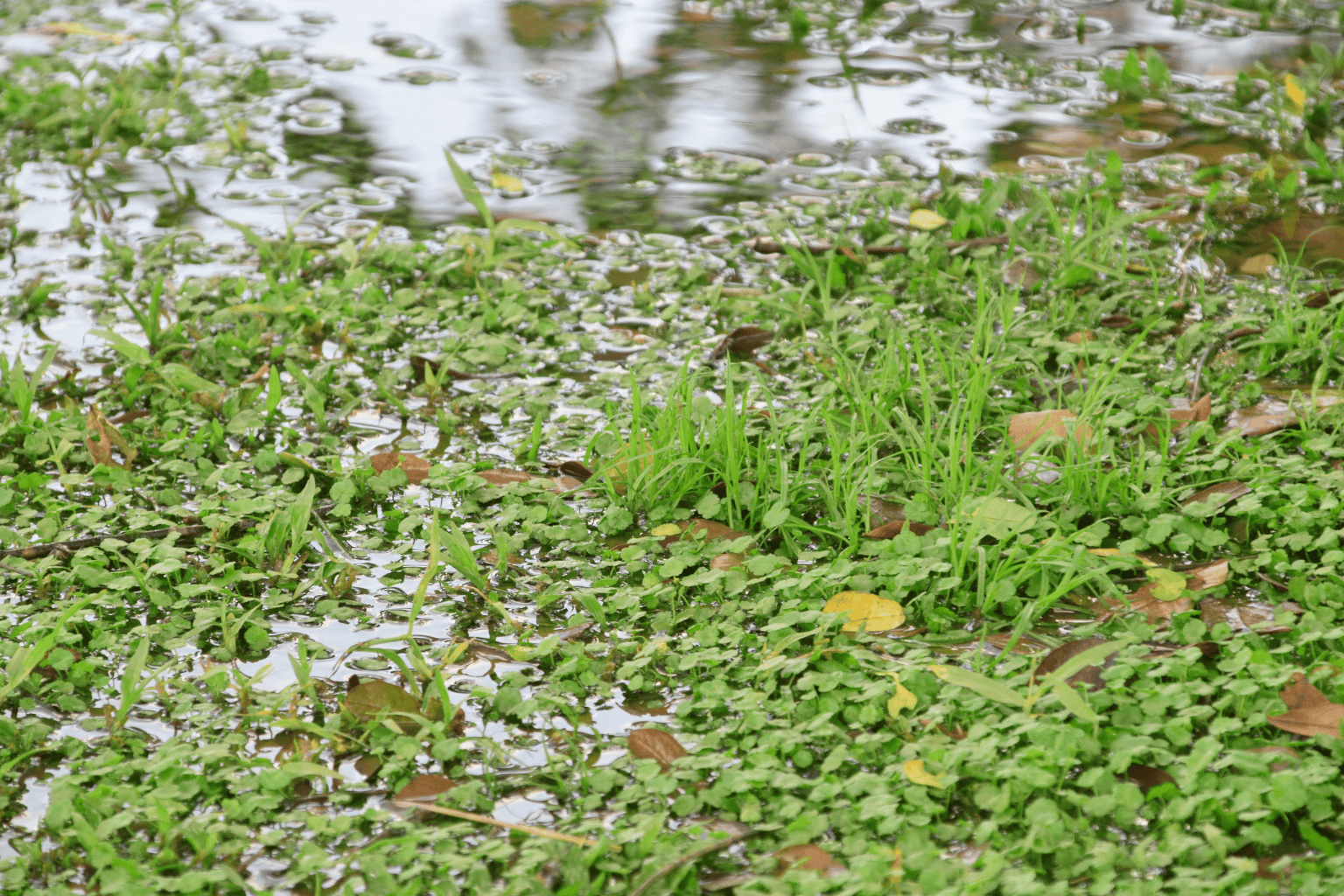
South East London gardens don't drain well. That's not an opinion - it's a geology problem, an urban density problem, and a decades-old infrastructure problem all hitting your garden at once. Poor drainage is one of the most common garden problems we see across Eltham, Lewisham, Catford, Greenwich, and Woolwich, and it almost always gets worse if left untreated. Standing water kills plant roots, softens foundations, and makes your garden completely unusable for months at a time. This guide walks you through exactly why it happens here specifically, what your options are, and where we can help directly.
Urban Gardeners installs channel drains between patios and lawns, and between house walls and paving - one of the most effective surface drainage solutions for South East London gardens. Get a free quote here or call 07760800457 (Mon-Sat 9am-6pm).
Is a Channel Drain the Right Fix for Your Garden?
Before reading the full guide, use this quick checklist. If you tick any of the boxes below, a channel drain installation is likely the right solution - and it's something Urban Gardeners can quote and install directly.
A channel drain is probably what you need if:
- Water pools along the edge of your patio after rain
- Your lawn gets waterlogged right next to the patio or hard surface but drains fine further away
- Water sits against your house wall after heavy rain
- Your grass is churned up and muddy specifically at the patio edge
- You can see water visibly running off the patio surface onto the lawn
You likely need a specialist drainage contractor if:
- The whole lawn stays waterlogged for days after rain regardless of proximity to paving
- You have standing water in areas with no hard surfaces nearby
- The problem has been getting worse for years despite surface fixes
- You suspect a broken pipe or collapsed soakaway underground
If you're in the first group, get a free quote from our team - we cover all South East London postcodes and reply within 24 hours.
If you're in the second group, keep reading - this guide covers every drainage solution available so you know exactly what to ask for when contacting a specialist.
Why South East London Gardens Have Worse Drainage Than Most
This isn't just a bad luck situation. There are specific, structural reasons why gardens in South East London struggle with water more than gardens in other parts of the UK.
The biggest one is clay soil. A huge proportion of South East London - from Blackheath and Sidcup down through Peckham and Dulwich - sits on London clay. Clay is basically nature's waterproof lining. It holds water instead of letting it pass through, which means after heavy rain, your topsoil gets saturated with nowhere for the water to go.
Then you add the urban density. Gardens in areas like Lewisham, Woolwich, and Catford are surrounded by hard surfaces - driveways, pavements, patios - that funnel rainwater directly into your garden rather than allowing it to spread and absorb naturally. Many properties also have extensions or outbuildings that have altered the original water flow of the plot.
Older housing stock makes it worse. South East London has a huge number of Victorian and Edwardian terraces where the drainage infrastructure hasn't been touched in decades. Blocked or cracked pipes, old soakaways that have collapsed, and gutters that dump water directly onto borders are all extremely common in SE postcodes.
London also gets more rainfall than most people expect - around 600mm per year, often in heavy bursts rather than light drizzle. Clay soil combined with impermeable surfaces and ageing infrastructure means that rainfall has absolutely nowhere to go.
9 Signs Your South East London Garden Has a Drainage Problem
Not all drainage problems are obvious. Here's what our team looks for when assessing a garden - and if you want to see the kind of work we do, take a look at our before and after project portfolio.
1. Puddles that stay for more than 24 hours after rain.
A bit of surface water after a downpour is normal. Water that's still sitting there a day later means your soil is saturated and can't absorb any more. This is the clearest indicator of a real drainage problem.
2. Spongy or soft ground even in dry weather.
If your lawn feels like a wet sponge in June, it means the water table beneath it is permanently high or the clay layer is holding moisture all year round. You shouldn't be sinking into your own garden in summer.
3. Grass that's patchy, yellowing, or dying in specific areas.
Waterlogged roots can't breathe. When roots sit in standing water, they effectively drown, which shows up as patches of dead or struggling grass - usually in low-lying areas or near structures.
4. Moss and algae taking over the lawn.
Moss thrives in wet, compacted conditions. If you're fighting a constant battle with moss despite treating it, the underlying drainage issue is the real culprit. Treating moss without fixing drainage is like mopping up water with the tap still running.
5. Green slime or algae on paving and paths.
When patios and pathways stay damp for long periods, algae colonises the surface. Beyond looking unsightly, it becomes dangerously slippery. This is also a sign that water isn't running off your hard surfaces correctly - and it's one of the most common reasons people book our patio and driveway cleaning service before realising the drainage itself needs addressing first.
6. Water stains or damp patches on boundary walls and fencing.
Chronic waterlogging near walls causes moisture to wick up through masonry and into timber. Over time this causes structural damage, rot in fence posts, and damp issues that can spread to the house.
7. Plants that look healthy in spring but die off by summer.
Counterintuitively, some plants rot in winter from waterlogged roots but don't show the damage until summer. If you keep losing plants for no obvious reason, drainage could be silently killing them over winter.
8. A persistent muddy strip along one side of the garden.
This usually means water is running off a neighbouring property, a roof, or a hard surface and pooling along your boundary. It's a surface flow problem rather than a soil problem - and it often has a straightforward fix.
9. Your garden smells musty or earthy even without digging.
Anaerobic soil - soil that's been starved of oxygen by constant waterlogging - produces a distinctive stale, swampy smell. If your garden smells like a pond, it's been waterlogged long enough to affect the soil biology.
What Urban Gardeners Can Install: Channel Drains
Before we cover the full range of drainage solutions, here's what we actually do - and it's one of the most practical and cost-effective drainage fixes for South East London gardens.
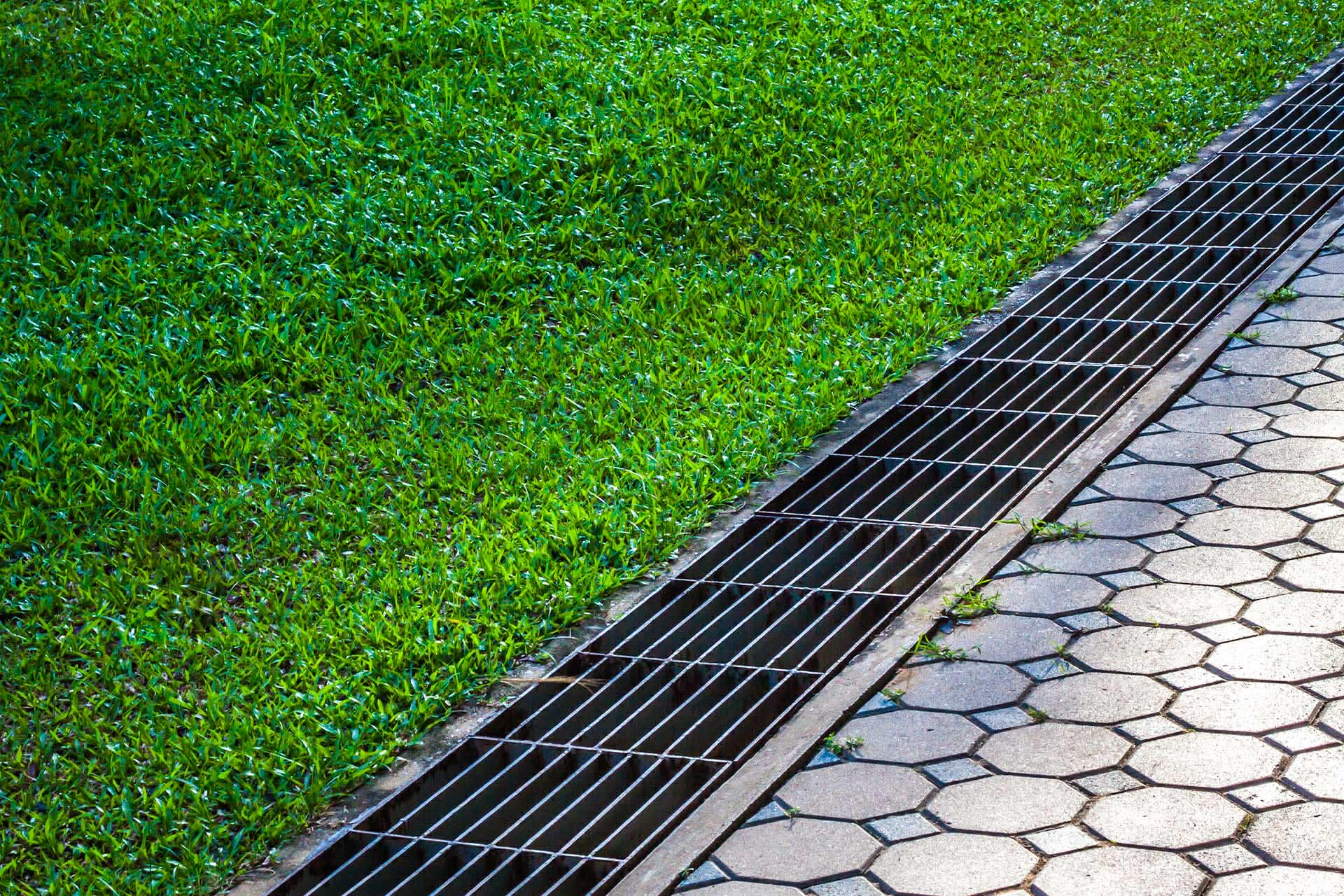
A channel drain (also called a linear drain) is a grated drainage channel installed at the junction between two surfaces - most commonly between your patio and your lawn, or between the house wall and paving. You've probably seen them without realising: a slim metal grate sitting flush with the ground, quietly doing its job every time it rains.
Why this matters in South East London: One of the most common drainage complaints we see is water running off a patio or path directly onto the lawn, or pooling against the house wall after heavy rain. Hard surfaces don't absorb water - they shed it, and if there's no outlet, it goes straight onto your grass or sits against your foundations. A channel drain intercepts that water before it becomes a problem and directs it away safely.
What's involved: We excavate a narrow channel at the edge of your patio or along the house wall, install the drain body, connect it to an appropriate outlet, and finish it flush with the surrounding surfaces. The grate sits at ground level and is barely visible once installed. The whole job is typically completed in a day for most residential gardens. You can read more about who we are and how we work if you'd like to know the team behind the work.
What it fixes:
- Water pooling along the edge of the patio after rain
- The lawn getting waterlogged directly next to hard surfaces
- Damp against the house wall from surface runoff
- Muddy, churned-up grass at the patio edge
What it doesn't fix: Deep soil waterlogging caused by a high water table, failed soakaways, or underground clay pans across the whole garden. For those issues, you'd need a specialist drainage contractor. We'll always tell you honestly if a channel drain won't solve your specific problem.
Get a free quote for channel drain installation - we cover all South East London postcodes and reply within 24 hours.
The Full Range of Drainage Solutions
Channel drains handle surface water between hard and soft areas. But depending on what's causing your drainage problem, there are several other solutions worth knowing about - some DIY, some requiring specialist contractors.
1. Lawn Aeration
What it is: Using a fork or mechanical aerator to punch thousands of small holes through your lawn, then filling them with sharp sand or horticultural grit.
Best for: Mild to moderate compaction in lawns where the soil is drainable but just needs opening up. Good first step for any lawn that's struggling.
Pros: Affordable, no excavation, you can do it yourself with a fork or hire a machine. Immediate improvement to water movement.
Cons: Won't fix serious drainage problems or clay soil on its own. Needs to be done annually to stay effective. Read our guide on lawn scarification and aeration for a deeper breakdown of how and when to do it.
2. Soil Amendment and Conditioning
What it is: Mixing organic material (compost, leaf mould, bark fines) and coarse grit or sharp sand into compacted or clay-heavy soil to break up its structure.
Best for: Flower beds and borders where clay is the main problem. Less effective for lawns without combining with aeration.
Pros: Improves soil biology as well as drainage. Long-term benefit. Can be done in stages.
Cons: Labour-intensive for larger areas. Clay soil may need multiple seasons of treatment to see significant change.
3. French Drains
What it is: A trench dug along the problem area, lined with membrane, filled with gravel, and containing a perforated pipe that channels water away to a safe outlet - usually a soakaway, a drain, or a boundary.
Best for: Gardens where water consistently pools along one edge, beside a wall, or in a specific low-lying strip. Also ideal where water is running in from neighbouring properties.
Pros: Very effective, long-lasting, hidden underground, works on clay soil. Can handle significant volumes of water.
Cons: Requires excavation and a proper outlet. Needs a specialist drainage contractor to ensure correct fall and connection. This is not a DIY job.
Note: Urban Gardeners does not install French drains. For this type of work, we recommend getting quotes from a specialist drainage contractor in South East London.
4. Soakaways
What it is: A large underground pit - typically a crate system wrapped in geotextile membrane - that collects excess water and allows it to disperse slowly into the surrounding subsoil.
Best for: Properties where there's no direct outlet to a surface drain, and where a French drain or downpipe needs somewhere to discharge.
Pros: Self-contained, no running costs, long lifespan when installed correctly.
Cons: In areas of pure London clay, a soakaway on its own can actually make the problem worse. Because clay doesn't allow water to disperse, the crate fills up and essentially becomes an underground pond with nowhere for the water to go. We see this in older Lewisham and Woolwich gardens where a soakaway was installed years ago and has started backing up. In dense clay, a soakaway needs to be either positioned where the subsoil transitions to a more permeable layer, combined with a pumped outlet, or paired with a French drain. A proper site assessment by a drainage specialist is essential before installing one.
Note: Urban Gardeners does not install soakaways. This requires a specialist drainage contractor.
5. Lawn Regrading
What it is: Reshaping the surface of your garden using topsoil to create a gentle slope (typically 1:40) that guides water away from the house and towards a designated drainage point.
Best for: Flat gardens where water has no natural direction to flow, or gardens where previous work has created low spots that collect water.
Pros: Permanent improvement, no pipes or systems to maintain, combines well with new turfing.
Cons: Requires proper calculation of levels. Doing it wrong can make things worse by directing water towards the house or a neighbour's property.
If your lawn needs regrading and new turf laid afterwards, our turfing service handles both together as a single project. You can also check our turfing cost guide for South East London for an idea of what to budget.
6. Raised Beds
What it is: Building planting areas above ground level using sleepers, treated timber, brick, or natural stone, filled with a well-draining mix of topsoil, compost, and horticultural grit.
Best for: Planting borders in permanently waterlogged areas where improving the ground drainage isn't practical or cost-effective. Also a strong option for older South East London gardens where decades of clay compaction have made the soil genuinely difficult to remediate in a single season - raising the growing level bypasses the problem entirely.
Pros: Immediate, reliable fix for plant health. Roots grow in fresh, well-draining growing medium from day one. Raised soil warms up faster in spring, extending your growing season. Adds strong structure and visual definition. Works with any aesthetic - railway sleepers for a contemporary look, reclaimed brick for a period-appropriate finish on Victorian terraces. Can be phased over time.
Cons: Doesn't address the underlying drainage - if you want a usable lawn, you still need to fix the ground. Timber sleepers need treating every few years. Poorly built raised beds can shift or collapse on soft ground.
See our garden landscaping and design service for how we integrate raised beds into full garden redesigns, or browse our project portfolio to see examples of completed builds.
7. Permeable Paving and Rain Gardens
What it is: Replacing solid, impermeable paving with surfaces that allow water to pass through - gravel, permeable block paving, resin-bound aggregate, or sett paving with open jointing. A rain garden is a planted depression positioned to receive runoff from driveways or patios and allow it to soak in naturally.
Best for: Properties where hard surfaces are the main contributor to the problem. In South East London, where front gardens have increasingly been converted to parking, a tarmac or concrete driveway can shed hundreds of litres of water onto an adjacent garden in a single downpour.
Pros: Tackles the source of the runoff rather than managing the result. Environmentally responsible - reduces pressure on South East London's already strained combined sewer system. Resin-bound gravel looks clean and modern, handles heavy traffic, and doesn't develop weeds the way loose gravel does. Rain gardens, when planted well with species like Astilbe, Iris sibirica, or ornamental grasses, become a genuine feature rather than a workaround.
Cons: Higher upfront cost than standard paving. Permeable surfaces need occasional maintenance to prevent pores silting up - typically a light jet wash every couple of years. Rain gardens need to be correctly sized and positioned to avoid directing water towards foundations or boundaries.
A note on planning: In most South East London boroughs, replacing a front garden with a permeable surface doesn't require planning permission, whereas solid impermeable paving over 5sqm does. Worth checking with your local council before starting.
What Urban Gardeners Can Help With - and What We Can't
We want to be straightforward about this, because getting the wrong advice wastes your time and money.
What we do:
- Channel drain installation between patio and lawn, or between house wall and paving
- Lawn aeration and grit treatment for compacted lawns
- Turfing and lawn restoration once surface drainage is resolved
- Raised bed installation as part of landscaping projects
- Garden maintenance including seasonal drainage checks
- Garden clearance to clear overgrown areas blocking drainage
- Patio cleaning to remove algae and moss once drainage is improved
What we don't do:
- French drain installation
- Soakaway installation
- Underground pipe work or drainage mapping
- Full drainage engineering
For those services, you need a specialist drainage contractor. If you're not sure which category your problem falls into, call us on 07760800457 and describe what you're seeing - we'll give you an honest steer.
For our related guide on managing garden flooding more broadly, read our post on how to deal with flooding and mud during the rainy season in South East London.
How Much Does a Channel Drain Installation Cost in South East London?
Channel drain installation is one of the more affordable drainage interventions because it's surface-level work - no deep excavation, no complex pipe systems.
For a typical South East London residential garden, here are realistic figures:
Channel drain between patio and lawn: pricing depends on the length of run, the grate type chosen, and the outlet connection. Contact us for a free quote - we reply within 24 hours and can often give an initial estimate from photos.
Lawn aeration and grit treatment: from £60-£80 depending on lawn size. A good follow-up once surface drainage is improved. See our lawn care service page for full details.
Turfing after drainage work: from £15-£28 per sqm for natural turf including labour and topsoil. If your lawn has been damaged by waterlogging, fresh turf laid after drainage work is the fastest way to restore it. Read our South East London turfing cost guide for a full breakdown.
Seasonal Drainage Checklist for South East London Gardens
Keep on top of these each year to prevent problems building up:
Spring (March-May)
- Aerate your lawn after winter
- Clear any blocked gullies, channel drains, and yard drains
- Check fence posts for rot caused by winter waterlogging - our garden fencing service can replace damaged posts
- Assess any new moss growth - it signals persistent moisture
Summer (June-August)
- Best time for channel drain installation (dry conditions, easier excavation)
- Top-dress lawn with sharp sand after aeration
- Inspect raised beds for drainage and structural integrity
- Book a patio clean to clear algae that built up over winter
Autumn (September-November)
- Clear gutters and downpipes before heavy rain season
- Clear leaves from channel drain grates - they block quickly in autumn
- Best time to regrade and re-turf before ground hardens - see our turfing service
Winter (December-February)
- Monitor known problem areas after rainfall
- Keep channel drain grates clear of debris after storms
- Avoid heavy foot traffic on waterlogged lawn - it compacts the soil further
Our garden maintenance service is available across all South East London postcodes we cover and includes seasonal checks. If overgrown plants are blocking your drainage channels, our garden clearance team can clear them before any drainage work begins.
Frequently Asked Questions
Channel drain installation costs vary depending on the length of run, grate type, and outlet connection. Urban Gardeners provides free quotes for channel drain installation in South East London - contact us to send photos and we'll give you an initial estimate within 24 hours.
Clay particles are extremely fine and pack tightly together, leaving almost no space for water to move through. Unlike sandy or loam soils, clay becomes dense and impermeable when wet, holding water at the surface rather than allowing it to filter down to the water table. South East London sits largely on London clay, which is why drainage problems are so widespread across SE postcodes.
Yes, for mild problems. Aerating your lawn, adding grit to borders, and clearing blocked drains are all effective DIY steps. Installing a channel drain between a patio and lawn is also achievable for confident DIYers. However, French drains, soakaways, and lawn regrading require professional assessment to ensure correct levels and proper outlet connection.
A properly installed channel drain with a quality grate should last 20+ years with minimal maintenance. The main upkeep is keeping the grate clear of leaves and debris, particularly in autumn. Stainless steel and galvanised grates are the most durable options for South East London's climate.
Don't Let Another Winter Ruin Your Garden
Poor drainage doesn't fix itself - it compounds. Each wet season adds more compaction, more moss, more root damage, and more risk to your foundations. The good news is that for many South East London gardens, a channel drain installation is a straightforward, affordable fix that makes an immediate difference.
Urban Gardeners install channel drains across all South East London postcodes - from Greenwich and Woolwich to Lewisham, Peckham, Dulwich, Sidcup, and beyond. We'll tell you honestly whether a channel drain is the right solution for your garden, or whether you need a specialist for something more involved.
Call us on 07760800457 (Mon-Sat 9am-6pm), or get a free quote online. We reply within 24 hours.

0 comments