

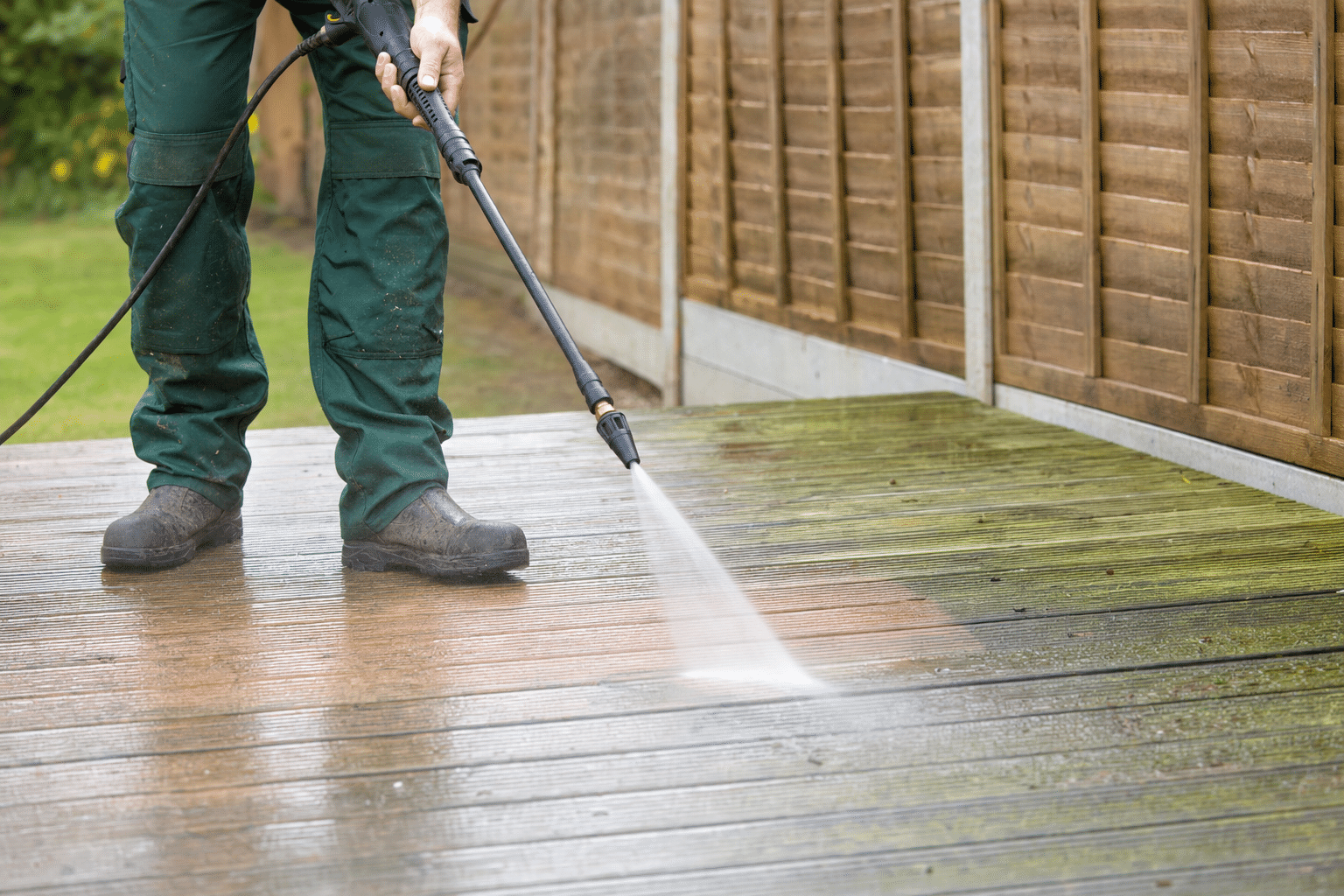
Every November it happens again. The deck that looked lovely in July has a green sheen on it, and the first time you carry the bins out in the rain your foot slides on the bottom board. In a shaded terrace garden it often stays like that until March.
This guide sets out the order we’d try things in to get non slippery decking back: clean it, add grip, and replace the boards only when the first two can’t fix it.
The short answer: green slime sits on top of the timber, so a deck that looks ruined is often sound underneath. Start with a proper clean. We do that at £4 per square metre, minimum £140 for up to 40m². Add grip strips or an anti-slip stain to the steps. New anti-slip boards only make sense when the timber is soft, split or worn smooth.
Is your deck past saving, or just green?
Book a free decking survey with our South East London team →
What’s in this guide
- Why Decking Stays Wet and Slippery in South East London Gardens
- Step 1: Clean the Deck Properly
- Step 2: Add Grip to the Boards You Already Have
- Clean, Grip or Replace: Which Fix Fits Your Deck?
- Step 3: When to Replace the Boards (and What to Choose)
- What Our Team Sees on Real SE London Decks
- DIY or Call Us?
- Frequently Asked Questions
- How Our Services Can Help
- Posts You Might Like
Why Decking Stays Wet and Slippery in South East London Gardens
Most of South East London sits on London clay, which holds water instead of letting it drain away. Under a low deck, that means damp ground just below the boards from October to April. The timber never dries from underneath.
At midday on 21 December the sun is only about 15 degrees above the horizon in London. At that angle a 1.8-metre fence throws a shadow about 6.7 metres long. In a small terraced garden that can cover the whole deck all day.
The Royal Horticultural Society notes that algae thrive in wet, shady spots with poor air circulation, and that build-ups often follow wet winters. Add leaves from next door’s tree packed into the gaps between boards, and the rain has nowhere to go.
Step 1: Clean the Deck Properly
Cleaning comes first because it’s the cheapest fix. Until the green film and packed leaves are gone, you can’t judge whether the boards themselves are worn.
Our patio and decking cleaning service uses commercial pressure washers turned down for timber, with no harsh chemicals. We charge £4 per square metre with a minimum charge of £140, which covers a deck of up to 40m². Our jet washing price guide for South East London shows how that works out for bigger gardens.
Too much pressure lifts the wood fibres and leaves a furry surface that holds water, so we keep the nozzle moving along the grain. We also clear every gap between the boards. The RHS warns that growths return if conditions stay the same, and open gaps let rain drain through.
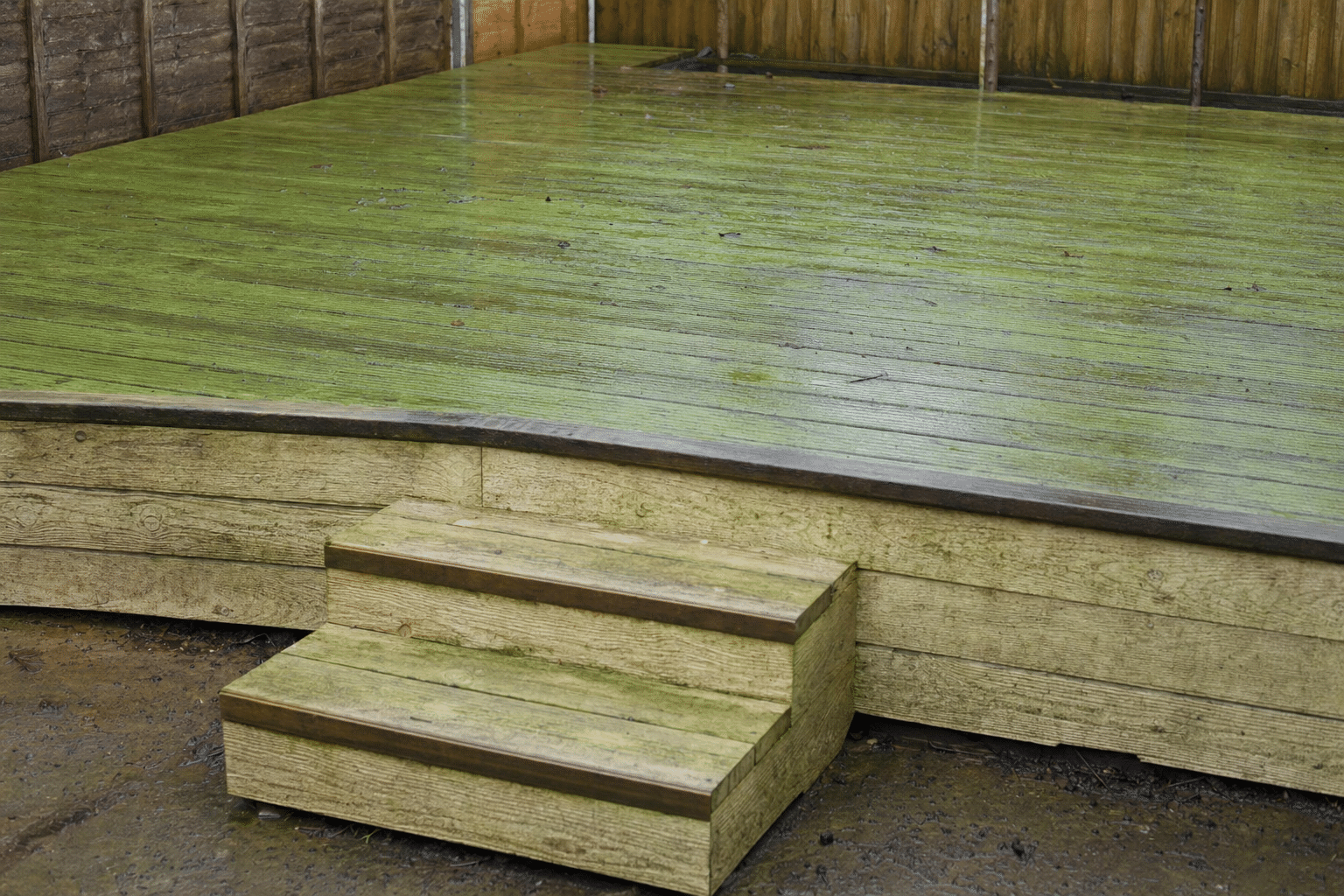
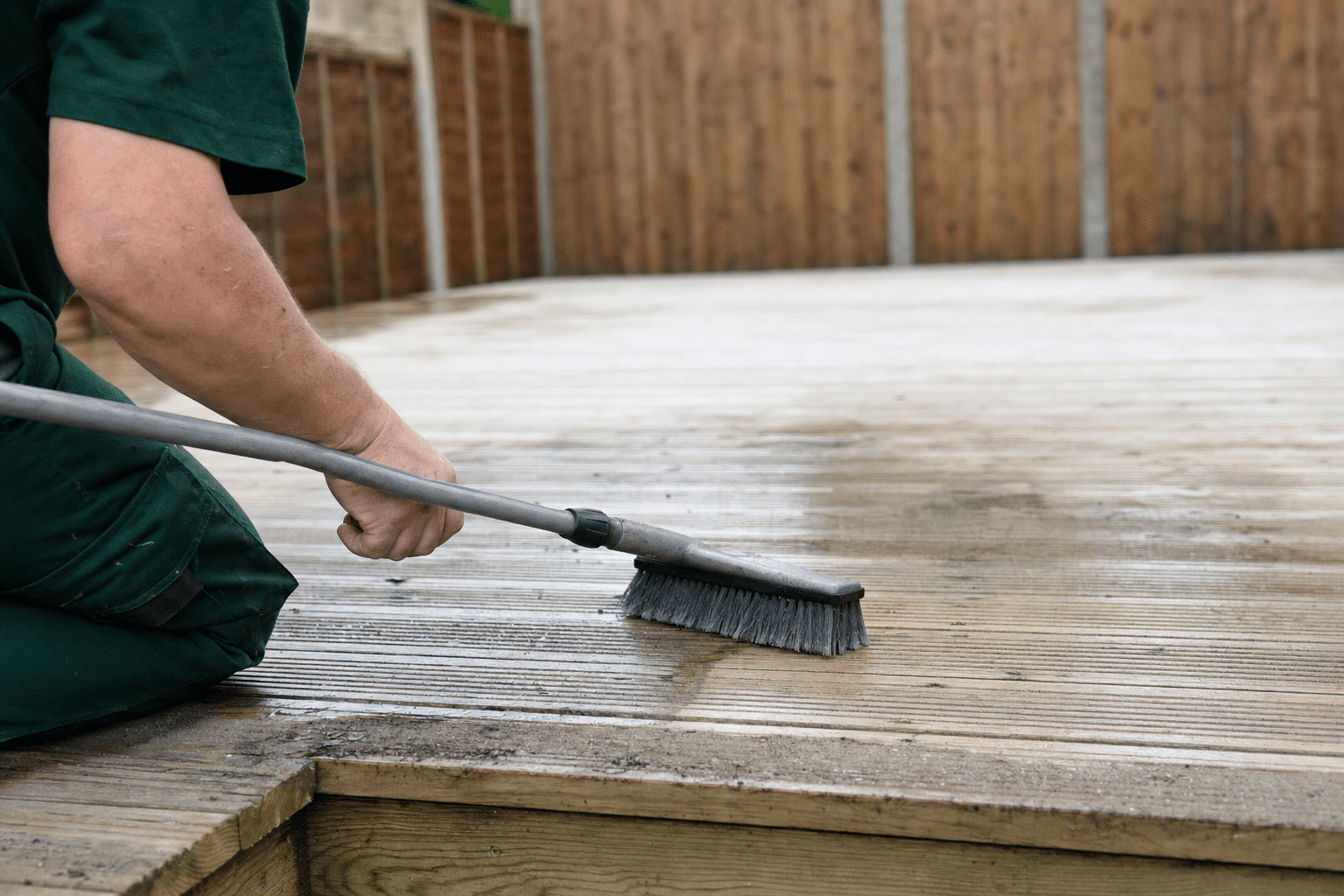
Book the clean in a dry spell from October onwards. A deck that goes into December clean stays grippy for longer.
Step 2: Add Grip to the Boards You Already Have
If the deck is clean but still slides when wet, the timber face has worn smooth. You don’t need new boards for that, just grit in the places people actually walk.
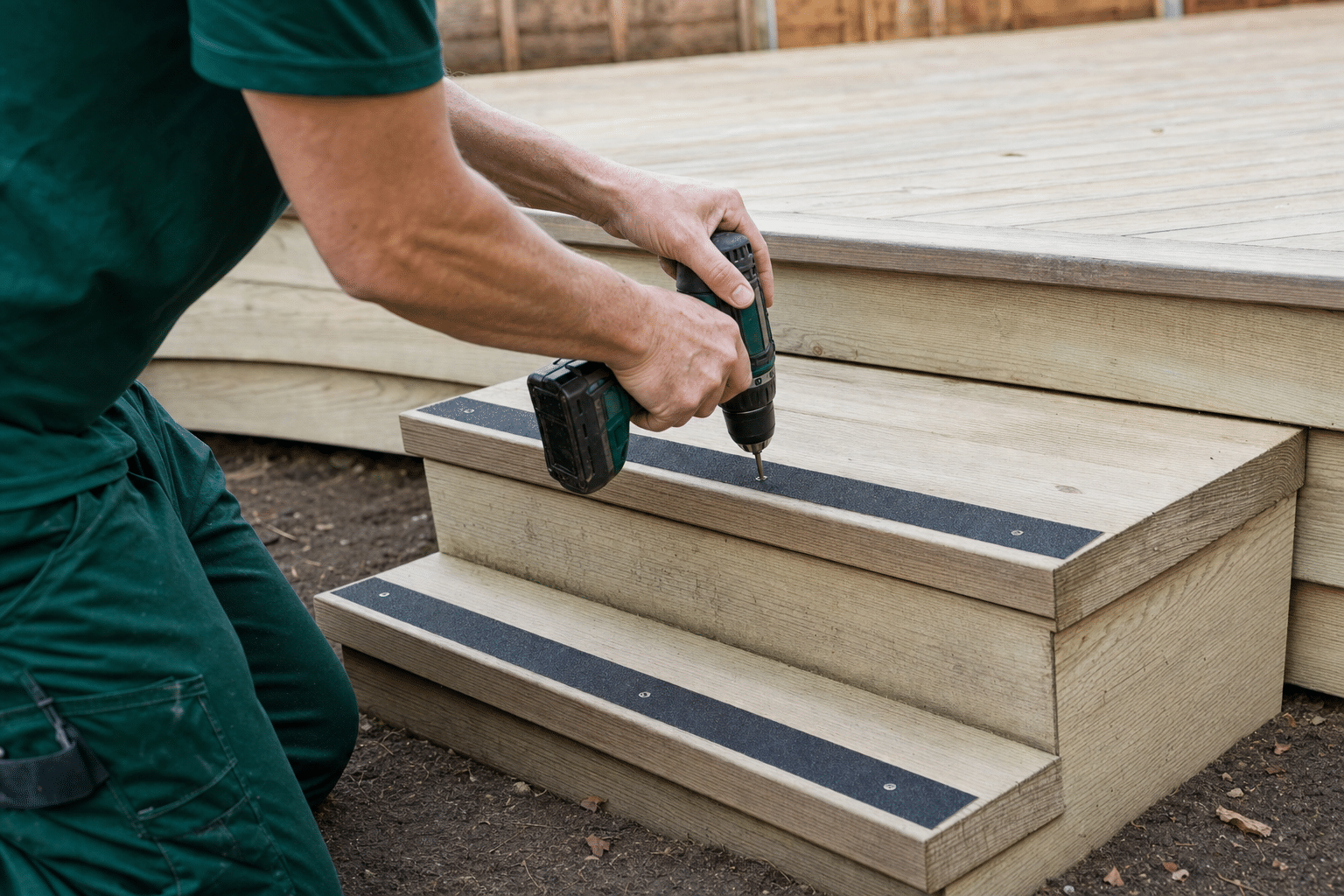
Non Slip Decking Strips
These are thin strips of glass-reinforced plastic (a tough plastic that won’t rot) with grit bonded on top. They screw straight onto the boards. Metre-long strips typically cost £8-£14 each from UK online suppliers in November 2026, a market estimate across UK, not our rate. Fit them across every step and along the path from the back door.
Anti-Slip Stain or Oil
This is brushed over the whole deck and has fine grit mixed in. Cuprinol’s Anti-Slip Decking Stain also contains an algaecide, which slows the green film coming back. Osmo advises a fresh coat of its anti-slip decking oil once it looks worn.
Chicken Wire and Rubber Mats
The RHS still suggests chicken wire stapled over timber for grip. A rubber mat with drainage holes works by the back door, as long as you lift it every few weeks.
Clean, Grip or Replace: Which Fix Fits Your Deck?
A slippery deck and a worn-out deck feel the same underfoot in January, but they need very different money spent on them. Push a screwdriver into a board near the house and one at the far end, then find your row below.
| What you see | What it usually means | The fix | Cost |
|---|---|---|---|
| Green film, boards firm | Algae on sound timber | Clean | Our rate: £4/m², minimum £140 for up to 40m² |
| Clean, but slides on the steps | Worn, smooth timber face | Grip strips or anti-slip stain | Strips typically £8-£14 per metre from UK online suppliers, market estimate across UK, not our rate |
| Screwdriver sinks in, boards bounce | Rot in the boards or the frame | Replace boards and check the frame | Our price after a free survey |
| Boards stay dark and damp in summer | Deck sitting on wet clay with no airflow | Rebuild on a raised frame | Our price after a free survey |
These are realistic starting points, not a fixed quote. Size, access through the house and the state of the frame all change the final number.
Step 3: When to Replace the Boards (and What to Choose)
Replacement is the last resort, and it’s the right call when boards are soft, split or bouncing. On clay the frame often rots before the boards do, so our survey lifts a board and looks.
Choose boards with a tested grip rating. The UK measure is the pendulum test, and a wet score of 36 or more counts as low slip potential under the HSE classification. Ask the supplier for the certificate, not just the “anti-slip” label.
Anti Slip Composite Decking or Grip-Insert Timber
Anti-slip composite boards are solid boards with a ribbed or textured face. Several UK makers give 25-year residential warranties, Ecodek among them. Anti-slip timber boards have grooves filled with a resin and grit insert. Plain grooved softwood, like the decking boards sold at B&Q, helps water run off but isn’t the same as a tested insert.
What Goes Under the Boards
We build decking on a wooden frame, so it sits off the wet ground with air moving below. The Timber Decking and Cladding Association advises 5-8mm gaps between timber boards for drainage. On a house, keep the new deck no higher than 0.3 metres and it normally stays within permitted development under the government’s householder planning guidance. For costs by size and material, see how much new decking costs in South East London.
What Our Team Sees on Real SE London Decks
In Catford SE6 and Brockley SE4, most decks we’re called to sit in narrow terraced gardens with fences on both sides. Many were laid straight onto the ground by a previous owner. These go green first and stay green longest.
In Blackheath SE3, gardens are bigger and sunnier. Mature trees there drop leaves into the board gaps from October. Clearing those gaps does more for grip there than any product. Where water pools under the deck, our guide to fixing poor drainage in South East London covers the next step.
We work across every SE postcode from Rotherhithe SE16 to Abbey Wood SE2, plus Sidcup, Welling, Bromley, Bexleyheath and Dartford.
Want someone to look at your deck before you spend anything?
DIY or Call Us?
A small deck can be cleaned at home with a stiff broom, warm water and an afternoon. Grip strips go on with a drill. Neither needs us.
A pressure washer held too close leaves boards rougher and wetter than before. Replacing boards on a rotten frame means two people, a saw and a lot of old timber carried out through the house.
DIY makes sense for: decks under 10m² with firm boards that need a good scrub and strips on the steps.
Professional makes sense for: decks over 20m², soft or bouncing boards, decks you reach only through the house, and anyone who wants every gap cleared.
Frequently Asked Questions
What can you put on decking to stop it from being slippery?
Clean it first. Then fit non slip decking strips to the steps, or brush on an anti-slip stain with grit in it.
What is the best non slippery decking?
Solid composite boards with a textured face, or timber boards with resin grit inserts. Pick whichever has a wet pendulum test score of 36 or more.
What is the longest lasting composite decking?
Solid-core boards from makers giving 25-year residential warranties, such as Ecodek. On clay, the frame underneath matters as much as the boards.
What is the best decking material in the UK?
Treated softwood costs least but needs yearly upkeep. Composite only needs washing and copes well with shade.
What is the 3/4/5 rule for decking?
It checks a deck frame is square. Mark 3 units along one side and 4 along the other. If the diagonal between the marks is exactly 5, the corner is a right angle.
Can you fit non slip composite decking near me in South East London?
Yes. We fit composite and timber decks across South East London after a free survey, with a written quote within 3 business days.
How Our Services Can Help
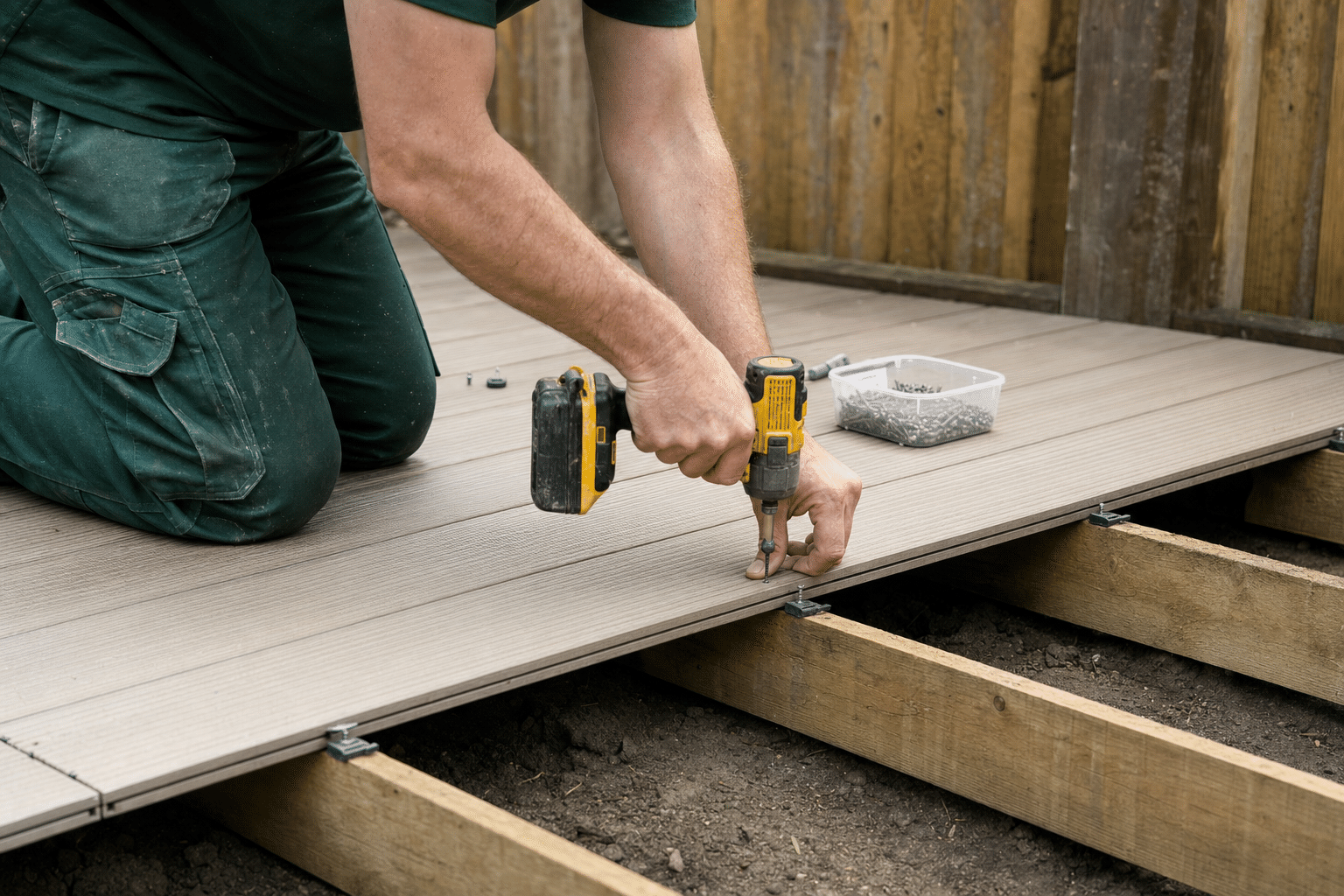
- Decking installation in South East London: new anti-slip boards on a frame built for clay, priced after a free survey.
- Patio and decking cleaning: £4/m², minimum £140 for up to 40m².
- Garden maintenance: cutting back the shrubs that shade your deck, £83 for the first hour and £65 for every hour after.
We’re a family-run team based in Eltham SE9 since 2016, with 111 Google reviews. See finished jobs in our garden project portfolio or meet the team who’ll do the work.
Ready to stop slipping on the back step this winter?
Arrange your free deck survey anywhere in South East London →
Posts You Might Like
Related reading
- Best Time to Install a Fence or Decking in South East London: Month by Month (And When to Book)
- Creating a Cozy Outdoor Space with Decking Before Winter
- How Much Does Decking Cost in South East London? (2026 Price Guide)
- Which Side of the Fence Is Mine? Who Replaces It After Storm Austen in South East London
- North-Facing Garden in a South East London Terrace? How to Design It So It Gets Used

0 comments