

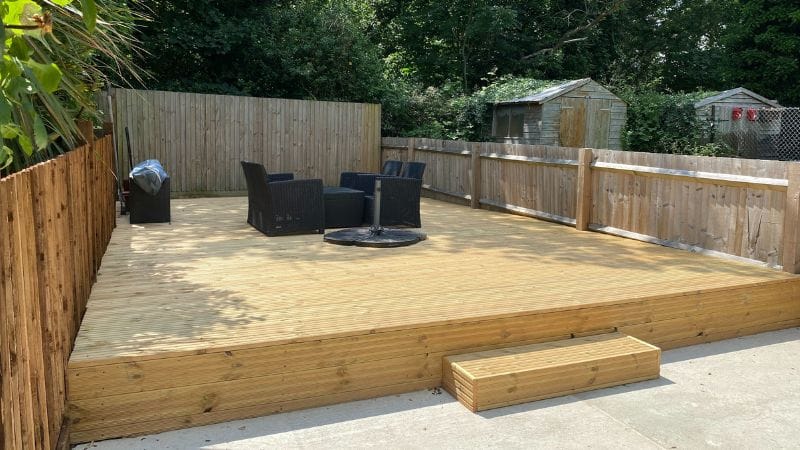
The panel at the bottom of the garden leans a little further after every windy night. You’ve wedged the wheelie bin against it and promised to sort it “when the weather’s better”. Then a neighbour mentions that every fencer they rang in April was booked for weeks.
This guide gives you the best time of year to install a fence or build a deck in South East London, month by month, with the clay, the nesting rules and the booking queue all taken into account.
What’s in this guide
- The Short Answer: When to Install a Fence in South East London
- Month by Month: Fence and Decking Installation Through the Year
- Why London Clay Decides Your Timing More Than the Weather Forecast
- Spring: The Busiest Fencing Season and How Far Ahead to Book
- Summer: Firm Ground, Shrinking Clay and Timber That Splits in the Heat
- Autumn: Why September and October Suit Most SE London Fences
- Winter: Storm-Damaged Panels and Waterlogged Post Holes
- Bird Nesting Season: When Clearing a Fence Line Has to Wait
- When Is Fencing Cheapest? What Actually Moves the Price
- Best Time to Build Decking in SE London: Softwood, Hardwood or Composite
- Fence and Decking Together: One Booking or Two?
- A Real Job: Fence Repair in Crystal Palace SE19
- DIY or Professional: What the Season Changes
- How to Book a Free Fencing Survey With Urban Gardeners
- Frequently Asked Questions
- How Our Services Can Help
- Posts You Might Like
The Short Answer: When to Install a Fence in South East London
The short answer: September and October suit most new fences in South East London, with April and May a close second. In both windows the clay is neither baked hard nor sitting in water, and there’s no frost to spoil the concrete. Autumn has one extra advantage: nesting season is over, so an ivy-covered fence line can be cleared straight away.
For a deck, aim for late April to early June to use it this summer, or September to build calmly for next year.
A fence can still go in during any month. If your posts are sound and only the panels need changing, the month barely matters. For prices, our garden fencing cost guide for South East London lists them panel by panel.
Planning a new fence before the winter gales arrive?
Book a free fencing survey with Urban Gardeners in South East London →
Month by Month: Fence and Decking Installation Through the Year
The rain and frost figures below come from the Met Office’s 1991-2020 averages for Greenwich, the closest long-running station to most of our jobs. The wettest months there are November and October, not January, and almost all of the 23 frost days a year fall between December and February.
| Month | Greenwich rain / frost days | Fences | Decking |
|---|---|---|---|
| January | 44mm / 5.9 | Storm repairs; new posts on dry, frost-free days | Plan and book |
| February | 40mm / 5.9 | Book your April fence now | Book for late April |
| March | 37mm / 2.1 | Ground drying; nesting season starts | Groundwork after a dry week |
| April | 39mm / 0.6 | Good digging; diaries fill | Good: use it all summer |
| May | 44mm / 0 | Good and busy | Good for every material |
| June | 49mm / 0 | Good; watch hot spells | Shade stacked softwood |
| July | 36mm / 0 | Driest month; clay hard | Full expansion gaps on composite |
| August | 53mm / 0 | Workable; avoid heatwave days | Fine |
| September | 52mm / 0 | Best month overall | Very good |
| October | 58mm / 0.3 | Very good; set before the gales | Good until the clocks change |
| November | 60mm / 1.8 | Slower, between wet spells | Composite on a dry week |
| December | 51mm / 6.5 | Storm repairs; no concrete on frost days | Plan for spring |
These are long-term averages, not a forecast, so we check the ground on the survey.
Why London Clay Decides Your Timing More Than the Weather Forecast
Most of South East London sits on London Clay. The British Geological Survey explains that clay swells when it soaks up water and shrinks and cracks as it dries. It puts the share of London properties affected by that movement at 20% in 1990, rising to a projected 43% by 2030.
For a fence, all of that happens at the post hole. In a wet winter a hole dug in the morning can be half full by lunch. Concrete poured into standing water sets weak and leaves the post in a wet pocket that rots it from the bottom. In a dry July the same clay goes as hard as brick and pulls away from posts already in it.
Our method doesn’t change with the season. A post goes into the ground by at least a third of its height above ground, so about 600mm for a 1.8m fence. On clay we dig 100-150mm deeper, put gravel at the bottom so water drains away, and slope the concrete so rain runs off. The season only changes how long the digging takes, and whether we wait a day for a hole to stop filling.
Spring: The Busiest Fencing Season and How Far Ahead to Book
On the first sunny Saturday in March, half the street walks down the garden and looks at what the winter did to the fence. That’s why spring diaries fill first.
The ground is usually fine by April. March is one of the two driest months at Greenwich, at 36.5mm, but clay that spent the winter wet takes a few weeks to give it up. By May the digging is as easy as it gets all year.
The quote rarely holds you up. We reply within 1 business day, the survey is free, and the written quote follows within 3 business days of it. Most standard fences take 1-3 days to install.
The date is the bottleneck, so for an April or May fence, book the survey in January or February. A panel swap on sound posts often takes one day and can usually slot in sooner.
Want a spring fence without joining the spring queue?
Send photos of your fence line to our South East London team →
Summer: Firm Ground, Shrinking Clay and Timber That Splits in the Heat
June is a good month for a fence, with firm ground and long evenings. July is harder. It’s the driest month at Greenwich, at 36.3mm, and in a dry spell the clay shrinks and cracks. Digging takes longer, and older posts can loosen as the soil pulls back from the concrete.
If that’s what you’re seeing, our guide to a leaning fence post on SE London clay explains the repair.
New timber needs care in the heat. Pressure-treated panels arrive damp from the treatment, and in strong sun they dry fast and split along the grain. Keep them stacked flat in the shade until they’re fitted, and leave staining until the wood has dried. Post-fixing concrete sold in the UK typically lists an upper working temperature of 25-30°C, so on a heatwave afternoon it can set before the post is straight.
So yes, a summer fence is fine. Pick a day below the high 20s and start in the morning.
Autumn: Why September and October Suit Most SE London Fences
September is the month we’d pick for our own gardens. There are no frost days at Greenwich, the first proper rain has softened the clay without waterlogging it, and holes dig cleanly. A fence finished in September has its concrete fully cured long before the winter gales, and the Met Office starts each new storm-naming year on 1 September.
October is the second wettest month, at 58mm, but that rain is spread over about 10 days. Between showers the ground stays workable, and plants are dying back, so there’s less to trample along the fence line.
The material you choose matters less to the timing than the posts do:
- Timber is still the usual choice. Solid fence panels made of overlapping boards (closeboard) stand up to wind better than cheaper overlap panels.
- Composite fence boards won’t rot or need painting, and often use recycled material.
- Metal panels, powder-coated against rust, suit gardens where security comes first.
All three need posts set properly in the clay, so the same autumn window applies.
Winter: Storm-Damaged Panels and Waterlogged Post Holes
It’s 2am, there’s a gust and a crack, and in the morning a panel is lying on the lawn. Most winter fencing is exactly this, and yes, you can put up a fence in winter.
Swapping panels on sound posts needs no digging, so it works in any month. New posts need a dry, frost-free spell. Most post-fixing concrete bags ask for 5°C and above, and Greenwich’s average January night is 3.4°C, so in winter we pour in the middle of the day and skip any day with frost forecast. If a test hole fills with water and stays full, we wait.
For the first 48 hours after a fence comes down, read our guide to a garden fence blown down in South East London.
Bird Nesting Season: When Clearing a Fence Line Has to Wait
Plenty of old fences in SE London are held up by the ivy, bramble or hedge growing through them. That growth has to come off before a new fence goes in, and between March and August it may have to wait.
Under the Wildlife and Countryside Act 1981, it’s an offence to intentionally damage or destroy a wild bird’s nest while it’s in use or being built. You can still build a fence in spring. A fence line under thick ivy or hedge just has to be checked first, and if birds are flying in and out with food, that stretch waits until the young have flown. The RSPB advises cutting hedges and ivy between 1 September and 28 February.
If the fence line needs clearing first, our garden clearance service costs £85 per hour for a 2-person team, with a minimum of 2 hours. Ivy grown into the panels is covered in our guide to ivy removal costs from walls and fences.
When Is Fencing Cheapest? What Actually Moves the Price
People expect a winter sale. In our experience the season moves the queue far more than the price, and our per-panel and per-post prices on the garden fencing page carry no winter discount and no spring surcharge. These are what change the total.
How Many Panels and Posts
Fences are priced by the bay, so length is the biggest factor. A 6-panel run in a Brockley terrace and a 14-panel run in an Eltham semi are different jobs in any month.
Whether the Posts Are Sound
Sound posts mean only the panels are replaced. Rotten or loose posts mean breaking out old concrete and setting new posts in the clay.
The Type of Fence
Overlap panels, closeboard, slatted designs and trellis tops all cost different amounts. Our prices page shows every service side by side.

Access
A side return makes the job straightforward. In a mid-terrace where every panel and bag of concrete goes through the hallway, it takes longer.
Old Fence Removal and Waste
Taking the old fence away is quoted separately and confirmed with you before anything is collected.
What Is in the Ground
Old concrete, tree roots and buried rubble slow the digging. We look for them on the survey so they’re in the quote, not a surprise on the day.
Best Time to Build Decking in SE London: Softwood, Hardwood or Composite
A deck sits on a wooden frame, so it’s held off the wet ground, but the frame’s posts still go into the clay. The ground rules are the same as for a fence: late April to early June for the summer on it, or September without the rush.
The board material decides how fussy the timing is:
- Softwood moves the most. It arrives damp from treatment and shrinks in hot weather, so the boards should sit on site, stacked and covered, before fixing.
- Hardwood lasts longer but still moves with the seasons, and it needs pre-drilling, so a cool, dry spell suits it.
- Composite doesn’t rot or need treating, so it copes with a cooler, damper build. It expands in heat, so gaps are set to the maker’s figure, never by eye.
Our decking installation service includes the frame and basic groundwork, and the decking cost guide for South East London breaks the price down by size and material. A green, slippery old deck comes under our patio and decking cleaning at £4 per square metre, with a minimum charge of £140 covering up to 40 square metres.
Thinking about a deck you can use next summer?
Fence and Decking Together: One Booking or Two?
One survey covers both, and it usually makes sense to book them as one job. The fence goes in first, so its posts are dug before the deck frame covers the ground and the spoil is cleared in one go.
The same team handles both. Deni and Bobby, two of our landscaping specialists, do our fencing, and Deni also builds our decks. A September start suits a combined job: the fence is up before the gales and the deck goes onto firm, frost-free ground.
If the budget won’t stretch to both, split them by season: the fence in autumn, the deck the following April or May. A bigger rethink of the whole garden falls under garden landscaping and design, where we quote fence, deck and paving together.
A Real Job: Fence Repair in Crystal Palace SE19
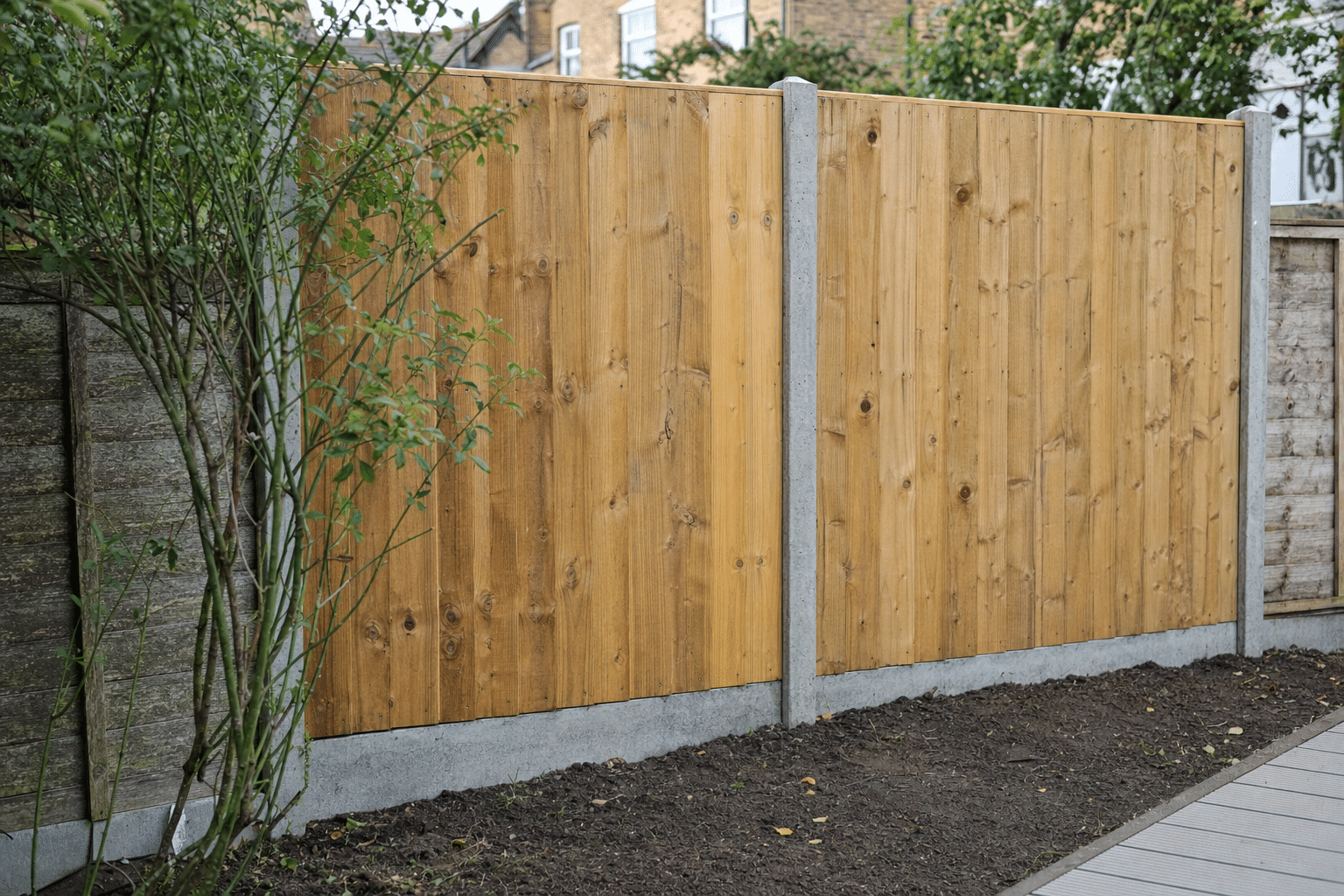
Claire, in Crystal Palace SE19, was already a regular garden maintenance client of ours. Two of her fence panels had grown old and worn, and had lost their colour and protective coating.
Two of our gardeners checked the posts and brackets first and found them in reasonably good condition, which decided the job. We moved and protected the plants growing against the fence, took out the old panels, and fixed new panels with a sun-protective coating to the existing posts with brackets. The plants went back, and the whole job took 1.5 hours.
Because no holes were dug, the clay never came into it, so a job like this can be done in any month. See the photos on our fence repair in Crystal Palace SE19 portfolio page, and more local work on the gardening services in Crystal Palace SE19 page.
DIY or Professional: What the Season Changes
A confident DIYer can replace panels on sound posts on any calm, dry day. A basic 1.8m (6ft) overlap panel runs about £15-£40 from UK suppliers, market estimate, not our rate. A 20kg bag of fast-setting post concrete costs about £8-£12, market estimate, not our rate.
New posts are where the season bites. Digging 700mm into clay by hand is heavy work in July and a muddy fight in January. A petrol post-hole auger costs roughly £50-£70 a day from UK hire shops, market estimate, not our rate. Then there’s the waste: old panels, rotten posts and lumps of concrete, none of which goes in a council garden waste bin.
DIY makes sense for: replacing one or two panels on firm posts, in spring or autumn, with somewhere to put the old timber.
Professional makes sense for: new posts in clay, runs of more than a few panels, winter jobs where the holes keep filling, gardens with access only through the house, and anyone who wants the old fence taken away.
How to Book a Free Fencing Survey With Urban Gardeners
Call or send the contact form with your postcode and a line about the job, plus photos if you have them. We reply within 1 business day to arrange a free survey. Tilyo, who leads our surveys, measures the boundary, checks the ground and access, and confirms the height.
A fence up to 2 metres, or 1 metre next to a road, is normally allowed without planning permission under the General Permitted Development Order 2015. Your itemised written quote follows within 3 business days.
In Eltham SE9, where we’re based, and Blackheath SE3, gardens tend to be larger, with longer boundary runs and more posts in the clay. In Catford SE6 and Brockley SE4, smaller terraced gardens often mean every panel comes through the house, so we plan the route on the survey.
We also cover Woolwich, Charlton, Lewisham, Peckham, Forest Hill, Sydenham, Dulwich, Sidcup, Welling, Bromley and Bexley, with the full list on our areas we cover page. We’ve worked in South East London since 2016, and you can read more about our family-run team.
Ready to pick a month for your new fence?
Frequently Asked Questions
What is the best time of year to install a fence in the UK?
In South East London, September and October suit most fences, with April and May close behind. The clay is workable, there’s no frost to spoil the concrete, and in autumn the nesting season is over.
Can you put up a new fence in winter?
Yes. Panel swaps on sound posts work in any month, while new posts need a dry, frost-free day, because post-fixing concrete usually needs 5°C and above.
What time of year is fencing the cheapest?
In our experience the season changes how fast you get a date, not the price per panel. The total moves with the number of panels, the state of the posts, the fence type, access and waste removal.
Can fence posts go into wet clay soil?
Yes, as long as the hole isn’t standing full of water. We put gravel at the bottom, dig 100-150mm deeper than a third of the post’s height, and slope the concrete so rain runs away.
How far ahead should I book a fence installer for spring?
Book the survey in January or February for an April or May fence. We reply within 1 business day and quote within 3 business days of the survey, and most fences take 1-3 days to install.
What is the best time of year to build decking?
Late April to early June gets you the summer on it, and September is the calm alternative. Avoid frozen or waterlogged ground for the frame posts.
Is it OK to install a timber fence in hot summer weather?
Yes, with care. Keep the panels flat in the shade until they’re fitted, work in the morning, and leave staining until the treated timber has dried.
How Our Services Can Help
- Garden fencing: new fences, panel swaps, post replacement and storm repairs, with a free survey.
- Decking installation: softwood, hardwood and composite decks, frame and groundwork included.
- Garden clearance: £85 per hour for a 2-person team, minimum 2 hours, to clear a fence line first.
- Garden maintenance: £83 for the first hour and £65 for every hour after, with no minimum charge.
- Patio and decking cleaning: £4 per square metre, minimum £140 covering up to 40 square metres.
Posts You Might Like
- Garden fencing in Peckham SE15: the best panels for privacy and security
- Creating a cosy outdoor space with decking before winter
- Waterlogged garden in South East London: how to fix it
Related reading
- 7 Reasons to Install Artificial Grass in South East London This Year
- Leaning Fence Post in SE London? The Screwdriver Test Decides the Fix
- The Last Mow of the Year in South East London: When to Stop Cutting in November
- Garden Fence Blown Down in South East London? What to Do and How Much It Costs to Replace (2026)
- Best Time to Lay Turf in South East London (Month-by-Month Guide)

0 comments