

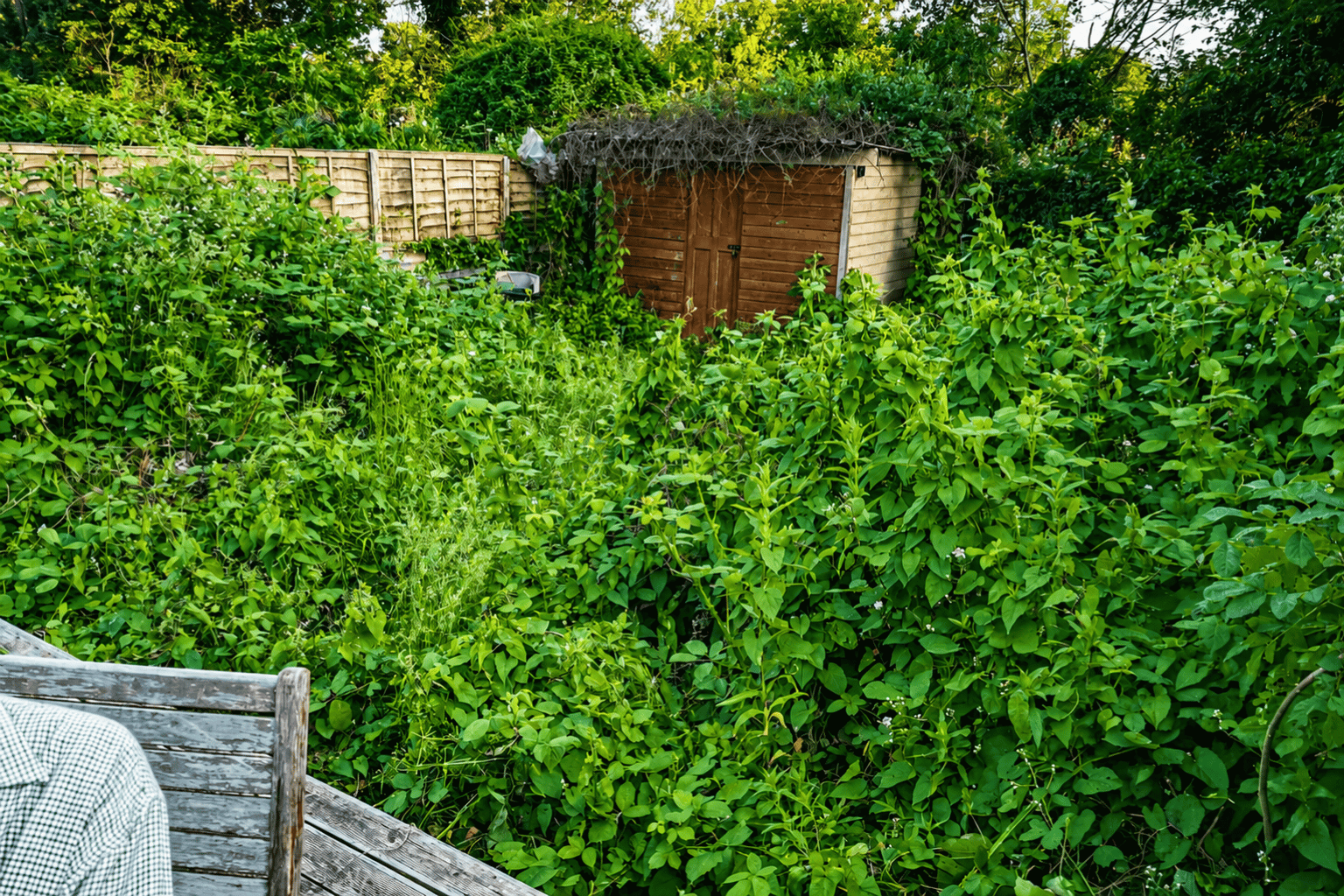
The garden has gotten away from you. Waist-high grass, brambles through the borders, a fence you can barely see. It feels like a job for a machine, not a person, but it is doable. What separates a smooth clearance from a three-weekend nightmare is not strength or fancy kit, it is doing the steps in the right order and knowing where the real risks are. This guide, written by a local clearance team based in Eltham, walks you through exactly that.
The quick version
If you just want the order to work in, here it is:
- Survey first and check for hazards and wildlife before cutting anything
- Clear the bulky rubbish so you can see what you are dealing with
- Cut tall, soft growth down to shin height with a strimmer
- Tackle brambles, ivy and climbers in layers
- Prune back the shrubs and hedges you are keeping
- Dig out roots of anything you are removing for good
- Deal with weeds and mulch so it does not all grow back
- Dispose of the waste (the part people underestimate most)
The rest of this guide explains each step, the tools you need, and the point where it stops being worth doing yourself.
Before you touch anything: survey the garden
The single biggest mistake is grabbing the strimmer and going in swinging. Ten minutes of looking first saves you hours and protects you from the things that send people to A&E.
Walk the whole space slowly and note:
- Hazards hiding in the growth. Broken glass, old paving, rusty metal, loose wire, rotten fence posts, even buried rubbish. Overgrown gardens hide all of it. Assume there is something sharp underfoot until you have cleared a patch and proven otherwise.
- Wildlife. Check for nests, bee or wasp activity, and hedgehogs before you cut anything back hard. Hedgehogs in particular hide in leaf piles and long grass, and they are a protected concern. If you find an active nest, leave that area until the season passes.
- What is worth keeping. Under the chaos there is often a decent shrub, a mature tree, or established plants worth saving. Take photos before you start. It is genuinely hard to remember what was where once you are halfway through and everything looks the same.
- Access and waste. How will you get bags or a barrow from the back garden to the front? In a lot of SE London terraces the only route is through the house or a narrow side return. Knowing this now changes how you stage the waste later.
Sketch a rough plan, even a phone note. Decide what stays, what goes, and where waste will pile up. A bit of structure here stops you doing the same job twice.
Get the right tools (this is where most DIY clearances go wrong)
Trying to clear thick growth with the wrong kit is slow, exhausting, and dangerous. You do not need everything on this list, match the tools to what your garden actually has.
The basics, for almost any clearance:
- Heavy-duty gloves. Not thin gardening gloves, proper thornproof ones with reinforced fingertips. Brambles and nettles will go straight through cheap pairs.
- Secateurs for clean cuts on stems and small branches up to about pencil thickness.
- Loppers for thicker branches. Two types exist and the difference matters: bypass loppers (two blades that pass each other, like scissors) are for live green growth and give a clean cut. Anvil loppers (one blade onto a flat surface) are for dead wood. Use bypass on living branches up to about 2 inches and you will not crush the plant.
- A garden rake for gathering leaves and debris. Metal for heavy work, plastic for light tidying.
- A spade or garden fork for digging out roots and stubborn weeds.
- A wheelbarrow if you have anywhere to wheel it. Moving waste by the armful is how a half-day job becomes a full one.
For heavier overgrowth, add:
- A strimmer or brushcutter for knocking down long grass and soft growth fast. A brushcutter (the beefier cousin with a blade rather than just a line) handles woody stems a strimmer cannot.
- A bow saw for branches and small trunks too thick for loppers. Cheap, manual, and surprisingly capable.
- A chainsaw only if you genuinely have small trees to fell, and only if you know how to use one safely. This is the tool that hurts people. If you are not confident, this is the line where DIY stops being worth it.
You can hire a strimmer, brushcutter or chainsaw by the day from most tool hire shops in SE London, which is far cheaper than buying for a one-off job. If you find yourself pricing up a chainsaw purchase for a single garden, that is usually a sign the job has outgrown DIY.
Already feeling like it is a lot? If the tool list alone is making you reconsider, you can send us a few photos and get a free, no-obligation clearance quote within 24 hours. No pressure, just a number to compare against your weekend.
The right order to clear an overgrown garden
Work in this sequence. Doing it out of order is what creates rework and mess.
1. Remove the bulky rubbish first
Before any cutting, pull out the obvious non-plant stuff, old pots, broken furniture, bags, debris. This clears your working space, reveals hazards, and stops you cutting growth only to find a bin bag fused into it. If you are in a terraced house where everything has to come through the hallway, stage the rubbish near that exit now rather than carrying it twice later.
2. Cut the tall, soft growth down to a workable height
Take long grass, weeds and soft overgrowth down to roughly shin height with a strimmer or brushcutter. Do not try to go to ground level in one pass, you cannot see what you are cutting into. Getting it to a manageable height first lets you actually see the garden's shape and spot anything you missed in the survey.
Work systematically, one section at a time, rather than darting around. Rake up as you go so you are not wading through cuttings.
3. Tackle the brambles, ivy and climbers
These are the stubborn ones. Cut bramble and ivy back in layers rather than trying to rip out a whole mat at once. For ivy on walls and fences, cut it at the base first and let it die back before you pull it, dead ivy comes away far more easily than live ivy and does less damage to the surface underneath. Ivy in particular is worth getting right, if it has taken over a wall, fence or tree, our step-by-step on how to remove ivy from your garden goes deeper than we can here.
4. Prune back shrubs and hedges
Now shape what you are keeping. Many overgrown shrubs respond well to hard pruning, but do it deliberately, not in a panic. Cut out dead, diseased or crossing branches first, then reduce size. Late winter to early spring is the ideal window for hard pruning on most plants, before new buds break. If you are dealing with big, established hedges or trees rather than shrubs, that is a job with its own rules and risks, our guide to tree and hedge pruning in South East London covers it in more detail.
5. Dig out roots and unwanted plants
For anything you are removing permanently, get the roots out, not just the top growth. Bindweed, ivy roots and bramble crowns will all come straight back if you only cut the surface. A fork to loosen, then pull from the base. A heads-up for SE London: a lot of gardens here sit on heavy London clay, which bakes hard in summer and turns to sticky mud in winter. Roots come out far more easily after rain when the ground is soft, fighting dry clay in August is a special kind of misery, so time this step if you can.
6. Deal with the weeds properly
Weed control is what decides whether the garden stays clear or is a jungle again by August. Hand-pull from the root where you can. For larger areas, a hoe handles surface weeds. Once an area is clear, a layer of mulch suppresses regrowth and keeps the soil healthy, this is the step people skip and then wonder why it all comes back. If weeds are your main battle, we have a fuller guide on how to remove weeds and prevent their regrowth. And the surest way to never face a full clearance again is light, regular upkeep, which is what ongoing garden maintenance is for.
7. Clear and dispose of the waste
Pile waste as you go into compostable green waste versus non-compostable rubbish. This matters more than people expect, because disposal is often the hardest part of a DIY clearance.
The part nobody warns you about: getting rid of the waste
Cutting it all down is satisfying. Then you are standing in front of a mountain of green waste with no obvious way to get rid of it.
Your options in SE London:
- Council green waste collection. Lewisham, Greenwich, Bromley and other local councils run garden waste schemes, but they are usually subscription-based and the bin is small. Fine for ongoing maintenance, useless for a big one-off clearance.
- Trips to the tip. Your local Reuse and Recycling Centre takes garden waste, but a real clearance is several car loads, and many sites have restrictions on vans and trailers. This is where a Saturday quietly turns into a weekend.
- Hiring a skip. Works if you have somewhere legal to put it. On many SE London streets you need a skip permit from the council to place one on the road, which takes time and adds cost.
- A licensed waste removal service. They take it away in one go. Worth pricing up against the value of your own time and several tip runs.
A quick legal note: you cannot fly-tip garden waste, and some material has special rules. If you suspect Japanese knotweed (bamboo-like stems, purple speckling, dense growth), stop, do not dig or strim it, and do not put it in normal waste, it is classed as controlled waste and spreading it can cause real legal and property problems. You can read the official guidance on legal waste disposal on the UK government website.
When DIY stops being worth it
DIY clearance is genuinely the right call for light to moderate jobs. But there is a point where the maths flips, where the cost of tool hire, waste disposal and several weekends of your time adds up to more than a professional job would have cost, with more risk and a worse result.
It is worth getting help when:
- The garden is large or heavily overgrown and would take one person many days
- There are small trees to fell, stump removal, or anything needing a chainsaw you are not confident with
- You find Japanese knotweed or giant hogweed, which need a specialist removal company (this is not something a general gardener should tackle)
- There is heavy or hazardous waste, or no realistic way to remove the green waste yourself
- You need it cleared quickly, before a house sale, a tenancy change, or a garden landscaping or design project (clearance is almost always the first step)
- The honest truth is you do not have the time, and it has been "next weekend" for two months
There is no shame in any of these. The real calculation is not just time versus money. A badly handled clearance, hacking out something that should have stayed, damaging a fence pulling live ivy, or hurting yourself with a hired chainsaw, can cost more to put right than the job would have cost to do properly.
If you would rather hand it over
If you have read this far and quietly decided the garden has gone past a DIY job, that is a sensible call, not a defeat. We are a local, fully insured team with over 12 years clearing overgrown gardens across South East London, rated Excellent across 111+ Google reviews. We bring all the kit and handle the waste removal in one visit.
You can see exactly what is involved and what it costs in our complete garden clearance guide for South East London, or learn about our garden clearance service and what is included. When you are ready, send us a few photos through the contact page or call 07760800457 (Mon to Sat, 9am to 6pm) and we will give you an honest estimate, usually within 24 hours. If a tidy-up turns out to be all you need, we will tell you that too.
Either way, whether you do it yourself with this guide or get a hand with the heavy part, the garden underneath the chaos is usually a lot better than it looks right now.
Frequently asked questions
A light to moderate garden is usually a one to two day DIY job. A heavily overgrown garden, or one where waste removal means several tip runs, can stretch across multiple weekends, which is often the point where people decide to bring in a professional team.
At minimum: thornproof gloves, secateurs, loppers, a rake, and a spade or fork. For heavier growth add a strimmer or brushcutter, a bow saw, and only if you are felling small trees, a chainsaw. You can hire the powered tools by the day rather than buying them.
For small jobs, DIY is cheaper. For large or heavily overgrown gardens, once you add up tool hire, waste disposal and your own time across several weekends, a professional clearance often costs about the same or less, with less risk and a better result.
For anything you are removing permanently, yes, get the roots out, not just the top growth. Bramble crowns, bindweed and ivy roots all regrow from what is left behind. In SE London's heavy clay soil, roots come out much more easily after rain.

0 comments