

What you will find in this guide
This guide explains how garden responsibilities usually work in England and how deposit schemes tend to approach disputes. It is general information from a gardening company, not legal advice. For a specific dispute, speak to your deposit scheme, a solicitor, or an organisation like Citizens Advice or the NRLA.
The short answer
Routine upkeep is usually the tenant's. Anything structural is the landlord's. And what counts as routine depends almost entirely on what the tenancy agreement says, not on statute.
That last point is the one that catches people out on both sides. There is no law that says "the tenant must mow the lawn." The obligation comes from the contract. If the agreement is silent or vague on the garden, a landlord is in a much weaker position than they usually expect.
It matters more than it sounds. The Tenancy Deposit Scheme lists gardening among the top five reasons for deposit disputes, and mydeposits puts garden issues at 12 to 15 per cent of all end-of-tenancy deposit problems.
What the law actually says
Very little, directly, about gardens.
A landlord's statutory repairing obligations cover the structure and exterior of the property. In practice, and as the Tenancy Deposit Scheme sets out, that means repairs to external areas such as fencing, walls, paths and roofing sit with the landlord, unless the tenant caused specific damage to them.
Everything else about the garden, the mowing, the weeding, the hedges, the general condition, comes from the tenancy agreement. No clause, no clear obligation.
So the practical hierarchy is:
- Structural and external repair sits with the landlord by law.
- Routine garden upkeep sits wherever the tenancy agreement puts it.
- If the agreement says nothing, the tenant is generally expected to return the garden roughly as they found it, allowing for wear and tear and seasonal growth, but a landlord trying to claim for anything more than that will struggle.
What tenants are normally responsible for
Where a standard garden clause exists, it typically covers:
- Cutting the grass and keeping it at a reasonable length
- Basic weeding of borders and paths
- Trimming shrubs and small bushes within reach
- Removing rubbish and keeping bins tidy
- Keeping paths and access clear
- Watering during dry spells, within reason
The key word throughout is reasonable. Adjudicators consistently take into account that most tenants are not gardeners, do not own specialist equipment, and did not choose the planting. If a garden was already mature or complex when the tenant moved in, they cannot be expected to return it in showroom condition.
What stays with the landlord
Regardless of what the agreement says, these normally remain the landlord's:
- Fences, walls, gates and boundary structures. Repair and replacement, unless the tenant damaged them.
- Paths, patios and hard surfaces. Structural repair, not routine cleaning.
- Tree work. Anything requiring a tree surgeon, and anything involving a protected tree. Specialist or potentially dangerous work is not a tenant obligation unless the agreement explicitly says otherwise, and even then it would be an unusual clause.
- Drainage and structural problems. Waterlogging caused by the ground rather than by neglect.
- Anything requiring equipment a normal household would not have.
In South East London that last group comes up more than you might expect. Established ivy on a boundary wall, a leylandii hedge that has got well beyond a hand trimmer, a fence blown down in a winter storm. None of those are reasonably a tenant's job.
Landlord or letting agent in South East London? We handle end-of-tenancy garden work across SE London and provide itemised invoices that stand up in a deposit dispute. Get a quote within 24 hours.
Fair wear and tear, and the seasonal growth argument
Two principles decide most garden deposit disputes, and both tend to favour the tenant more than landlords expect.
Fair wear and tear
Deterioration from age and normal use is not chargeable. A lawn that is thinner after two years of a family using it is normal. Borders that have filled out and changed shape are normal. Plants that died in a heatwave are usually normal.
No betterment
Deductions must reflect actual loss. A landlord cannot use the deposit to get the garden back in better condition than it was at check-in. If it was tired when the tenant moved in, the benchmark is tired, not immaculate.
Seasonal growth
This one is decisive and frequently overlooked. A tenancy that starts in November and ends in August is being compared across completely different points in the growing season. Adjudicators make allowance for that, and it routinely reduces awards.
If you are a landlord, the practical consequence is that a summer check-out against a winter check-in will not get you the full claim, however genuine the neglect. Build that into your expectations.
Two real cases, with the actual numbers
Published adjudication decisions are more useful than principles here, because they show where the line actually falls. Both cases below are published by the bodies involved and linked so you can read them in full.
Case one: £180 claimed, £150 awarded
Source: PropertyWire, February 2026, reporting case details released by TDS Adjudication Services.
A two-year tenancy. The check-in inventory documented the garden as well maintained, with freshly cut lawn edges, weed-free borders and trimmed hedges, supported by photographs. The check-out report showed overgrown grass, heavily weeded borders and shrubs encroaching onto pathways.
The tenant accepted it was untidy but attributed it to seasonal overgrowth in the final months, said they had done occasional mowing, and argued that fast-growing shrubs planted by the landlord had contributed.
The adjudicator found the evidence pointed to an absence of routine maintenance over an extended period rather than normal use, and that the agreement explicitly required the garden to be kept reasonably maintained.
The landlord was awarded £150 rather than the full £180, with the reduction accounting for seasonal growth.
What made the difference: a clear clause, a detailed check-in inventory, and photographs at both ends. Without those three, the claim would likely have failed entirely.
Case two: 70 per cent of the claim awarded
Source: mydeposits published case study, reviewed by their Head of Dispute Resolution.
A £875 deposit with £319 in dispute. The landlord's quote was £290 for garden maintenance covering trimming hedges, mowing lawns, tidying borders, and removing weeds and crayon marks from the patio.
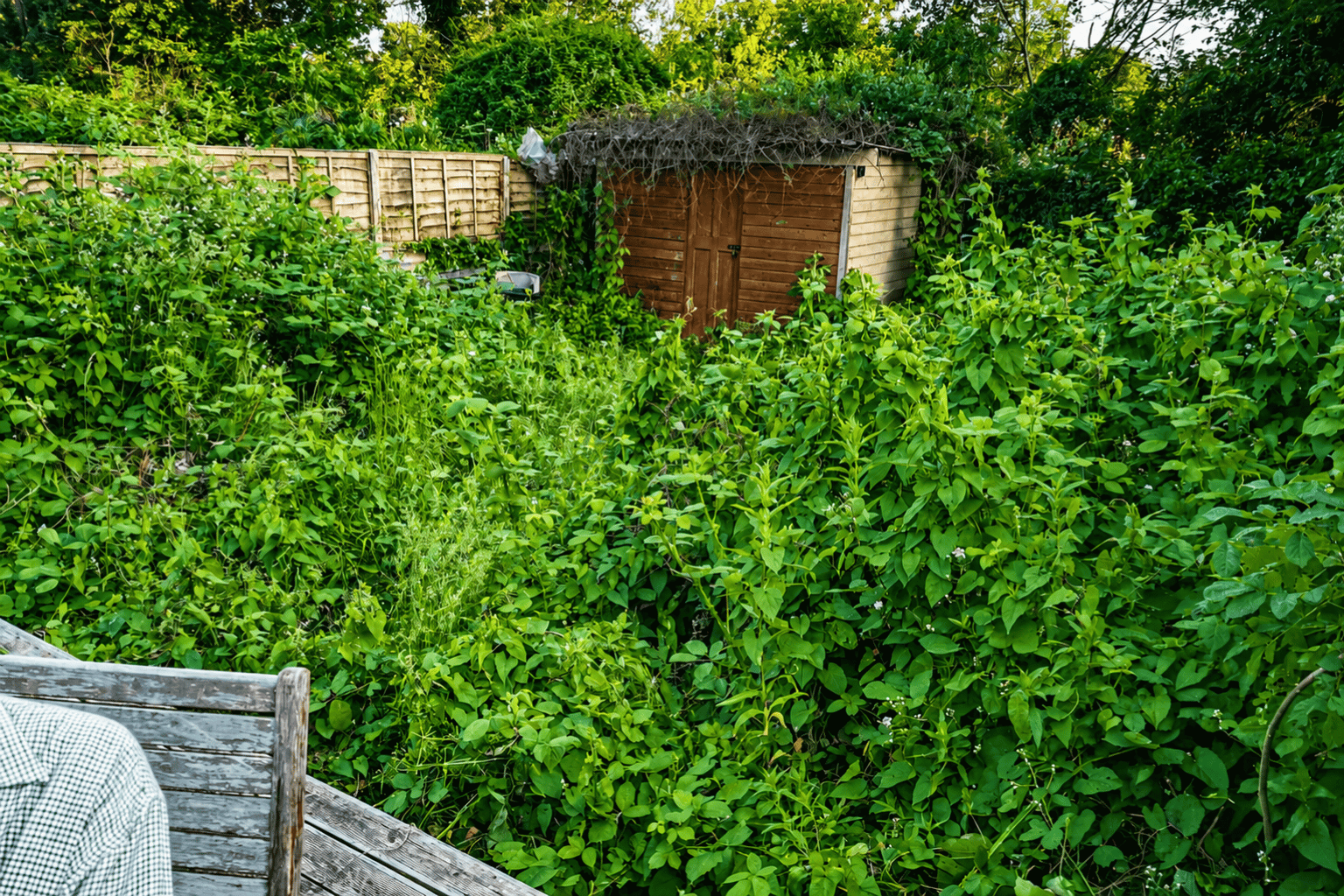
The check-in report recorded both gardens as being in good seasonal order, with photographs showing slight overgrowth on the front hedge and a few weeds in the rear borders. The check-out report and photographs showed both gardens overgrown, with weeds, a patchy lawn and an unclean patio with crayon residue.
The adjudicator found the tenant responsible for returning the garden to the same seasonal order it was in at the start. But the tenancy had started in autumn and ended in summer, and the check-in report itself recorded some existing overgrowth, neither of which is the tenant's responsibility.
The landlord was awarded 70 per cent of the amount claimed. The tenant had already agreed to £100 towards it, so the landlord received the difference.
What made the difference: the landlord won the argument on principle and still lost 30 per cent of the value, purely on timing and on what the check-in report had already admitted. If you are a landlord, that ratio is the realistic expectation, not full recovery.
What evidence actually works
If you are a landlord or agent
| Evidence | Why it matters |
|---|---|
| Detailed check-in inventory describing the garden | Not "garden: good". Describe the lawn, borders, hedges, paths and any structures separately. |
| Dated photographs at check-in and check-out | The single most common reason garden claims fail is having one set and not the other. |
| A specific garden clause in the agreement | Both cases above turned on the clause existing. Without one, there is little to enforce. |
| Itemised quotes and invoices | The work described must match the deterioration shown. A round-number quote for "garden tidy" invites a reduction. |
| Awareness of the seasons involved | Know that a summer check-out against a winter check-in will be discounted, and claim accordingly. |
If you are a tenant
- Photograph the garden when you move in, dated, including the bits that were already neglected. This is your single best protection.
- Read the garden clause at the start, not at the end. If it is vague, ask for it in writing.
- Photograph again before you leave, from the same angles.
- Keep receipts if you paid for garden work during the tenancy.
- Report structural problems in writing, in the moment. A fence that came down in a storm is the landlord's, but only if you can show you told them.
- You do not have to accept the first deduction offered. Every protected deposit comes with free, impartial adjudication.
What a good garden clause looks like
Vague clauses cause disputes. Specific ones prevent them. A workable clause names the tasks and the frequency rather than gesturing at a standard.
Weak: "The tenant shall keep the garden in good order."
Better: "The tenant shall cut the lawn at least monthly between April and September, keep borders and paths free of weeds, remove garden waste, and keep shrubs and hedges below head height. The landlord retains responsibility for fences, walls, paths, tree work and any task requiring specialist equipment."
The second version tells everyone what is expected, is realistic for a non-gardener, and gives an adjudicator something concrete to measure against.
For a larger or more complex garden, the practical answer is often a landlord-arranged maintenance visit built into the rent, which removes the argument entirely.
Managing several SE London properties? Scheduled maintenance visits across a portfolio cost less per property than one-off end-of-tenancy rescues, and they remove garden disputes from the equation. Talk to us about a schedule.
What garden work costs in South East London
Useful for landlords budgeting, and for tenants sanity-checking a deduction.
| Work | Our price | Typical situation |
|---|---|---|
| Garden maintenance | £83 first hour, £65 per hour after, no minimum | Scheduled upkeep between tenancies or during them |
| Garden clearance | £85 per hour, two-person team | End-of-tenancy rescue on a genuinely neglected garden |
| Green waste removal | £10 per 150-litre bag, £40 per bulk bag | Charged separately, itemised on the invoice |
| Fencing | £230–£280 per panel, £260 closeboard | Landlord responsibility, not a deposit deduction |
All quotes are itemised, so if you are claiming against a deposit you have an invoice that names the actual work rather than a lump sum. Based on the second case above, that detail is worth money.
For a fuller breakdown see our garden maintenance cost guide and garden clearance cost guide. If you are at the end of a tenancy specifically, our guide to end of tenancy garden clearance in South East London covers what that job actually involves.
Where to go for more
The National Residential Landlords Association publishes practical guidance on what landlords can and cannot claim from a deposit for garden damage, including how adjudicators assess it.
Your deposit scheme also publishes its own guidance and offers free adjudication. If your deposit is protected, and it must be within 30 calendar days in a government-authorised scheme, that route costs nothing to use.
Frequently asked questions
Yes, where the tenancy agreement required maintenance and the evidence shows genuine neglect rather than normal seasonal growth. Deductions must reflect actual loss, and the garden cannot be claimed back in better condition than it started. Adjudicators expect a detailed check-in inventory, dated photographs from both check-in and check-out, and itemised quotes.
The landlord, in almost all cases. Repairs to external areas such as fencing, walls and paths are the landlord's responsibility unless the tenant caused the specific damage. A fence blown down in a storm is not a tenant cost.
The landlord. Specialist or potentially dangerous work is not a tenant obligation unless the tenancy agreement explicitly says otherwise. Anything involving a protected tree needs council consent regardless of who pays.
Yes, and it is a recognised argument that adjudicators take seriously. A tenancy running from winter to late summer covers very different points in the growing season. It rarely defeats a claim outright where there is evidence of prolonged neglect, but it commonly reduces the award.
Then that is the benchmark. A tenant cannot be required to hand back a garden in better condition than they received it. This is exactly why check-in photographs matter to both sides.
For larger or more complex gardens, often yes. Building a scheduled visit into the arrangement removes the argument entirely, protects the property's condition between tenancies, and usually costs less over time than periodic rescue jobs.
30 calendar days from receiving it, in a government-authorised scheme. That protection is also what gives both sides access to free, impartial adjudication if a garden dispute arises.
Posts you might like
- End of Tenancy Garden Clearance in South East London
- How Much Does Garden Maintenance Cost in South East London? (2026 Price Guide)
- How Much Does Garden Clearance Cost in South East London? (2026 Price Guide)
- Garden Fence Blown Down? What to Do and What It Costs
- When to Call a Gardener vs a Tree Surgeon in SE London
- How to Prepare Your Garden for Sale in South East London

0 comments