

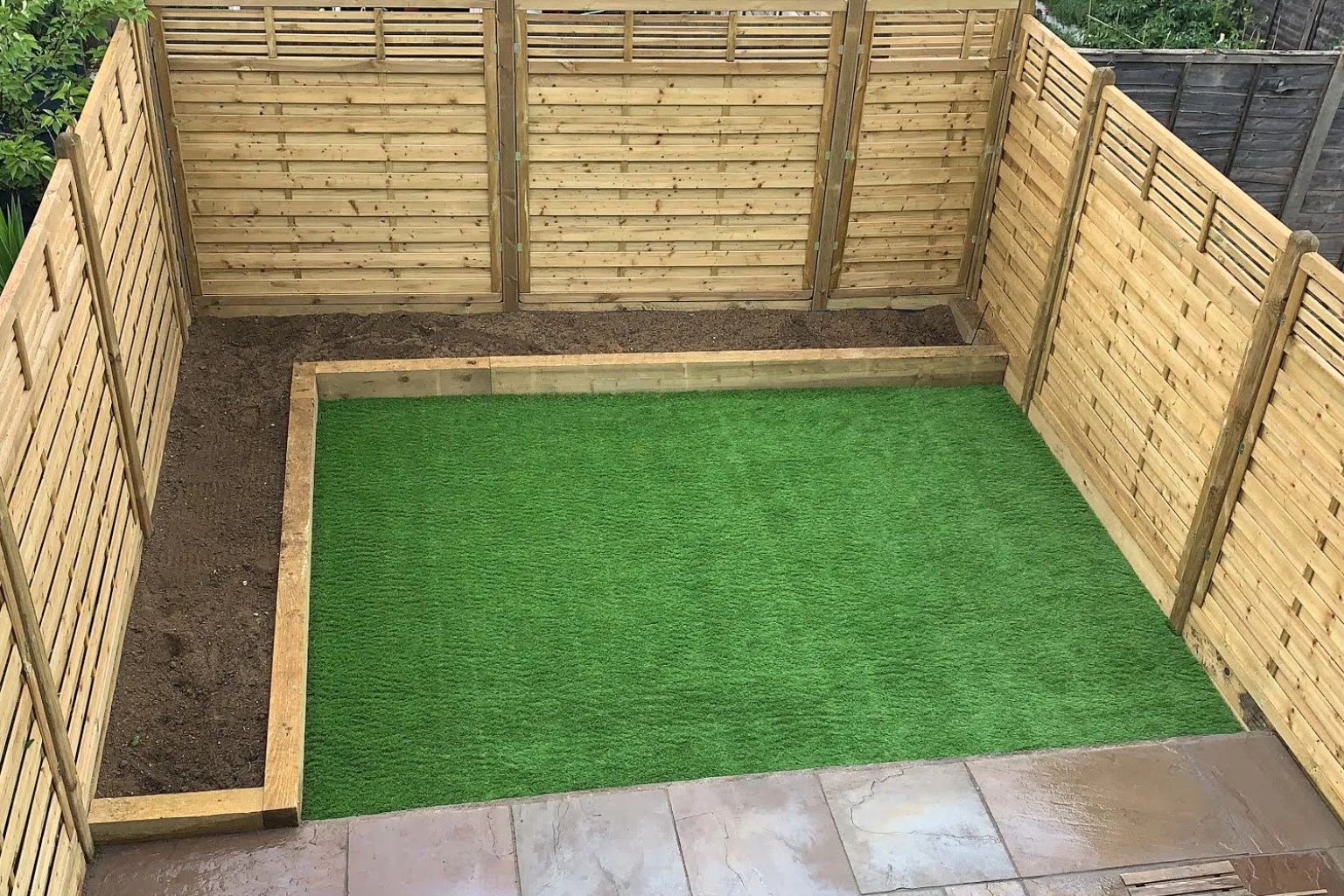
Quick answer: Brush the fibres every 1-2 weeks, rinse pet areas weekly, remove debris with a leaf blower or plastic rake, and apply weed control twice a year. A professional deep clean once a year keeps it fresh and extends the lifespan significantly.
Most SE London gardens that come to us with artificial grass problems have the same story: the lawn was installed a few years ago, it looked great for the first year, and then it slowly started going flat, smelling of dog, or growing moss along the edges. Not because the grass was bad - because nobody told the owner what to actually do after installation.
This guide fixes that. It covers the full routine: how often, what tools, how to handle pets, what to do each season in a UK climate, and the specific things that catch SE London gardens out - urban dust, clay drainage, overhanging trees, and shaded spots where moss takes hold faster than anywhere else.
Thinking about installing artificial grass in SE London? See our turfing service →
Does Artificial Grass Actually Need Maintenance?
Yes - but far less than a natural lawn. No mowing, no watering, no feeding, no scarifying. If you are still on natural grass and weighing up the switch, see our natural vs artificial grass guide for SE London - it covers the honest trade-offs.
What artificial grass does need is:
- Regular brushing to keep fibres upright
- Debris removal to protect drainage
- Rinsing to wash away dust, pollen, and pet waste
- Weed control twice a year along edges and seams
- A deep clean once a year (or more if you have pets)
Skip these and you will get compacted fibres, blocked drainage, moss growth along the edges, and odours that are very hard to remove once embedded. A small amount of regular maintenance protects what is usually a £1,000-£2,500+ investment. For a full breakdown of what artificial grass costs to install in SE London, see our 2026 artificial grass cost guide.
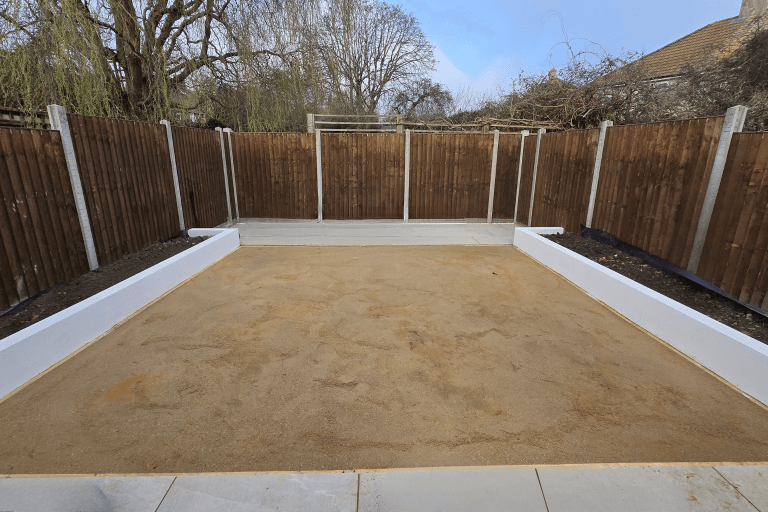
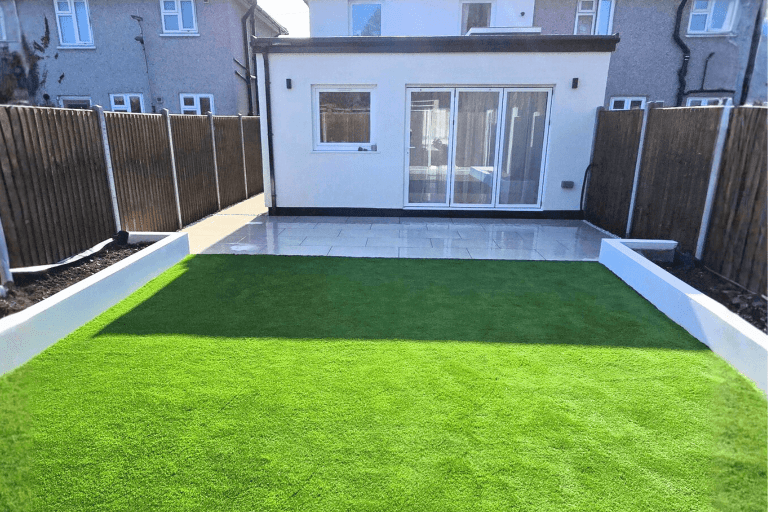
Back view
Front view
Artificial grass installation by Urban Gardeners.
Monthly Maintenance Checklist
This covers the core tasks. Do all of these regularly and your lawn will stay in good shape year-round.
Remove Leaves and Debris
Use a leaf blower, plastic rake, or stiff broom to clear the surface. Do not use a metal rake - it damages the fibres.
Organic build-up is the main enemy of artificial grass. Leaves, twigs, and dirt block the drainage holes beneath the turf, which leads to waterlogging and moss. In SE London, where we get significant rainfall and many gardens have overhanging trees, this is especially important through autumn. Gardens in Lewisham, Catford, and Forest Hill in particular tend to have heavy tree cover - if that sounds like your garden, clear debris weekly through October and November.
Trim back any overhanging branches where you can. It makes a big difference to how often you need to clear the lawn.
Brush the Fibres
Use a stiff brush or a specialist artificial grass brush to brush against the grain - that means brushing in the opposite direction to how the fibres naturally lie. This lifts them back upright and keeps the lawn looking natural rather than flat and matted.
For a small SE London terrace garden, a stiff broom takes five minutes. For larger areas, a power brush speeds things up considerably.
How often: every 1-2 weeks in areas of regular use. High-traffic zones - where kids play, where pets run the same path repeatedly - need it more often.
Rinse the Surface
A quick hose down washes away dust, pollen, and surface dirt. In SE London, urban pollution means dust accumulates faster than in rural areas, so a rinse every couple of weeks keeps the colour fresh.
For a deeper clean, use a diluted mix of water and a small amount of washing-up liquid. Rinse thoroughly afterwards. Avoid bleach and harsh chemicals - they degrade the fibres over time.
Pet Owners: Extra Steps
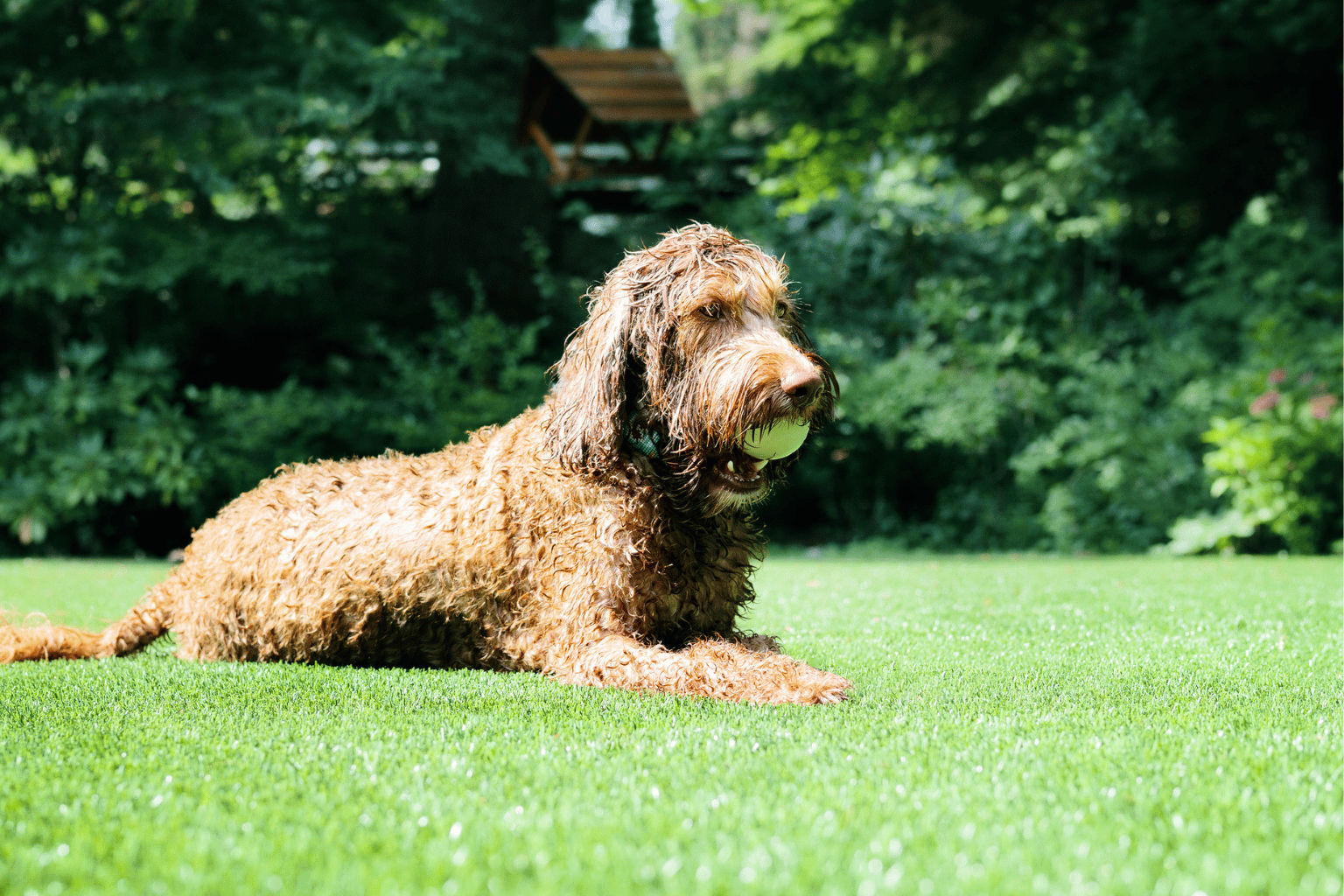
If you have dogs, artificial grass needs more attention than the standard routine. Dog urine in particular builds up bacteria and odour in the infill over time, even though it drains through.
Weekly for pet areas:
- Rinse the areas your dog uses most with a hose
- Use a pet-safe artificial grass cleaner or diluted white vinegar (50/50 with water) to neutralise odour
- Remove solid waste immediately - the longer it sits the harder it is to clean
Monthly for pet areas:
- A more thorough rinse of the entire lawn
- Check the infill depth in high-use zones - dogs running the same path repeatedly compact the infill and the surface becomes uneven
What to avoid:
- Do not use disinfectants containing phenol - toxic to dogs
- Do not use bleach - damages fibres and harmful to pets
- Do not use boiling water - can damage the backing
If your artificial lawn has developed a persistent odour that rinsing is not shifting, a professional deep clean with specialist enzyme-based cleaner is the most effective solution. Get in touch and we can help.
Tools You Need
You do not need much. Here is what is worth having:
| Tool | What It Does | Notes |
|---|---|---|
| Stiff bristle brush | Lifts fibres, removes debris | Avoid wire bristles |
| Plastic rake | Leaf and debris removal | Never use metal |
| Leaf blower | Fast debris clearing | Useful if you have trees nearby |
| Garden hose with spray attachment | Rinsing and cleaning | A jet setting helps shift stubborn dirt |
| Pet-safe turf cleaner | Odour and bacteria control | Worth buying if you have dogs |
| Weed killer (artificial grass-safe) | Edge and seam weed control | Always patch test first |
Weed Prevention and Edge Care
A good artificial grass installation includes a weed membrane underneath, which stops the vast majority of weed growth through the turf. What the membrane does not stop is weeds growing in from the edges and seams.
In SE London's damp climate, moss and weeds along the edges are common, especially in shaded gardens. Here is how to keep them under control:
- Inspect edges and seams every month during spring and autumn
- Pull out any small weeds by hand as soon as they appear - they are much harder to deal with once established
- Apply a pet-safe, artificial grass-compatible weed killer along edges twice a year - once in spring, once in autumn
- Always do a patch test before applying any product to the full edge
If moss appears on the surface itself (usually in heavily shaded areas), treat with a diluted moss killer suitable for synthetic turf. Avoid anything that contains iron sulphate - it can stain the fibres.
If the weed or moss problem has gone beyond what DIY treatment can handle, our garden maintenance team covers artificial grass edge care as part of a regular maintenance visit.
Seasonal Maintenance Guide for SE London
The UK climate means your maintenance routine should shift through the year. Here is what to focus on each season.
Spring
Spring is the most important maintenance window of the year. After a UK winter, fibres will be flat and the surface will need a proper refresh.
- Full brush of the entire lawn to lift winter-flattened fibres
- Thorough rinse to wash away winter grime and salt residue
- Inspect for any damage from frost or heavy foot traffic
- Check infill depth - top up with silica sand or rubber crumb if needed
- Apply weed killer along edges before the growing season gets going
- If you have a shaded area with moss, treat it now before it spreads
Spring is also a good time to book a garden clearance if the surrounding beds and borders have become overgrown over winter - debris from neglected borders ends up on the artificial grass and accelerates maintenance problems.
Summer
Summer is generally the easiest season for artificial grass maintenance. The main concerns are heat and UV.
- Rinse more frequently in hot weather to cool the surface and wash away dust
- In extreme heat (30c+), the surface can get hot underfoot - rinse before children or pets use it
- Check for any colour fading in areas of direct sustained sun - this is more common on cheaper grades of artificial grass
- Keep up the brushing routine - UV and heat can speed up fibre flattening in high-use areas
If your garden also has a patio or decking alongside the artificial grass, summer is the right time for a patio clean - the full outdoor space looks best when both surfaces are maintained together.
Autumn
Autumn is the busiest maintenance season. Fallen leaves are the main issue.
- Clear leaves every week - daily if you have a tree directly overhanging the lawn
- Leaves left on artificial grass decompose, block drainage, and create conditions for moss and weed growth
- Check drainage is working properly after heavy rain - water should clear within a few seconds of stopping
- Trim overhanging branches if the leaf problem is severe
Winter
- Remove snow promptly with a plastic shovel or soft broom - avoid metal tools which damage the fibres
- Use a pet-safe de-icer sparingly if ice builds up - standard rock salt can damage the infill over time
- Do not use boiling water to melt ice - damages the backing
- Reduce foot traffic on frozen turf where possible - fibres are more brittle in very cold weather
- Drainage issues show up most in winter - if water is pooling, the sub-base or drainage layer may need professional attention
Stains and Spills: How to Clean Them
Act quickly and most stains come out easily. Wait and they set into the infill. Here is the full reference:
| Stain Type | Method | Important Notes |
|---|---|---|
| Mud, food, drinks | Blot (do not rub), rinse with cold water. Stubborn marks: diluted washing-up liquid, scrub gently, rinse thoroughly | Always blot inward - rubbing spreads it |
| Oil and grease | Diluted household ammonia in water, rinse well | Large spills: use a specialist turf cleaner |
| Pet waste (solid) | Remove immediately, rinse area, apply enzyme-based pet cleaner | Do not leave - bacteria sets fast in infill |
| Pet urine | Rinse immediately, follow with diluted white vinegar (50/50) or enzyme cleaner | Weekly routine prevents odour building up |
| Chewing gum | Freeze with an ice pack, break off carefully with a blunt tool | Do not pull - tears fibres |
| Water-based paint | Rinse immediately while still wet | Once dry it is very hard to remove |
| Oil-based paint | Professional clean needed | Home methods will not shift it |
| Rust stains | Specialist rust remover for synthetic turf | Prevention is easier - avoid metal furniture direct on turf |
| Moss | Diluted moss killer safe for synthetic turf, scrub, rinse | Avoid iron sulphate - stains fibres permanently |
Never use on artificial grass: Bleach, acetone, nail polish remover, harsh solvents, boiling water, or any metal tools. All of these damage fibres, degrade the backing, or harm pets using the lawn afterwards.
How to Revive a Tired-Looking Artificial Lawn
If your artificial grass is looking flat, dull, or matted and you have not been keeping up maintenance, it can usually be brought back. Here is the process:
- Remove all debris with a leaf blower and plastic rake
- Do a thorough rinse to remove surface dirt and dust
- Apply a diluted cleaning solution and scrub with a stiff brush
- Rinse thoroughly
- Brush the entire surface against the grain to lift fibres
- Check infill depth and top up if needed - thin infill is a common cause of a flat, lifeless appearance
- If moss or weeds are present, treat them before doing anything else
If the fibres are severely matted or damaged, or if the lawn is more than 10 years old, a professional assessment makes sense before spending time on a home revival.
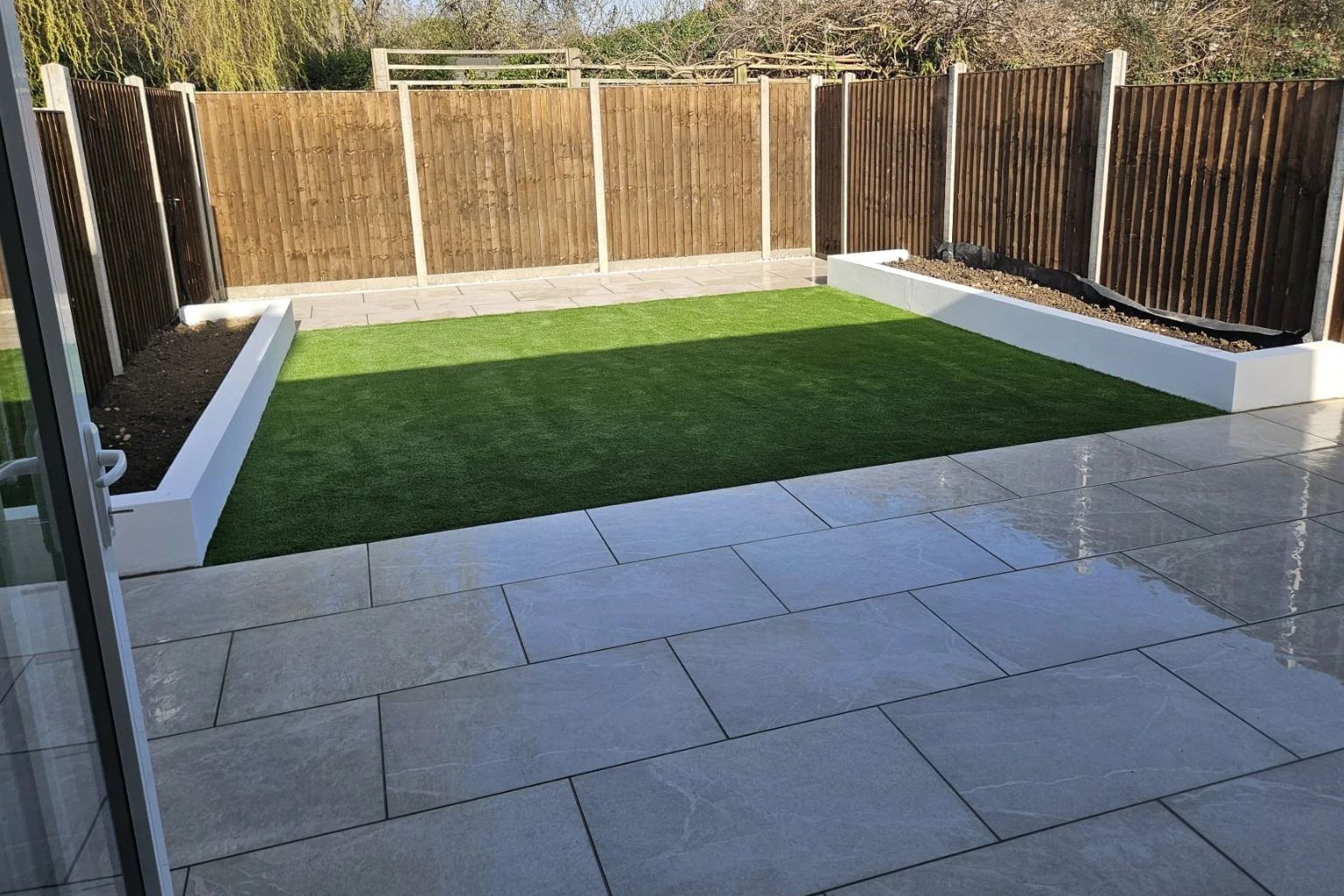
Artificial grass installation by Urban Gardeners.
When to Call a Professional (and What It Costs to Ignore It)
Most artificial grass maintenance is DIY-friendly. But some problems get worse and more expensive the longer you leave them. Here is how to read the signs:
Your lawn smells and rinsing is not fixing it.This means bacteria has embedded into the infill - usually from dog urine over time. A home rinse moves surface contamination but does not reach the infill layer. A professional deep clean with enzyme-based treatment breaks down the bacteria at the source. Left untreated, the smell gets worse every warm day and the only fix eventually becomes infill replacement, which costs significantly more than a clean.
Water is pooling after rain and not draining away.Healthy artificial grass drains within seconds of rain stopping. If water sits for minutes or hours, the drainage layer beneath is blocked - usually from compacted organic debris or a failing sub-base. This is a professional job. Trying to fix it yourself without understanding what is underneath risks making it worse.
The seams are lifting or edges are coming away.This is a repair job, not a maintenance job. Lifted seams let in weeds, look bad, and become trip hazards. A professional can re-bond seams and edges properly. Left alone, the damage spreads along the full seam.
The lawn feels hard and crunchy underfoot.Compacted or depleted infill. The infill - silica sand or rubber crumb - is what gives artificial grass its cushioning and keeps fibres upright. When it compacts or breaks down, the surface goes hard and the fibres collapse. Topping up infill is a professional service because it needs to be applied evenly and brushed in correctly - uneven infill creates patches and drainage problems.
The lawn is 8-10+ years old and looking tired.An older lawn that has been maintained well can be professionally revived - deep clean, new infill, full brush. One that has been neglected at this age usually needs a replacement assessment. We can tell you which applies after a quick look. If replacement is needed, our turfing service covers full artificial grass removal and reinstallation across SE London.
We carry out artificial grass maintenance, deep cleaning, infill top-ups, and seam repairs across SE London. If you are not sure what your lawn needs, send us a few photos and we will give you an honest assessment.
Thinking About Installing Artificial Grass?
If you are still on natural grass and considering the switch, see our honest comparison: natural grass vs artificial grass for South East London gardens.
For the seven most practical reasons SE London homeowners make the switch, see our post on why to install artificial grass in South East London.
We install both natural and artificial turf across SE London - Greenwich, Lewisham, Bromley, Bexley, Eltham, Catford, Woolwich and surrounding areas. See our full turfing service page for what is included and how the process works, or check our areas we cover page for your postcode.
For cost information, our artificial grass cost guide for South East London covers typical prices by garden size.
If you are planning a full garden transformation alongside the artificial grass, see our garden makeover guide for SE London which covers the full process and costs.
Frequently Asked Questions
Less than other seasons, but yes. Remove snow with a soft broom or plastic shovel, keep leaves cleared, and avoid metal tools on frozen fibres. If you have pets, keep up the weekly rinse routine year-round.
Rinse pet areas weekly with a hose and use a pet-safe enzyme-based cleaner monthly. The enzymes break down the bacteria that cause odour rather than just masking it. If the smell is embedded in the infill, a professional deep clean is the most effective solution.
Yes, on a low setting. A pressure washer is effective for a deep clean but use it carefully - too high a pressure can dislodge infill and damage the fibre backing. A regular garden hose is sufficient for routine rinsing.
A quality installation with regular maintenance lasts 15-20 years. Budget artificial grass or installations without proper sub-base preparation typically last 7-10 years regardless of maintenance.
Flat fibres are caused by heavy use, insufficient brushing, or low infill levels. Regular brushing against the grain and topping up the infill usually resolves it. If the fibres are permanently kinked or damaged, that section may need replacing.
Not through the turf itself if a weed membrane was installed properly underneath. Weeds can grow in from the edges and seams where organic matter accumulates. Regular edge inspection and twice-yearly weed killer application keeps this under control.
Remove any food debris immediately. Rinse the area with cold water. For grease or oil marks, use a diluted washing-up liquid solution, scrub gently, and rinse thoroughly. Make sure your BBQ is on a stand that does not sit directly on the turf - sustained heat from a BBQ base can melt or distort the fibres.
About Urban Gardeners
We are a South East London gardening and landscaping company based in Eltham SE9, working across Greenwich, Lewisham, Bromley, Bexley, and surrounding areas since 2014. We install both natural and artificial turf and carry out garden maintenance and garden clearance across SE London.
111+ verified Google reviews. Fully insured. Free site visits.

0 comments