


At some point, most South East London homeowners reach a decision point with their lawn. Maybe it's recovered badly from a wet winter. Maybe it's never really worked - too shaded, too compacted, too much foot traffic. Or maybe you're starting fresh with a new property and want to get it right from the beginning.
The question is always the same: natural turf or artificial grass? The honest answer is that neither is universally better. The right choice depends on how your specific garden is used, what the soil and drainage are like, and how much ongoing maintenance you're willing to do.
If you're considering turf or artificial grass installation in South East London, our team provides expert ground preparation and professional installation tailored to local soil conditions. Below is a practical, SE London-specific breakdown to help you make the right call for your garden.
Quick Summary: Which One Suits Your Garden?
Choose natural grass if you want:
- a living lawn that feels soft and cool in summer
- better support for local biodiversity (worms, birds, soil life)
- the option to overseed, repair, and evolve the lawn over time
- the most “authentic” look up close
Choose artificial grass if you want:
- year-round green with minimal upkeep
- a tidy, mud-free space for kids and pets
- a lawn that stays usable in heavy footfall zones
- predictable results in awkward spaces (tiny courtyards, shaded strips)
What South East London Gardens Need In Spring
South East London gardens vary a lot: Victorian terraces with long, narrow lawns; new-build courtyards; shaded patches from fences, extensions, and mature trees. Spring also tends to bring a mix of sunshine and sudden rain, which makes drainage and ground preparation a big deal.
Two spring realities that influence your choice:
1) Drainage matters more than you think
If your garden sits on compacted soil or has poor fall (slope), natural grass can get waterlogged and patchy. Artificial grass can also fail if the base isn’t built properly and water can’t move through.
For drainage basics and flood risk info, the UK Environment Agency is a useful starting point.
2) Shade is the silent lawn killer
Many South East London gardens have partial shade for most of the day. Natural lawns in shade can thin out, get mossy, and need more care. Artificial grass can look consistent in shade, but it may encourage algae growth if debris isn’t cleared.
For general lawn care and shade-lawn tips, the RHS is a solid reference.
Natural Grass (Real Turf)
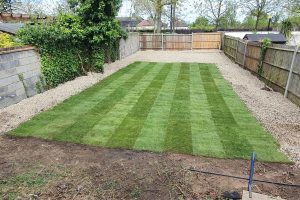
Natural turf remains the most traditional and environmentally friendly option for South East London gardens. For homeowners who value authenticity, biodiversity and a living landscape, real grass is hard to beat.
✅ Why Homeowners Choose Natural Grass
Natural Appearance & Feel
Nothing fully replicates the look and softness of real grass. It changes with the seasons and feels authentic underfoot.
Better for Biodiversity
Natural lawns support soil life, insects and improve local ecosystems, especially important in urban areas like Greenwich, Lewisham and Dulwich.
Lower Initial Installation Cost
Turf installation is typically more affordable upfront than artificial grass installation.
Cooler in Summer
Unlike artificial grass, real grass does not retain heat.
⚠️ Things to Consider Before Choosing Natural Turf
Ongoing Maintenance
Regular mowing, feeding, watering and seasonal care are required.
Can Become Patchy
Heavy use, pets or poor drainage (common in London clay soil) can cause wear and muddy areas.
Weather Dependent
Wet winters can cause waterlogging. Dry summers can cause browning.
Artificial Grass
Artificial grass has become increasingly popular in South East London, particularly for small gardens and busy households looking for a low-maintenance solution.
✅ Why Homeowners Choose Artificial Grass
Low Maintenance
No mowing. No watering. No feeding. Ideal for busy homeowners.
Year-Round Green Appearance
It stays visually consistent in all seasons.
Durable for Pets & Heavy Use
Suitable for families with children and dogs.
Good for Poor Drainage Areas
With proper sub-base preparation, artificial grass can help manage drainage better than compacted soil.
❌ Things to Consider Before Choosing Artificial Grass
Higher Upfront Cost
Installation requires excavation, membrane layers and a solid sub-base.
Can Get Hot in Summer
Artificial turf can retain heat during very warm weather.
Not Environmentally Natural
It does not support biodiversity and is plastic-based.
Limited Lifespan
Most artificial grass products last around 15–20 years before replacement.
Side-by-side Comparison Table (South East London Edition)
Factor | Natural Grass | Artificial Grass |
|---|---|---|
Up-front cost | Usually lower | Usually higher (materials + base) |
Ongoing cost | Mower, feed, reseeding, water in dry spells | Occasional brushing, rinse/cleaning, infill/top-up sometimes |
Looks in spring | Fresh and bright, but can be patchy after winter | Consistent, photo-ready |
Mud in wet weather | Possible, especially in clay/compacted soil | Low, if base drains properly |
Shade performance | Often struggles | Usually fine, but can grow algae if neglected |
Pet friendliness | Great, but can scorch/burn with urine patches | Easy day-to-day, but needs rinsing to avoid odour |
Heat in summer | Cooler | Can run warmer in direct sun |
Repairs | Reseed/returf patches | Usually requires lifting/replacing sections |
Eco impact | Supports soil life | Plastic-based, end-of-life considerations |
Not Sure Which Lawn Is Right for Your Garden?
Every South East London garden is different, from heavy clay soil in Lewisham to compact urban spaces in Peckham and Greenwich. The right choice depends on drainage, usage, sunlight and long-term maintenance preferences.
Explore our services: Turf Installation, Artificial Grass Installation and Garden Landscaping.
The make-or-break Factor: Ground Preparation
If you take one thing from this article, make it this: most “bad lawns” (real or artificial) are actually “bad bases.”
For natural grass: spring prep that makes a visible difference
Aerate compacted areas (especially common in London gardens)
Level shallow dips that collect water
Top-dress thin patches and overseed
Feed lightly once growth starts
Mow higher at first (don’t scalp it)
If moss is a big issue, it’s often a sign of shade + compaction + damp.
For artificial grass: a proper base is non-negotiable
A quality install generally includes:
removing existing turf/soil to a stable depth
installing a well-compacted sub-base (often a crushed aggregate)
adding a levelling layer (often grit/sand)
ensuring fall (slope) away from the house where needed
weed membrane where appropriate
correctly joined seams and secure edges
If an installer skips base depth or compaction, that’s where puddles and sinking start.
Cost Comparison in South East London
While prices vary depending on garden size and ground conditions:
- Natural turf installation is typically more affordable upfront.
- Artificial grass installation costs more initially due to groundwork and materials.
However, artificial grass may save maintenance costs over time.
For a full breakdown of costs by garden size, see our 2026 turfing price guide for SE London.
The only way to know what’s right for your garden is through a proper site assessment.
What Works Best For Common South East London Garden Types
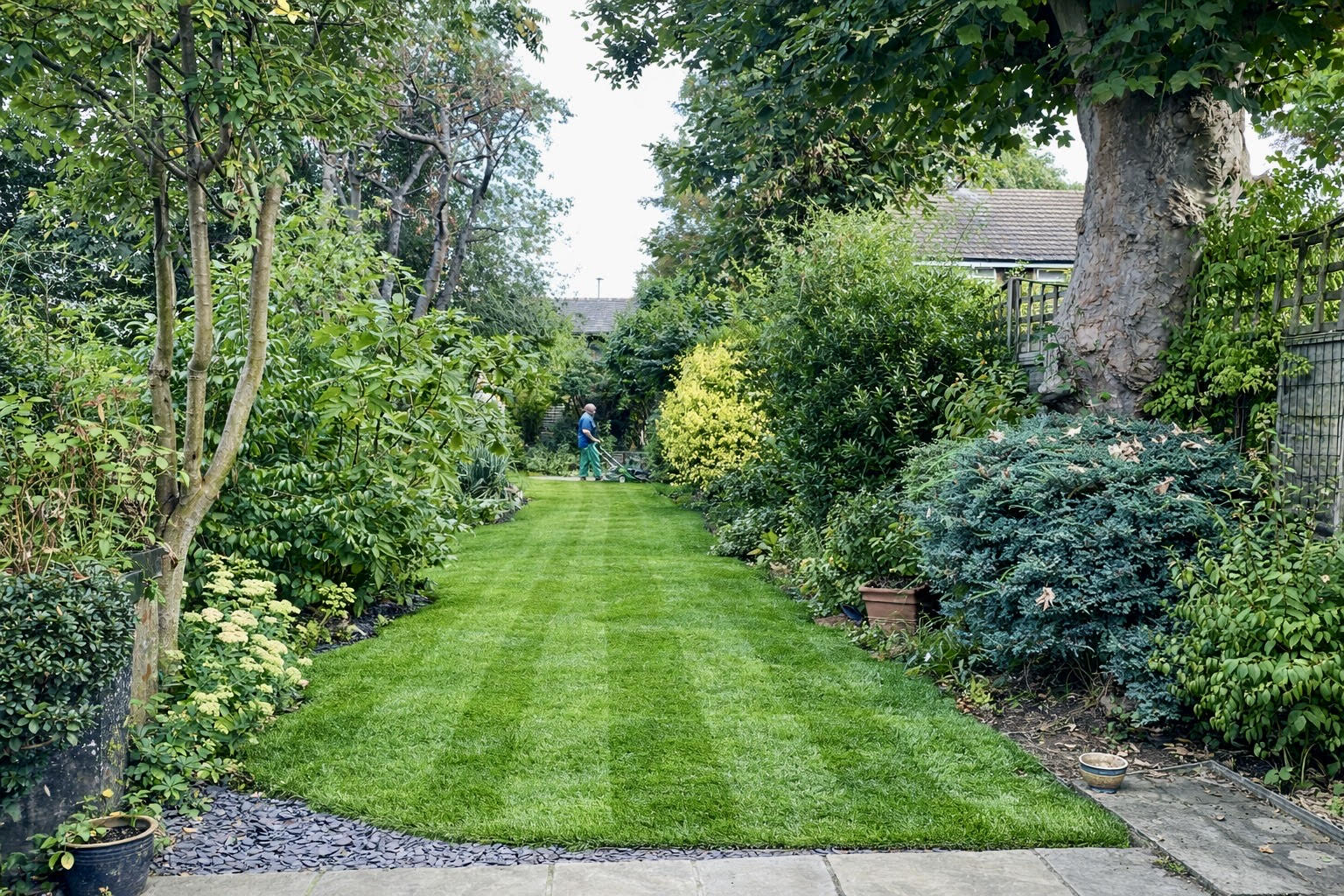
Long, narrow terraced gardens
Natural grass works well if you get decent sun and don’t have constant foot traffic down the middle.
Artificial grass can suit if the lawn is basically a walkway-to-the-shed and gets worn fast.
Tip: adding stepping stones or a slim path can protect real lawns from “traffic lines.”
Shaded gardens (extensions, fences, big trees)
Artificial grass often wins for consistent appearance.
Natural grass is possible, but you’ll need shade-tolerant seed mixes and realistic expectations.
Small courtyards and low-maintenance makeovers
Artificial grass can create a soft “green room” effect.
Natural grass can work too, but it’s less forgiving in tiny spaces with shade and compaction.
Family + dog gardens
Artificial grass is brilliant for keeping things tidy, but plan for rinsing and odour control.
Natural grass feels nicer and stays cooler, but you may battle urine spots and mud in wet spells.
Hybrid Option: Often The Best Of Both
A lot of South East London gardens do well with a blended approach:
artificial grass in the highest-traffic zone (near the back door, play area)
natural planting beds and borders around the edges
a small real-lawn patch where it actually gets sun
paths/stepping stones to protect the rest
This keeps the garden practical without turning the whole space into one surface.
A Simple Decision Checklist (Use This In 60 Seconds)
Natural grass is probably right if…
you can commit to mowing during peak growth
you want a cooler surface in summer
you’re okay with seasonal changes
your lawn gets decent sun and doesn’t stay soggy
Artificial grass is probably right if…
you want the garden looking neat all year with minimal effort
your lawn gets destroyed by foot traffic or pets
you have a shaded area that never thrives
you’re happy to invest upfront for a consistent finish
Spring Makeover Ideas That Pair Well With Either Choice
Fresh edging: crisp borders instantly make any lawn look “new”
Raised beds: adds structure and reduces lawn area (less upkeep)
A defined seating zone: patio or gravel area for furniture
Lighting: low-level solar or wired lights for evening use
Vertical planting: climbers on fences make small gardens feel bigger
For planting inspiration and seasonal garden tasks, you’ll find solid guidance here.

Frequently Asked Questions About Natural vs Artificial Grass in South East London
Yes, if installed correctly.
Artificial grass itself drains well, but the base underneath must be properly excavated, compacted and graded. Without correct sub-base preparation, water can pool and cause sinking.
In South East London, proper drainage design is essential due to compacted and clay-heavy ground conditions.
Generally:
Natural turf installation has a lower upfront cost.
Artificial grass installation costs more initially due to excavation and base layers.
However, artificial grass may reduce long-term maintenance costs. The right option depends on how long you plan to stay in the property and how much upkeep you’re willing to do.
Most quality artificial grass installations last 15–20 years when properly installed and maintained.
Lifespan depends heavily on:
Installation quality
Drainage
Foot traffic
Pet use
Poor base preparation is the main reason artificial lawns fail early.
Artificial grass can get warmer than natural grass in direct sunlight.
In most South East London gardens, this is manageable, but in full-sun, enclosed spaces, it’s something to consider. Lighter-coloured turf and good airflow can reduce heat retention.
Natural grass stays cooler naturally.
Yes, many homeowners choose artificial grass for dog-friendly gardens because:
It prevents muddy paws
It handles heavy use well
It’s easy to rinse clean
However, proper drainage and occasional rinsing are important to prevent odours.
It can, but expectations matter.
Gardens shaded by extensions, fences or mature trees often struggle with thinning and moss. Shade-tolerant seed mixes help, but results vary.
If your lawn never sees consistent sunlight, artificial grass may provide a more reliable finish.
In most standard residential gardens, planning permission isn’t required.
However, if major drainage changes are involved or you’re in a listed property or conservation area, it’s always best to check local guidance.
Ground preparation.
Whether you choose natural turf or artificial grass, the long-term success of your lawn depends on:
Proper excavation depth
Stable sub-base
Correct fall (slope) for drainage
Edge security
Most lawn problems are actually base problems.
We operate across South East London, including Bromley, Bexley, Dartford, Orpington, and surrounding areas.
You can view the full list on our Service Area Coverage page.
The best first step is a site assessment.
Every South East London garden is different, from compact terraces in Peckham to larger plots in Lewisham and Greenwich. Soil type, sunlight and usage patterns all affect the right solution.
We offer free on-site lawn surveys where we assess your garden and recommend the best option based on real conditions, not guesswork.
👉 Get in touch to book your free assessment and see what will work best for your space.
How Our South East London Lawn Specialists Can Help
Choosing between natural turf and artificial grass isn’t just about appearance - it’s about soil conditions, drainage, usage and long-term maintenance.
We provide:
- Professional turf installation
- Artificial grass installation
- Ground preparation & drainage correction
- Lawn replacement for worn or patchy gardens
- Full garden landscaping if you’re redesigning the space
Whether you want a low-maintenance solution or a living, natural lawn, we’ll recommend the best option for your specific garden.
Ready to choose the right lawn and get it installed properly? Get in touch and book your free on-site lawn survey today.
You Might Also Like
Rats Moving Into Overgrown South East London Gardens Before Winter: What Actually Stops Them
Leaning Fence Post in SE London? The Screwdriver Test Decides the Fix

0 comments