

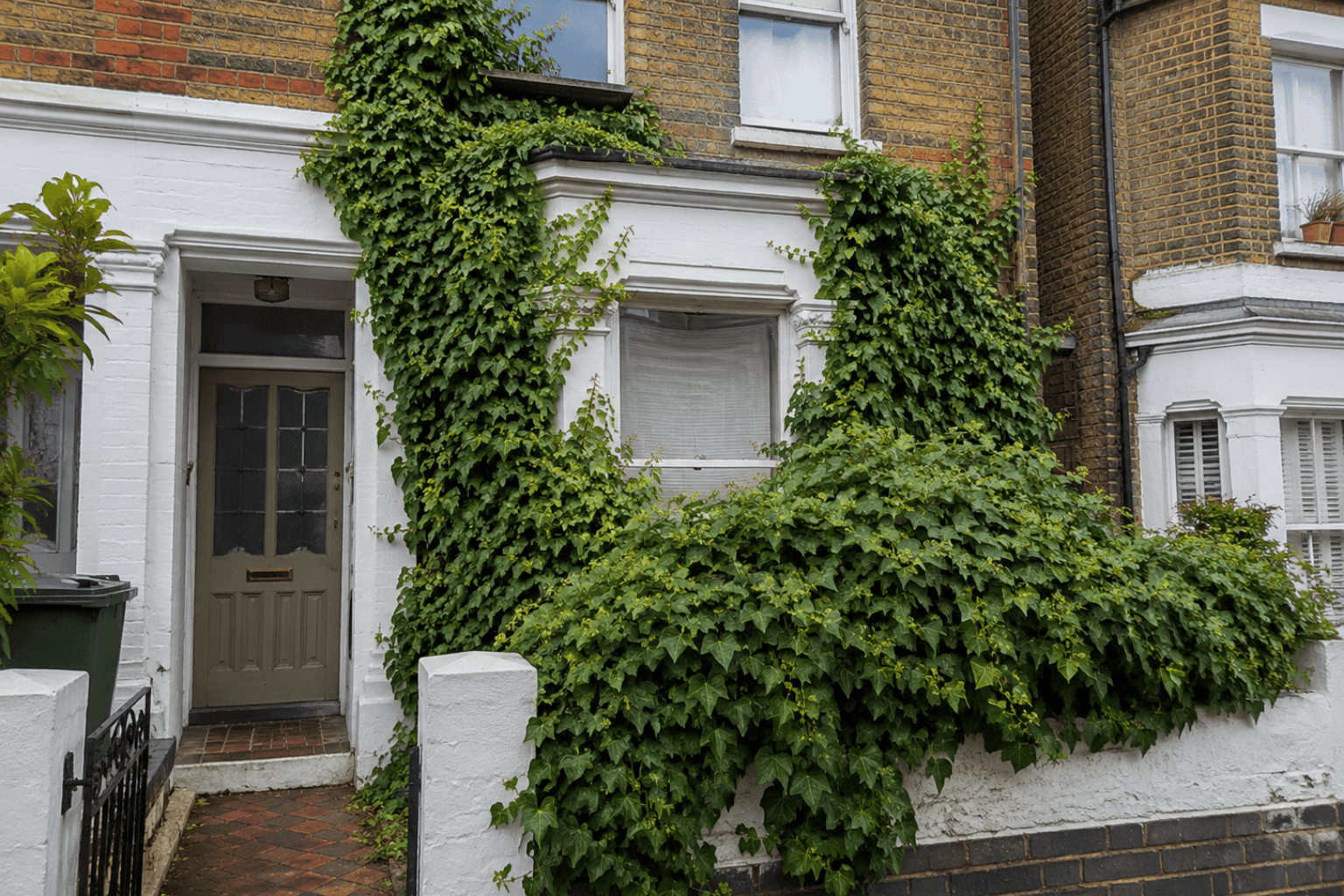
Ivy looks charming until it starts pulling mortar out of your brickwork, rotting your fence panels, strangling a tree, or providing a home for rats behind a thick mat of growth you cannot see through. By the time most SE London homeowners call us, the ivy has been left long enough that a quick trim is no longer an option and it needs proper removal.
This guide gives you our actual 2026 rates, explains what drives the cost up or down depending on where the ivy is growing, and covers the practical stuff most guides skip: what happens to the wall or fence underneath, whether the ivy will come back, and when you should leave it alone.
The Quick Version
- Our rate: £80-£85 per hour, 2-person team, all tools included. Fixed price available for some jobs
- Typical jobs: 2-4 hours for a fence or single wall, 4-8 hours for heavy coverage on a house or multiple boundaries
- Typical cost range: £160-£680 depending on coverage, height and access
- Waste disposal: quoted separately based on volume, confirmed before we start
- The key factor: how long the ivy has been growing. Recent growth pulls off easily. Established ivy with thick woody stems and aerial roots embedded in mortar is a different job entirely
- Ready to get a quote? Send us photos and we will reply within 24 hours
How Much Does Ivy Removal Cost in South East London?
We charge £80-£85 per hour for ivy removal with a 2-person team, all tools included. Depending on the job, we sometimes offer a fixed price instead of hourly, particularly for larger or more clearly defined jobs where we can assess the scope accurately from photos. We will let you know which pricing structure applies when we quote. The total cost depends on how much ivy there is, where it is growing, and how long it has been established.
| Ivy location | Typical time | Typical cost |
|---|---|---|
| Ivy on a garden fence (one boundary, light to moderate) | 2-3 hours | £160-£255 |
| Ivy on a single wall (ground floor, moderate coverage) | 2-4 hours | £160-£340 |
| Ivy on a rear wall with fence boundaries (typical SE London terrace) | 3-5 hours | £255-£425 |
| Heavy ivy coverage (multiple walls, thick established growth) | 5-8 hours | £425-£680 |
| Ivy on trees (cutting at base plus accessible removal) | 1-3 hours | £85-£255 |
Waste disposal is quoted separately and confirmed before we start. Ivy generates a surprising amount of bulk waste, especially thick, woody growth that does not compress easily.
These are our actual rates, not national averages. For a full breakdown of all our service pricing, see our complete gardener cost guide for South East London.
What Affects the Cost?
Five things make the difference between a 2-hour job and a full day.
1. How established the ivy is. This is the biggest factor. Ivy that has been growing for a year or two pulls away relatively easily with hand tools. Ivy that has been growing for a decade or more develops thick, woody stems (sometimes as thick as a wrist), deep aerial roots that embed into brickwork and mortar, and dense mats of growth that weigh far more than people expect. Removing established ivy takes significantly longer and requires more care to avoid damaging the surface underneath.
2. Where it is growing. Ivy on a garden fence is the simplest job because fences are accessible from both sides and the ivy can usually be pulled away without worrying about the surface (the fence was likely being damaged by the ivy anyway). Ivy on a brick wall is more delicate because the aerial roots bond to the mortar and aggressive removal can pull pointing out with it. Ivy on a tree requires cutting at the base and leaving the upper growth to die before removal, which may need a follow-up visit.
3. Height and access. Ground-floor ivy is straightforward. Ivy that has reached the first floor, the gutters, or the roofline adds time and may need ladders or extended reach tools. In many SE London terraced properties, rear access is through the house only, which affects how quickly the team can work and how waste is removed.
4. What is underneath. Removing ivy from a sound brick wall is different from removing it from old, crumbling mortar, painted render, or a wooden fence that has started to rot behind the growth. If the surface is fragile, the work needs to be slower and more careful to avoid making the damage worse. We always assess the surface condition before starting and will let you know if the wall or fence is likely to need repair after the ivy comes off.
5. Waste volume. Ivy is deceptively heavy, particularly thick woody stems. A single wall of established ivy can fill several large waste bags. Disposal is quoted separately and varies by volume.
Ivy on Walls: What You Need to Know
Ivy on walls is the most common removal job we handle across SE London, and it is also the one where people worry most about what will be left behind.
The honest truth about ivy and brickwork: ivy does not usually damage sound, well-pointed modern brickwork. The aerial roots grip the surface but do not penetrate solid mortar. The real damage happens when ivy grows into already-weakened mortar joints, gaps around windows, under roof tiles, or into gutters. Once it gets into cracks, it expands them as it grows. Old Victorian and Edwardian brickwork (common across Lewisham, Greenwich, Brockley, Blackheath and surrounding areas) is more vulnerable because the lime mortar is softer than modern cement.
What to expect after removal: once the ivy is off, you will see the aerial root traces left on the brickwork. These are small, hair-like marks that cling to the surface. On unpainted brick, they weather away over a few months. On painted surfaces, they are more visible and may need scrubbing or repainting. If the mortar was already failing, you may see gaps where the ivy roots were holding loose pointing in place. This is not damage the removal caused; it is damage the ivy was hiding.
When to leave ivy on a wall: if the ivy is on a structurally sound wall, the brickwork is in good condition, and you like the look, there is no urgent reason to remove it. Controlled ivy actually provides insulation and can protect brickwork from weather. The problems start when it is neglected: reaching the gutters, growing under tiles, or covering windows. If it is well maintained with annual trimming, it can stay.
Ivy on Fences: Why It Is More Urgent
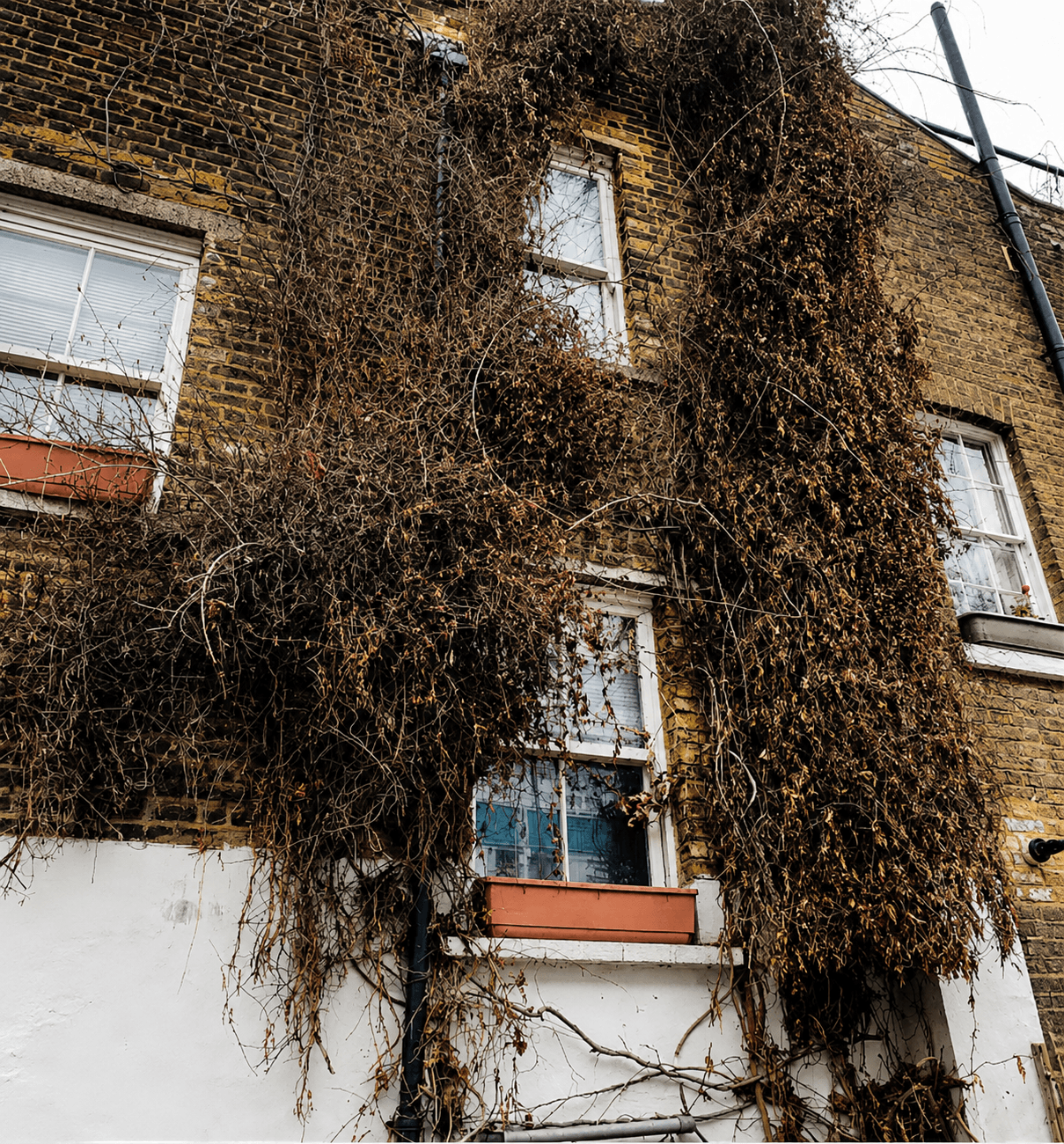
Ivy on fences is a more urgent problem than ivy on walls, because fences are weaker and the damage happens faster.
Ivy adds significant weight to a fence panel, especially when wet. A standard 6-foot fence panel is not designed to support the weight of a mature ivy plant. Over time, the weight bows the panel, pulls the posts, and eventually brings sections down, particularly in storms or high winds. We see this regularly across SE London, and the fence repair costs far more than the ivy removal would have.
Ivy also traps moisture against the wood, accelerating rot. If you pull back a thick mat of ivy on a wooden fence and the timber is soft, dark and crumbling, the fence was dying behind the ivy while it looked green and healthy from the garden side.
The cost saving: removing ivy from a fence before it causes structural damage is significantly cheaper than replacing fence panels after the damage is done. A 2-3 hour ivy removal job (£160-£255) versus a fence panel replacement at £230-£280 per panel. If you have ivy on your fences and the fencing is in reasonable condition, removing it now is the cheaper option. If the damage is already done, our garden fencing service covers replacement.
Ivy on Trees: A Different Approach
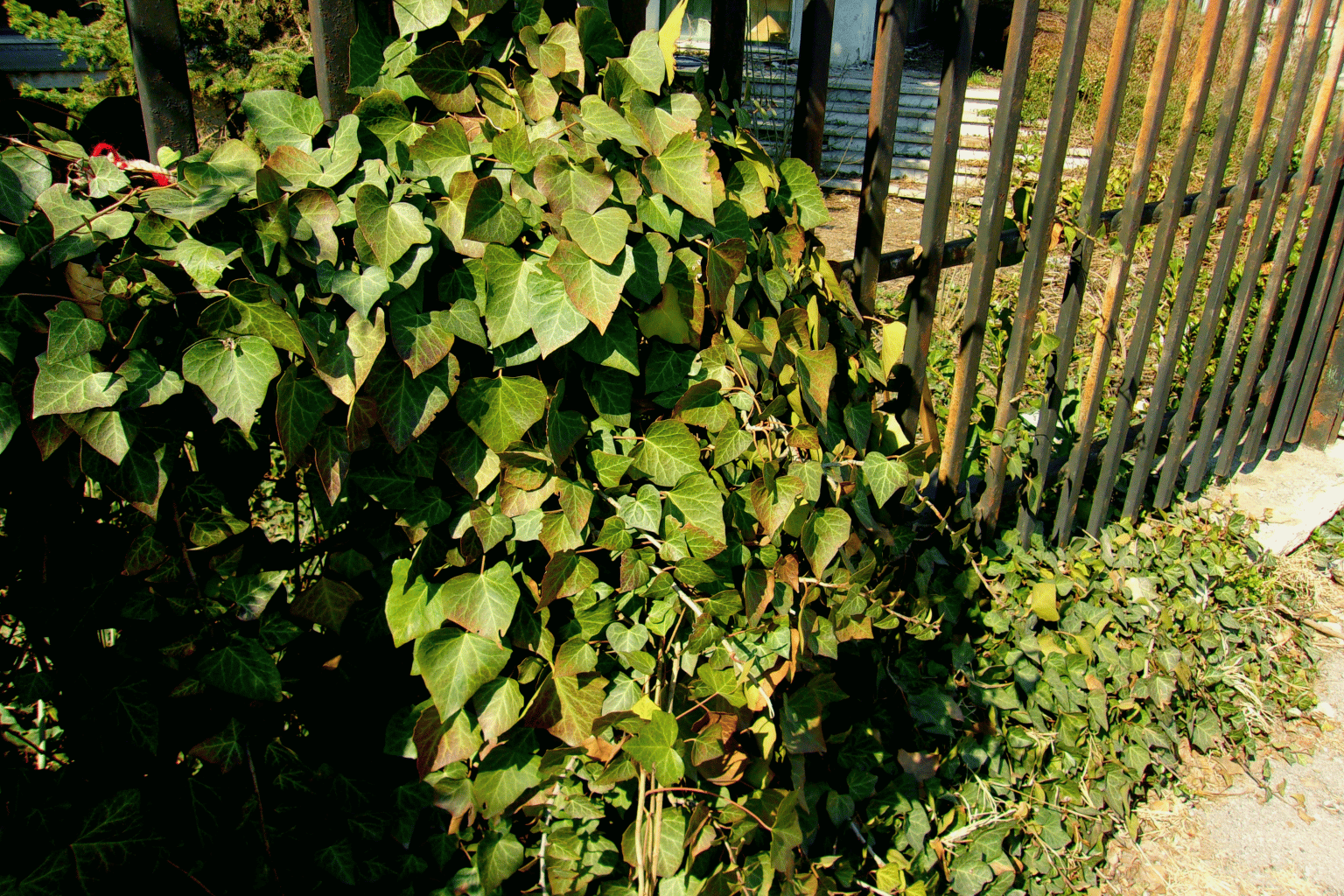
Ivy on trees is not removed the same way as ivy on walls or fences. Pulling established ivy off a tree can damage the bark, and ripping out a heavy mat of ivy from within the canopy is dangerous because of the weight involved.
The correct method: cut the ivy stems at the base of the tree (roughly waist height) and cut a second ring about a metre above the first, removing the section of stem between the two cuts. This kills the upper ivy by cutting off its water supply. The ivy above the cuts will brown off and die over the following weeks. Once it is dead, it can be pulled away much more easily and with less risk of bark damage. The roots at ground level are then dug out.
This sometimes means two visits: one to cut the stems, and a follow-up a few weeks later to remove the dead growth and dig out the roots. We will tell you upfront whether a single visit or two visits is more appropriate.
When ivy on a tree is a real problem: ivy does not technically "strangle" a tree, but it does compete for light and water, adds wind resistance that makes the tree more likely to come down in a storm, and hides structural problems (disease, decay, dead branches) that you cannot see until the ivy is removed. If a tree is already unhealthy, heavy ivy makes it worse and harder to assess.
If the tree is large (above 5 metres) and the ivy is extensive through the upper canopy, a tree surgeon may be better placed to handle it. For trees within our 5-metre working range, we handle ivy removal as part of our standard service.
Will the Ivy Come Back?
Yes, if you do not deal with the roots. This is the part that separates professional removal from a DIY trim.
Cutting ivy back to the fence or wall line without removing the root system means it will regrow, often within a single growing season. The root network is shallow but extensive, and ivy is aggressive enough to regrow from very small root fragments left in the soil.
Proper removal means cutting the growth, removing it from the surface, and then digging out the root system from the base. For ivy that has been growing along a fence line for years, the roots can extend well into the border and even under paving.
If complete root removal is not practical (for example, the roots run under a patio or into a neighbour's garden), we cut the growth back, remove as much root as possible, and advise on monitoring and treatment to prevent regrowth. Being honest with you about what is realistic is better than promising a permanent fix when the roots are inaccessible.
Check for Nesting Birds Before Removing
Thick, established ivy is a popular nesting site for birds, particularly in SE London where garden habitat is limited. Under the Wildlife and Countryside Act 1981, it is a criminal offence to intentionally disturb or destroy an active bird's nest.
If you are removing ivy between March and August (the main nesting season), check the growth carefully for nests before starting. If you find an active nest, the work must stop and wait until the chicks have fledged and left. This applies whether you are doing the work yourself or hiring a professional.
Outside of nesting season (September to February) this is not a concern, which is another reason why autumn and winter are good times to schedule ivy removal.
Best Time of Year to Remove Ivy
The best time to remove ivy in South East London is September to February, outside of the bird nesting season. This window gives you several advantages.
No nesting risk. Between March and August, thick ivy is likely to contain active bird nests, which are legally protected. Removing ivy during nesting season means checking every section carefully and stopping work if a nest is found. Outside of this window, you can work without restrictions.
The ivy is less active. Ivy slows its growth significantly over autumn and winter. Removing it during this period means less sap, lighter foliage, and the plant is not actively trying to regrow while you are cutting it back. Any root fragments left behind are also less likely to regenerate before you can treat them.
You can see what is underneath. With deciduous plants around the ivy having dropped their leaves, it is easier to assess the full extent of the ivy coverage and inspect the condition of the wall, fence, or tree underneath. Problems that were hidden in summer become visible.
Better scheduling. Autumn and winter are quieter periods for gardening services, which means faster availability and more flexible scheduling compared to the spring and summer rush.
That said, if the ivy is causing active damage (pulling a fence down, blocking gutters, growing under roof tiles), do not wait for the ideal season. Deal with it as soon as possible and check for nesting birds before starting if it is between March and August.
DIY vs Professional Ivy Removal
Light ivy on a short fence that has been growing for a year or two is a reasonable DIY job. The basic approach: cut all the stems at the base with secateurs or loppers, then leave it for 2-3 weeks. Once the upper growth has died and turned brown, it pulls away from the surface far more easily and with less risk of damage than trying to rip live ivy off. After removal, dig out the root system from the soil at the base to prevent regrowth. Wear thick gloves, because dead ivy stems splinter and the aerial roots grip hard.
Where DIY stops making sense:
- The ivy has thick, woody stems (more than roughly thumb thickness)
- It has reached the first floor, the gutters, or the roofline
- It is on a wall with old or crumbling mortar
- It covers a large area and the waste volume will be significant
- It is on a tree and has grown into the canopy
- You have tried cutting it back before and it has regrown because the roots were not dealt with
For a step-by-step approach to clearing ivy yourself, our DIY garden clearance guide covers the tools and techniques. For anything beyond light growth, the time, waste disposal, and risk of surface damage usually make professional removal better value.
How to Get a Quote
Ivy is one of the easier jobs to quote from photos. Send us a few pictures through the contact page or WhatsApp showing the coverage, the surface it is growing on, and a rough idea of the area. Include a photo from further back so we can see the height and access. We will reply within 24 hours with an honest estimate.
We cover all South East London postcodes including Lewisham, Greenwich, Eltham, Bromley, Woolwich, Blackheath, Peckham, Sidcup, and all surrounding Bexley and Dartford postcodes.
Call 07760800457 (Mon-Sat 9am-6pm) or send your photos and details here. We reply within 24 hours.
Frequently Asked Questions
If the roots are properly removed, it should not grow back. If roots are left in the ground or fragments remain under paving, regrowth can appear within a single growing season (spring to summer). We dig out roots as part of the removal, but if the root system extends into an inaccessible area, we will tell you so you can monitor for regrowth.
You can remove ivy from your side of a shared boundary. If the ivy originates from the neighbour's side and has grown over onto yours, you have the right to cut it back to the boundary line and return the cuttings to your neighbour (technically). In practice, most people just remove what is on their side. If the ivy is on a shared or party wall, it is worth discussing with your neighbour before starting.
Ivy does not directly kill healthy trees. It competes for light and water, adds weight and wind resistance, and hides structural problems. A healthy tree with moderate ivy is usually fine. A tree that is already stressed, diseased or in decline can be pushed further by heavy ivy. If you are concerned about a tree's health, removing the ivy is the first step to being able to properly assess its condition.
Fences may need panel replacement if the ivy has caused rot or structural damage. Walls may need repointing where mortar has deteriorated behind the ivy. Painted surfaces may need repainting where root traces are visible. We can advise on what is needed after removal. For fence repairs, our garden fencing service covers replacement at £230-£280 per panel installed.
If the ivy is well maintained and adds character, it can be a selling point. If it is uncontrolled, reaching the roof, or clearly damaging brickwork, it will put buyers off and may be flagged in a survey. An overgrown facade suggests neglect. Removing it before listing is a relatively low-cost way to improve kerb appeal. Our guide on preparing your garden for a house sale covers what else adds value.
About Urban Gardeners
Urban Gardeners is a local gardening and landscaping company based in Eltham SE9, serving South East London since 2016. We are a small, fully insured team that works directly with homeowners, landlords and letting agents across all SE London postcodes plus Bromley, Bexley and Dartford.
We hold a Gardening and Landscape Design Business Diploma and Certificate, and we have completed thousands of jobs across the area, from quick garden tidy-ups to full garden transformations. We currently have 111+ verified Google reviews at a 4.5+ rating.
If you want to see what our work actually looks like, browse our completed project portfolio or read more on our about page.
Posts You Might Like
Arranging Garden Maintenance for an Elderly Parent in SE London: Who Helps and What It Costs
Your mum mentions, lightly, that the back garden has “got away from
How Much Does Hedge Trimming Cost in South East London? (2026 Price Guide)
If your hedges have gone from "neat boundary" to "the neighbours can't
End of Tenancy Garden Clearance in South East London: What Landlords Need to Know (2026 Cost Guide)

How Much Does Garden Maintenance Cost in South East London? (2026 Price Guide)
Communal Garden Maintenance in South East London: Who Pays and What It Costs

The Importance of Well-Shaped and Trimmed Hedges and Bushes
In the world of gardening, the beauty of a landscape is often

Garden Tidy Up in South East London: 7 Things We Do (And What It Costs)
Your garden should feel like a place to breathe. A tidy outdoor

0 comments