

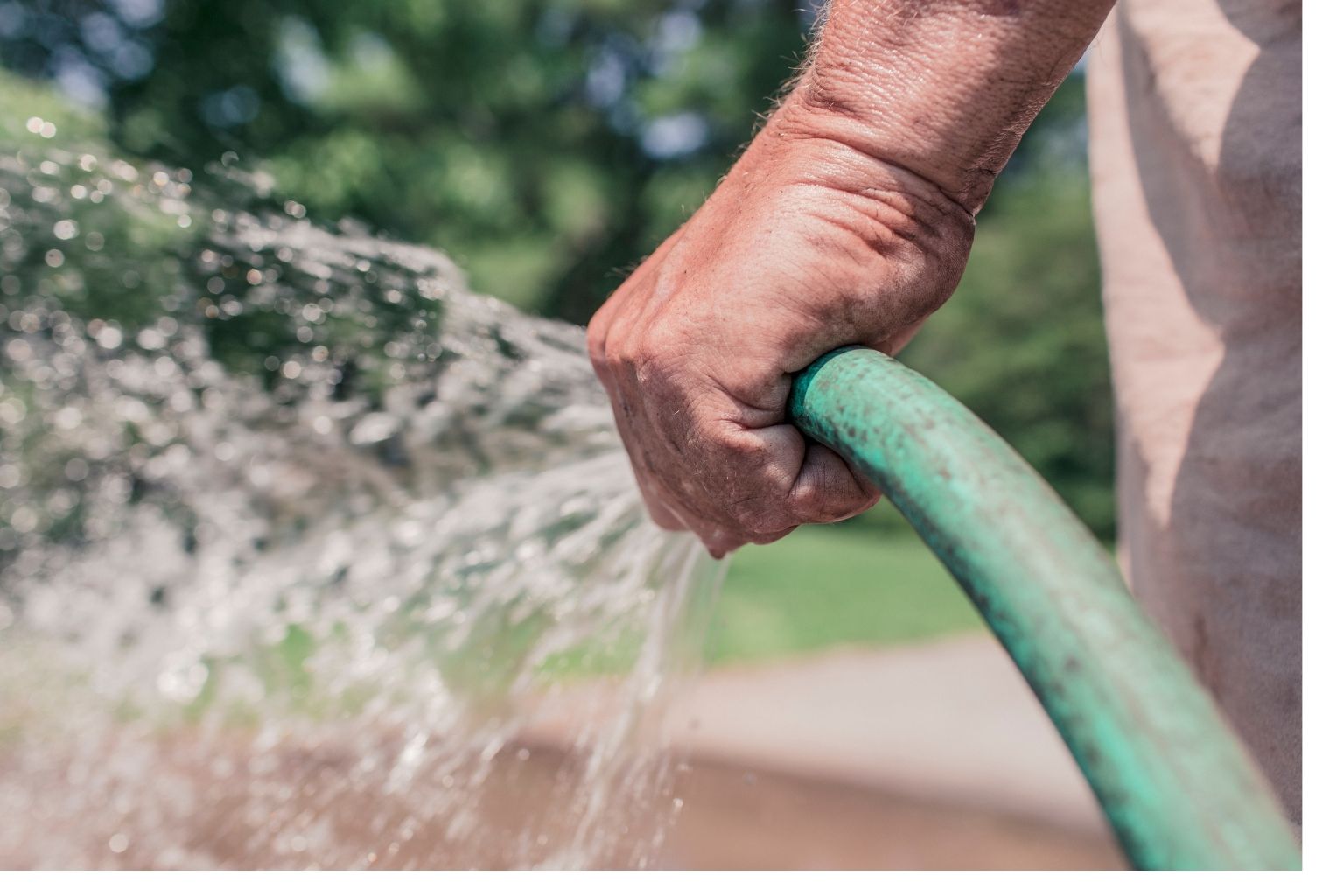
You step outside, coffee in hand, and there it is again. That patch by the fence that used to be the greenest bit of the lawn is now the colour of digestive biscuits. You reach for the hose out of habit, then stop. Are you actually allowed to do this anymore?
The short answer: since 00:01 on Thursday 23 July 2026, Thames Water has banned hosepipe use across most of Greater London, including South East London, with no end date announced. Watering cans, buckets and water butts are all still fine. Here is exactly what has changed, what you can still legally do, and what it means for your garden over the coming weeks.
Not sure if your lawn needs help or just needs rain?
Send us a photo and we'll tell you honestly, no charge and no obligation →
At a glance: what you can and cannot do
| Banned with a hosepipe | Still allowed |
|---|---|
| Watering gardens, lawns and allotments | Watering with a watering can or bucket |
| Using sprinklers or irrigation systems | Water from a water butt or reused household water |
| Filling paddling pools, swimming pools and hot tubs | A short hose section (up to 30cm) to fill a watering can |
| Cleaning cars, patios, paths, driveways, walls and windows | Hose or sprinkler on new turf, sown lawns and new planting laid by a business, for 28 days |
| Pressure washers (Thames Water counts these as covered) | Watering trees and hedging planted in the last three years, where hand watering is not practical |
| Watering an established lawn, however brown it looks | Watering food crops, and water for animal welfare |
The full detail on each of these, plus the exemptions most people miss, is below.
What changed on 23 July 2026
Thames Water brought in a Temporary Use Ban, commonly called a hosepipe ban, from 00:01 BST on Thursday 23 July 2026. It applies until further notice. No end date has been announced, so it is worth planning for this to run for a while rather than a few days.
The ban is not a polite request. It is enforceable under the Water Industry Act 1991 and the Flood and Water Management Act 2010, and breaking it can mean a fine of up to £1,000. It covers most of Greater London, including the SE and BR/DA supply areas, which works out at around 10 million people affected.
Which SE London postcodes are affected
This is a Thames Water supply area restriction, not a borough by borough one, but in practice it takes in the whole of South East London. That means Greenwich, Lewisham, Bromley, Bexley, Eltham, Blackheath, Catford, Peckham, Dulwich and everywhere in between, along with Dartford just over the Kent border.
If you are unsure whether your specific postcode is on Thames Water supply, the safest move is to check directly with them at thameswater.co.uk/help/temporary-hosepipe-ban. A handful of streets on the fringes of SE London are supplied by other companies with their own separate rules. For our full list of covered postcodes, see our Areas We Cover page.
What is banned: the full list
Under the ban, you cannot use a hosepipe connected to the mains for any of the following:
- Watering gardens, lawns or allotments
- Using a sprinkler or garden irrigation system
- Filling or topping up paddling pools, swimming pools or hot tubs
- Cleaning cars
- Cleaning patios, paths, driveways, walls and windows
Thames Water has confirmed that pressure washers count as covered under this ban too, since they draw from the same mains supply through a hose connection. In practical terms that means patio and driveway cleaning with a pressure washer is off the table for the duration of the ban, and we have paused that service accordingly. If you have a job you were planning, get in touch and we will put you on the list to book in as soon as restrictions lift.
What you can still legally do
The ban is specifically about hosepipes connected to the mains. You are still completely free to:
- Water your garden using a watering can or bucket
- Use water stored in a water butt, however you collected it
- Reuse household water, such as leftover washing up water, on plants
- Use a hose section up to 30cm long to fill a watering can from a tap
It is more effort than dragging a hose across the lawn, but a couple of watering cans a day on the plants that matter most, containers, veg beds, anything newly in the ground, will do far more good than trying to soak the whole garden.
The exemptions most people miss
There is more than one carve-out in the ban, and most coverage only mentions the first.
New turf, new lawns and new planting. Newly laid turf, newly sown lawns, and newly planted trees, shrubs and plants can be watered with a hosepipe or a sprinkler for 28 days from the date the work was done, but only where it was carried out by a business as part of a paid service. If you laid your own turf over the weekend, that exemption does not apply to you. The water also has to go on the new turf or planting itself, not the rest of the garden.
Trees and hedging planted in the last three years. Separately from the 28-day rule, standard trees, saplings, whips and hedging planted at any point in the three years before the ban started can be watered with a hosepipe where hand watering is not practical. Street trees in urban settings are not covered by the ban at all, since they do not sit in a garden or on domestic premises.
Food crops. Watering fruit and vegetables you are growing to eat is exempt. Ornamental planting is not.
Animal welfare. Water needed for pets, livestock or fish is exempt, including keeping enough oxygen in a pond to keep fish alive.
Priority Services customers. If you are registered with Thames Water's Priority Services scheme and a disability or medical condition means you cannot reasonably adjust your water use, the ban is applied differently. Contact them directly.
Wastewater-only customers. If Thames Water handles your sewerage but another company supplies your drinking water, this ban does not apply to you. Check your bill.
The first exemption is the one that matters most for gardens. It is why professional installation is the only route to getting new turf established during a ban, and we have written that up in full in our guide on laying turf during the hosepipe ban, including how the 28 days works in practice and what happens when it runs out.
For the exact legal wording on all of the above, see the Thames Water hosepipe ban legal notice.
How to keep your garden alive during the ban
A ban does not mean your garden has to suffer. It just means being smarter with the water you are still allowed to use. Here is what we would prioritise across an SE London garden right now.
- Water the things that cannot recover, first. Pots, containers, hanging baskets, veg beds and anything planted in the last few months have shallow roots and no reserves. Established shrubs, trees and lawns can look after themselves far better, so they go to the back of the queue.
- Water at dawn or dusk. Watering in the middle of a hot day means most of it evaporates before it reaches the roots. Early morning or evening lets the water actually soak in, so every can goes further.
- Water deeply, less often. A good soak two or three times a week encourages deep roots that cope better with dry spells. A daily splash trains roots to stay near the surface, where they dry out fastest.
- Mulch your beds. A layer of bark, compost or even grass clippings over the soil locks moisture in and slows evaporation. It is one of the biggest wins during a dry spell and needs no water at all.
- Reuse household water. Cooled water from washing up, rinsing veg, or the shower while it warms up is all fair game on ornamental plants. It is outside the ban and otherwise goes straight down the drain.
- Get a water butt on now if you can. It will not help today, but the moment rain returns you will be collecting free, ban-proof water for the rest of the summer.
Get those few habits right and most gardens come through a ban in far better shape than the panic-watering approach, using a fraction of the effort.
What this means for your lawn
Take a breath about the brown patches. An established lawn that goes brown in dry weather is almost always dormant, not dead. Grass is remarkably good at shutting down to conserve itself and greening back up once proper rain returns. It is not pretty for a few weeks, but it is rarely fatal.
What you should avoid is walking on a stressed, dormant lawn more than you need to, since foot traffic on dry grass causes more lasting damage than the dryness itself. Beyond that, our advice for most established lawns right now is simply to leave them alone and let our lawn mowing service keep on top of growth with the blade set a little higher than usual, which helps grass retain moisture.
If you are weighing up whether a lawn that keeps struggling every summer is even worth persisting with, you have two realistic options: replace it with fresh natural turf, which can still be laid and established during the ban under the 28-day exemption, or switch to artificial grass. Our guide on artificial grass costs in South East London breaks down the numbers on the second, and our prices page covers both.
Worried your lawn won't bounce back?
Get a free, honest assessment from our team →
What this means for patios and driveways
Pressure washing a patio, path or driveway is banned for the duration, so our patio and driveway cleaning service is on hold until restrictions lift.
In the meantime, regular sweeping and a stiff brush with a bucket of water will keep most patios and driveways looking reasonable. Moss, algae and ground-in dirt will need proper equipment once the ban is over.
If you had a job in mind, get in touch now and we will add you to the list. We are booking patio cleaning in for the moment restrictions lift, and that queue will move fast once they do, so it is worth being on it early rather than joining the rush.
What this means for new turf and planting
If you have been thinking about relaying a tired lawn or putting in new planting, timing now matters more than usual. Turf laid by a business, lawns sown by a business, and planting installed by a business all qualify for 28 days of hosepipe watering under the exemption above, which gives them a real chance to establish properly even during a ban. Turf laid without that support has to survive on cans and butts alone, which is much harder in a dry spell.
We have covered this in full in our guide to laying new turf during the hosepipe ban, including exactly what the 28 days covers and what happens after.
The same exemption applies to planting, which means a full garden landscaping and design project with new beds and borders is still workable this summer. If you are planning further ahead, our month by month guide on the best time to lay turf in South East London covers how to time it around weather like this.
How long is this likely to last
Nobody, including Thames Water, has put a date on when this will end. Bans like this are reviewed against reservoir levels and rainfall, and lifted once supplies recover, rather than tied to a fixed calendar date.
For context on how long these things typically run: the 2022 Thames Water ban came into force in August and was not lifted until the following year. The 2012 ban ran from April into summer. Neither is a prediction, but both suggest planning for months rather than weeks.
Update, 31 July 2026: the ban remains in force with no end date announced. We will update this section as the position changes.
The honest planning assumption for SE London gardens is that this could run for several weeks, possibly a good deal longer, so it is worth adjusting your watering routine for the medium term rather than waiting it out.
How we are adapting on jobs right now
We have been doing this in SE London for over 12 years, and dry summers are nothing new to us even if this particular ban is a bigger one than most. On every job at the moment, from Eltham to Dulwich, we are adjusting mowing heights, timing any new planting around the exemption rules, and being straight with clients about what is realistic to expect from a lawn until proper rain comes back.
Not sure whether your lawn is dying or just dormant? Send us a photo and we will tell you honestly, no charge and no obligation. Call 07760800457, Monday to Saturday, 9am to 6pm.
How Our Gardening Services Can Help
A hosepipe ban changes how a few of our regular jobs are done, not whether we can do them.
- Lawn mowing and care, adjusted mowing height and timing to protect a dormant lawn until rain returns
- Professional turfing, the only route to the 28 day hosepipe watering exemption on new turf
- Garden landscaping and design, new planting also qualifies for the 28 day exemption, so redesigns are still on
- Garden maintenance, general upkeep adapted for dry weather across the season
- Garden clearance, completely unaffected by the ban
- Patio and driveway cleaning, paused until restrictions lift, join the waitlist now
You can see what everything costs on our prices page, or browse recent work in our portfolio.
Need help deciding what your garden actually needs right now?
Get in touch and we'll recommend the best next step →
Hosepipe Ban FAQ
No. Thames Water treats pressure washers as covered by the ban because they connect to the mains hose supply, and cleaning patios, paths, driveways, walls and windows with a hosepipe is one of the restricted uses. Sweeping and a bucket are fine. Proper cleaning has to wait until the ban lifts.
Not with a hosepipe. You can wash it with a bucket and sponge, or use a commercial car wash, which is exempt because it is a business using water as part of a service.
No. Water butts, and any reused household water, are outside the ban entirely. You can use them freely.
Almost certainly not. An established lawn that goes brown in dry weather is dormant rather than dead, and greens back up once proper rain returns. The main thing to avoid is heavy foot traffic on dry grass, which does more lasting damage than the dryness itself.
It is a criminal offence under the Water Industry Act 1991 and the Flood and Water Management Act 2010, with a penalty of up to £1,000.
Yes. Turf laid by a business as a paid service can be watered with a hosepipe or a sprinkler for 28 days from laying. The same applies to lawns sown from seed by a business and to new planting. Turf you lay yourself does not qualify.
Yes. Watering food crops is exempt from the ban. Ornamental planting is not.
Yes, the same rules apply to anyone using a hosepipe connected to the mains, whether that is a homeowner or a professional. The only exception is the 28-day exemption on newly installed turf and planting.
No end date has been announced. Bans are lifted when reservoir levels and rainfall recover, not on a fixed date, so it is worth planning for this to run for several weeks at least.
Posts You Might Like
Landlord or Tenant: Who Maintains the Garden? SE London Guide
What you will find in this guide This guide explains how garden
Can You Still Lay New Turf During the Hosepipe Ban in South East London?
Hosepipe Ban in South East London: What You Can and Cannot Do in Your Garden
You step outside, coffee in hand, and there it is again. That
When to Call a Gardener vs a Tree Surgeon in SE London (And the Cost Difference)
You have a tree in your SE London garden that needs attention.
Waterlogged Garden in South East London: How to Fix It and What It Costs (2026)
Poor Drainage in South East London: How to Fix It (And Whether a Channel Drain Is What You Need)
South East London gardens don't drain well. That's not an opinion -
August Garden Problems? Here’s How to Keep Your Garden Thriving
August is a key month for garden maintenance in South East London.

Easy Steps to Handle a Deceased Tree in The Garden
Do you know how to deal with a deceased tree? Well, tackling


0 comments