

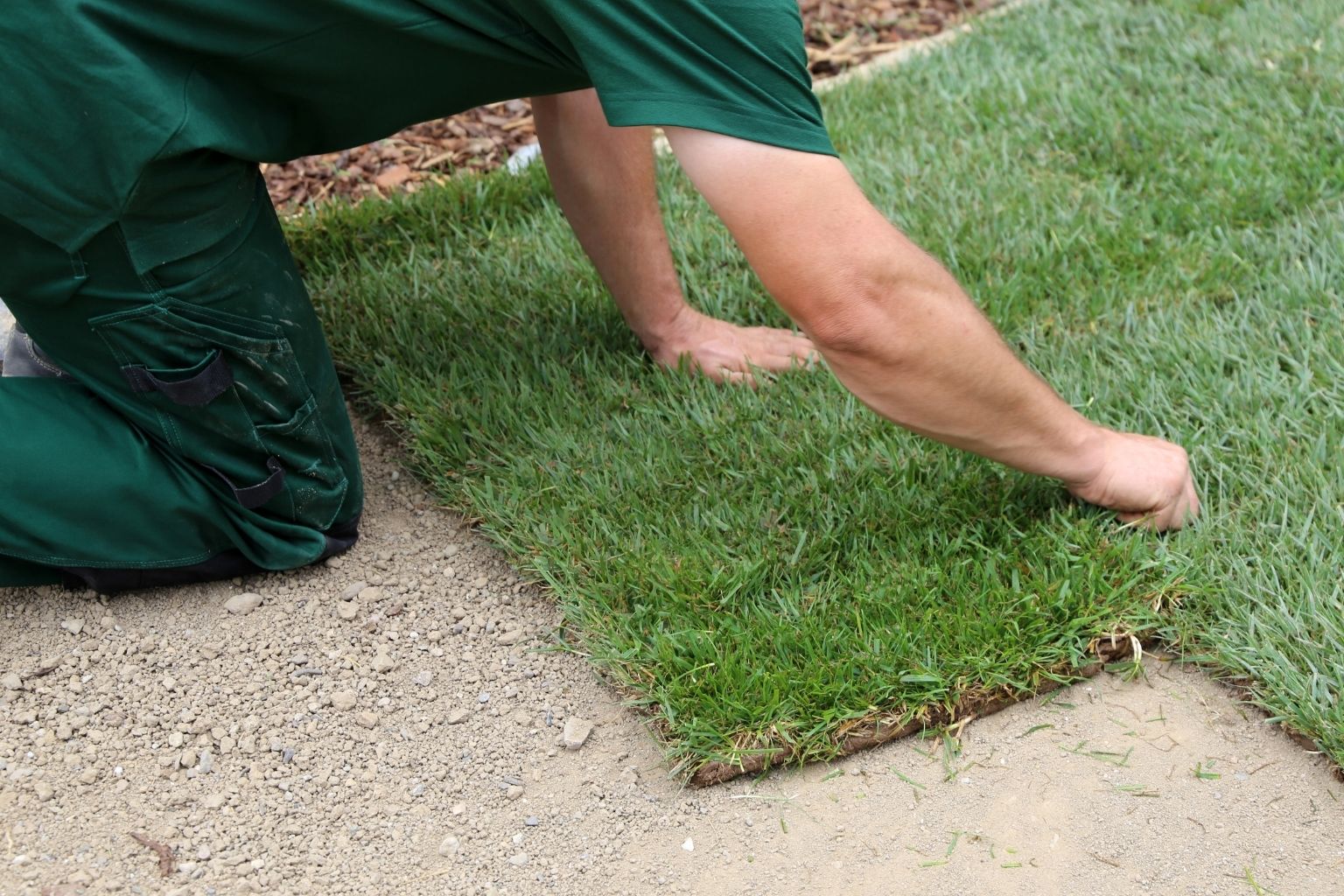
You have been putting up with the lawn for a while now. Patchy in spring, muddy in winter, and after the dry weather this summer it has gone brown and tired across most of the garden. You had finally decided to have it replaced with fresh turf, and then the hosepipe ban landed. So that is that, you think. New turf will have to wait until next year.
Not necessarily. There is an exemption in the ban that most people have not heard about, and it changes the answer completely, as long as you go about it the right way.
The short answer: yes, with one important condition
You can still have new turf laid during the Thames Water hosepipe ban, and you can legally keep it watered with a hosepipe while it settles in. The condition is that the turf has to be laid by a business as a service. A lawn you buy and lay yourself does not qualify for the exemption, which in practice means it will struggle to survive.
That is not a sales line we have invented. It is written into the ban itself. Here is exactly how it works.
The ban at glance
| What you want to do | Allowed under the Thames Water ban? |
|---|---|
| Water new turf laid by a business | Yes. Hosepipe or sprinkler, for 28 days from the day it is laid |
| Water new turf you laid yourself | No hosepipe. Watering can only |
| Water new plants, shrubs or trees planted by a business | Yes. For 28 days from the day they go in |
| Water a lawn sown from seed by a business | Yes. For 28 days from the day it is sown |
| Water an established lawn | No hosepipe, no sprinkler. Watering can only |
| Fill a watering can from a short hose (up to 30cm) | Yes |
| Pressure wash a patio, path or driveway | No |
| Water new turf once the 28 days are up | No hosepipe. Watering can only |
Rules can change at short notice, so always confirm the current position for your own address before you book.
What the Thames Water exemption actually says
Thames Water brought its Temporary Use Ban into force from 00.01 on 23 July 2026, across most of Greater London including the SE, BR and DA postcodes we cover. It stays in place until further notice. Watering a lawn with a hosepipe is one of the uses that is banned, and breaking the ban can carry a penalty of up to £1,000.
Inside that same set of rules, though, there is a specific carve-out. The legal notice allows a hosepipe to be used on newly laid turf, newly sown lawns, and newly planted trees, shrubs and plants, for 28 days from the day of laying, sowing or planting, where that work was carried out as a service to customers in the course of a business.
The reasoning is simple. Fresh turf that cannot be watered in its first month will almost always die, and that would be a waste of a living product, the water already used to grow it, and the customer's money. So the exemption exists to protect professionally installed lawns and planting during the one period they genuinely cannot survive without water.
You can read the exact wording on the Thames Water hosepipe ban legal notice, and check your postcode against the main hosepipe ban page. Different water companies word their exemptions differently, so if you are supplied by someone other than Thames Water, check with them directly.
Why laying it yourself does not qualify
This is the part that catches people out. If you buy turf from a garden centre and lay it over the weekend, the exemption does not apply to you. The rule is tied to work carried out by a business as a service. Your brand new lawn would be treated exactly like any established lawn, which means no hosepipe, no sprinkler, watering can only.
A freshly laid lawn needs a proper soaking every day in its first week or two, especially in warm weather. Trying to keep 30 or 40 square metres of new turf alive with a watering can, in a South East London summer, is close to impossible. The turf dries out at the joints, the roots never knit into the soil, and within a fortnight you are looking at shrinking, curling strips of dead grass. It is the most expensive way to end up back where you started.
When we lay your turf, the 28-day exemption applies from the day we install it. That is the difference between a lawn that establishes properly and one that fails.
Thinking about a new lawn this summer?
Book a free, no-obligation turfing survey. If we lay it, your lawn qualifies for 28 days of legal hosepipe watering from the day it goes down.
Explore our services: Turfing, Garden Landscaping and Design, or Lawn Mowing.
What the 28-day window covers, and what happens after
The 28 days run from the day the turf goes down. During that window you can water it with a hosepipe, or a sprinkler, as needed to get it established. The one restriction is that the water has to go on the new turf itself and not on the rest of the garden. We will leave you with clear, simple watering guidance for your specific lawn, so you are not guessing.
After 28 days, the exemption ends and the normal ban rules apply again. By that point a healthy new lawn has rooted into the soil beneath it and is far more resilient. It can be kept going with a watering can, or left to go dormant and brown through the driest spell, in the knowledge that it will green back up when the rain returns and the ban lifts. Establishing the lawn now is what buys you that resilience later.
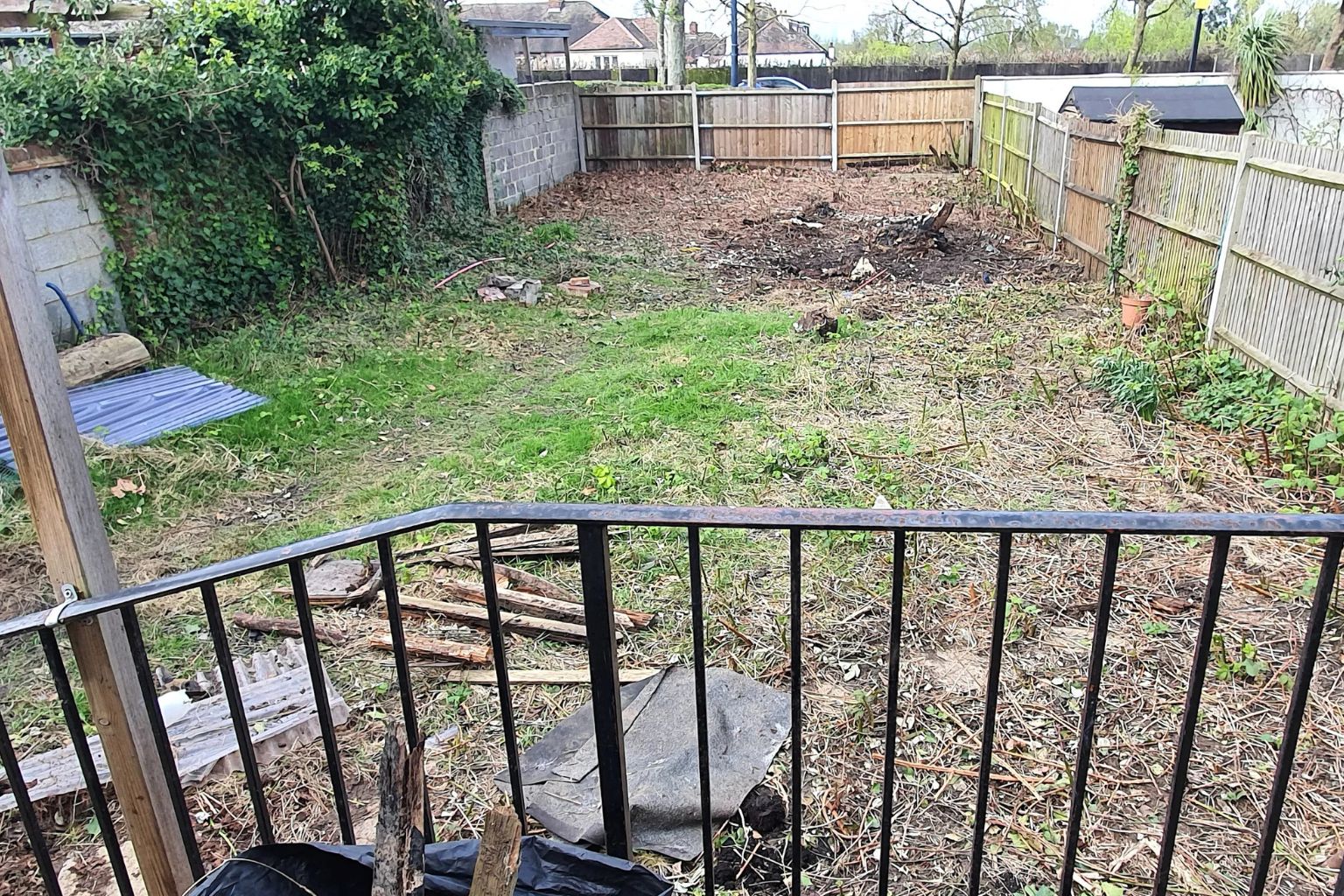
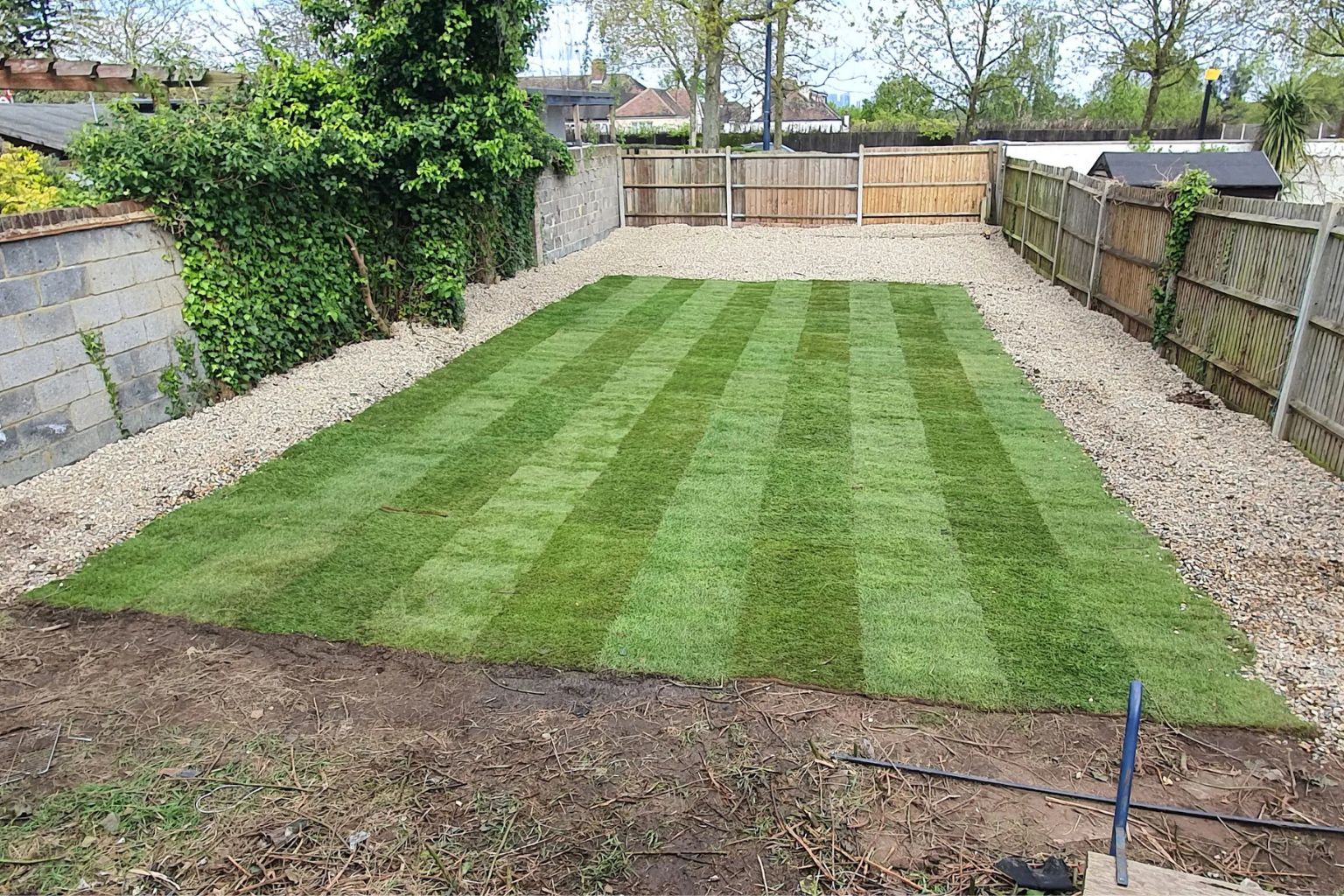
A turfing project by Urban Gardeners. You can see more of these in our garden transformation portfolio.
Why 28 days is exactly what new turf needs
It is worth knowing that the exemption window is not an arbitrary number. The critical establishment period for new turf is roughly its first three to four weeks. In that time the grass sends fresh roots down through the join between the turf and the soil, and once those roots take hold the lawn can look after itself far better.
That figure comes from the industry itself. The Turfgrass Growers Association, the body representing professional turf growers in the UK, has argued for a consistent 28-day exemption across all water companies for exactly this reason, and has been making that case to the water industry since 2011.
So the 28 days you are given line up almost perfectly with the period the lawn cannot do without water. Get a new lawn through that first month properly watered, and you have a lawn that will handle future dry spells, including whatever the rest of this summer throws at gardens across Greenwich, Lewisham, Eltham and the rest of South East London.
It is not just turf: new planting counts too
Most of the coverage of this exemption talks about lawns, but the wording is broader than that. Newly planted trees, shrubs and plants are covered by the same 28-day window, again on the condition that a business did the planting as part of a service.
In practice that means a full garden redesign is still very much on the table this summer. If we build you a new patio with planted borders, or put in new hedging and beds as part of a garden landscaping and design project, those new plants can be watered in properly for their first month, which is the difference between planting that takes and planting that sulks or dies.
There is a second, separate exemption worth knowing about as well. Trees, saplings, whips and hedging planted at any point in the three years before the ban started can be watered with a hosepipe where hand watering is not practical. So if you had hedging or young trees put in during 2024 or 2025, they are not automatically stuck on watering-can rations.
Natural turf or artificial grass during a hosepipe ban?
A ban like this one does make some homeowners look again at artificial grass, and it is a fair question, so here is the honest comparison.
- Natural turf gives you a real, living lawn that is cooler underfoot, better for wildlife and drainage, and cheaper to install. The trade-off is that first month of watering, which the exemption is designed to cover. Once established it needs mowing and the occasional feed. Typical cost is £15 to £28 per square metre, laid.
- Artificial grass needs no watering at all, during a ban or otherwise, and stays green through any drought. It costs more up front because of the groundwork involved, roughly £60 to £90 per square metre, but it is very low maintenance afterwards. It suits shady spots and gardens where a natural lawn has always struggled.
Neither is the right answer for everyone. If you want to weigh it up properly, our guide on natural versus artificial grass goes through it in more detail, and we are happy to talk it through on a survey.
Should you lay turf now, or wait for autumn?
Early autumn is traditionally one of the best times to lay a lawn in South East London, because the soil is still warm but the air is cooler and rain is more reliable, so the turf establishes with far less effort. Our month-by-month turf laying guide sets out the ideal timing across the year.
That said, there is no need to write off the rest of this summer. With professional installation and the 28-day exemption, turf can be laid and established now, while the ban is on. There is also a practical argument for not waiting. The exemption runs for 28 days from the day the turf goes down, so a lawn laid in early August is fully rooted before the driest weeks of the season, rather than going in cold in September with nothing established behind it.
Whether it is better for you to go ahead now or hold on a few weeks depends on your garden, how the current lawn is holding up, and your plans for the space. It is exactly the kind of thing we will give you a straight answer on when we come and look.
What our turfing survey covers
Every turfing job starts with a free, no-obligation survey. When we visit we will:
- Measure the area properly and check the condition of the existing lawn and soil.
- Tell you honestly whether new turf is the right move, or whether your current lawn is simply dormant and likely to recover on its own once the rain returns.
- Advise on natural turf versus artificial grass for your particular garden.
- Explain how the 28-day exemption will work for your lawn, and leave you with clear watering guidance.
- Give you a written quote, with everything included: old lawn removal if needed, ground preparation, topsoil or sub-base, and the turf supplied and laid.
You can see typical pricing in our turfing cost guide for South East London, check our full price list, or read more about how we work on our professional turfing service page.
Once the lawn is established and the 28 days are up, keeping it in good shape is straightforward. Most of our turfing clients move onto a regular lawn mowing visit or a flexible garden maintenance plan, so the lawn you have just paid for still looks the part next spring.
Frequently asked questions
The exemption is tied to turf laid by a business as a service, so a lawn you laid yourself is treated like any other lawn under the ban and cannot be watered with a hosepipe. You can still use a watering can, though keeping a large new lawn alive that way in summer is very difficult.
It covers both. Newly planted trees, shrubs and plants are included on exactly the same terms as turf, for 28 days from the day they are planted, where a business carried out the planting as part of a service. That is why a full garden redesign is still workable during the ban.
Normal ban rules apply again. By then a healthy new lawn has rooted into the soil and is far more resilient. It can be maintained with a watering can, or allowed to go dormant during the driest weather and left to recover naturally when rain returns and the ban lifts.
Not with a hosepipe or pressure washer. Cleaning outdoor surfaces is one of the restricted uses, so our patio and driveway cleaning service is paused for the duration of the ban. Get in touch anyway and we will put you on the list to book in as soon as the restrictions lift.
Artificial grass needs no watering and stays green through any ban or dry spell, which appeals to a lot of homeowners right now. It costs more to install but is very low maintenance afterwards. Natural turf is cheaper and gives you a living lawn, with that one month of watering the exemption is designed to cover. We will help you weigh it up on the survey.
In most cases we can arrange a free survey quickly and give you a written quote within three business days. Turfing is popular through spring and summer, so it is worth getting in touch early to secure a slot. Call 07760800457, Monday to Saturday, 9am to 6pm.
The information here reflects the Thames Water Temporary Use Ban as it stood at the time of writing. Hosepipe ban rules and exemptions can change and vary by water company, so always confirm the current rules for your own address with your supplier before relying on them.
Posts You Might Like
Rats Moving Into Overgrown South East London Gardens Before Winter: What Actually Stops Them
Leaning Fence Post in SE London? The Screwdriver Test Decides the Fix
Is Turfing Worth It? The Honest Verdict for South East London Gardens (2026)
Is My Lawn Dead or Just Dormant? A South East London Drought Recovery Guide
The short version: most brown lawns in a dry summer are dormant, not
Can You Still Lay New Turf During the Hosepipe Ban in South East London?
How Much Does Artificial Grass Cost in South East London? (2026 Full Breakdown)
You are tired of the lawn. Every spring it comes back patchy.
How Much Does Lawn Mowing and Lawn Care Cost in South East London? (2026 Price Guide)
How Much Does Turfing Cost in South East London? New Lawn Price Guide 2026
If you spent last winter staring out at a muddy, patchy mess

Natural vs Artificial Grass: The Honest Pros and Cons for South East London Gardens
At some point, most South East London homeowners reach a decision point

0 comments