

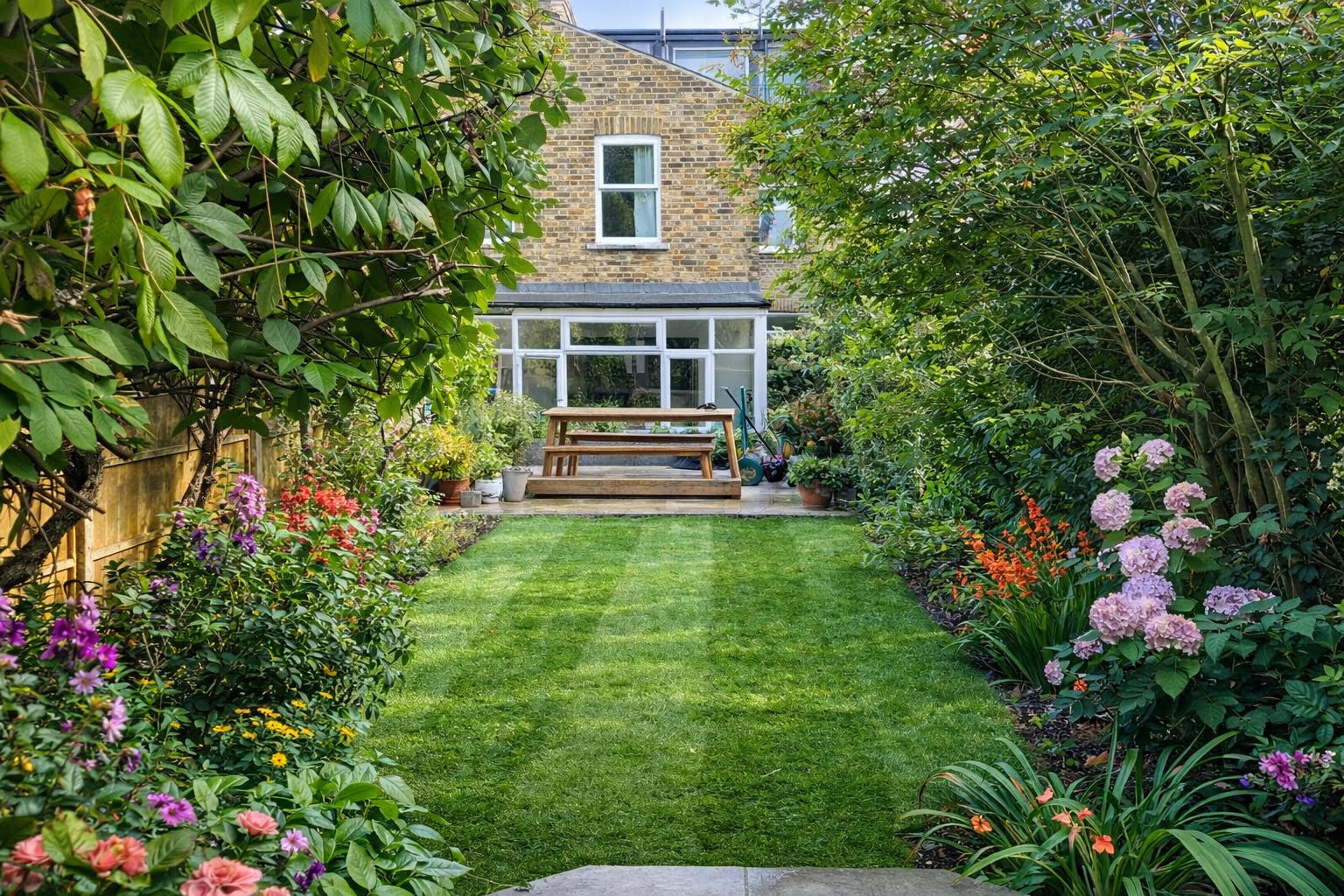
The best time to lay turf in South East London is mid-March to mid-May or September to October. These windows give your new lawn mild temperatures, manageable watering needs, and warm-enough soil for roots to grab hold quickly. But turf can go down in every month of the year if you handle it right.
Below is a practical month-by-month breakdown based on how the weather actually behaves across Greenwich, Lewisham, Bromley, Eltham, and the wider SE postcode area, not a generic UK guide written for somewhere up north.
Quick Reference: Best Months to Lay Turf in SE London
| Month | Rating | Summary |
|---|---|---|
| January | 3/10 | Cold, soggy clay. Turf survives but sits dormant for weeks. |
| February | 4/10 | Marginally better. Fine if ground is already prepped from landscaping work. |
| March | 8/10 | Soil warming, residual winter moisture. Pro season starts here. |
| April | 10/10 | Best month. Mild temps, long days, full growing season ahead. |
| May | 8/10 | Still strong. Watch for dry spells, be ready to water. |
| June | 6/10 | Hit or miss. Depends entirely on the weather that year. |
| July | 4/10 | Hard work. Daily watering essential. Only if you cannot wait. |
| August | 4/10 | Same as July. Smaller gardens cope better. |
| September | 10/10 | Tied best. Warm soil, cooler air, rain picking up. |
| October | 7/10 | Good in the first half. Risky after mid-month. |
| November | 3/10 | Turf goes dormant. Will not root until spring. |
| December | 3/10 | Same as November. Strategic if you are patient. |
Why Timing Matters More Than You Think
When turf is cut from the farm and rolled up, the roots are severed. The moment it hits your soil, those roots need to push downward and anchor before the grass dries out, freezes, or cooks in the heat.
Think of it like transplanting a houseplant. Do it in good conditions and the plant barely notices. Do it in a heatwave or a freeze, and it struggles.
In South East London, we deal with a few specific conditions that affect timing:
- London clay soil. Much of SE London, from Eltham SE9 through to Lewisham SE13 and Bromley, sits on heavy London Clay (with some areas closer to the Thames having more gravelly or alluvial soil). Clay holds moisture well in autumn and spring, which helps new turf root. But in summer it bakes hard, and in winter it can become waterlogged. Both extremes make turfing trickier.
- The urban heat island. SE London runs 1-2 degrees warmer than the Kent countryside, which means your spring window opens a bit earlier and your autumn window stays open a bit longer than national guides suggest.
- Smaller garden sizes. Victorian terraces in Brockley SE4, Edwardian semis in Blackheath SE3, and post-war estates in Abbey Wood SE2 tend to have compact gardens. Smaller lawns are faster to lay and easier to keep watered, which means you can get away with summer turfing more easily than someone with a half-acre plot.
Month-by-Month Turfing Guide for South East London
January and February: Possible, But Patience Required
The ground across SE London is often cold and soggy through January. Clay soil in areas like Catford SE6 and Woolwich SE18 can sit waterlogged for weeks after heavy rain.
You can lay turf in these months. The grass will not die. But it will sit dormant, barely rooting until temperatures climb above 5-6 degrees consistently. You will not be able to walk on it for 6-8 weeks, sometimes longer.
Verdict: Only do this if your project timeline forces it. If you have had landscaping work done and the ground is already prepared, laying turf in February to tidy things up is perfectly reasonable. Just do not expect it to green up and root until March.
March: The Season Turns
Mid-to-late March is when SE London soil starts to warm. Daytime temperatures regularly hit 10-12 degrees, daylight hours are stretching, and the soil is typically moist from winter without being waterlogged. This is when professional turfing season properly begins.
The clay soil is moist but workable. Roots can penetrate. Grass starts actively growing. If you are planning a new lawn for spring, March is the sweet spot to book your preparation and laying.
Verdict: Excellent month to lay turf. One of the two best windows of the year.
If your lawn needs full ground preparation, levelling, and topsoil, now is the time to get a survey booked. We offer free on-site turfing surveys across South East London with a written quote within 3 business days.
April: Prime Time
April is arguably the single best month to lay turf in SE London. Soil temperature is ideal, daylight hours are increasing fast, and the grass has the entire growing season ahead of it to thicken up and fill in. Despite the old saying, April is actually one of London's driest months, so you will likely need to water your new turf regularly, especially during dry spells.
Gardens in Greenwich SE10, Lee SE12, and Sidcup DA14 that get new turf in April are typically established enough to handle light use by June.
Verdict: Best month of the year. Book early because this is the busiest period for turfing work.
May: Still Strong, Start Watering
Early May is still a great window. The risk is a dry, warm spell toward the end of the month. SE London can hit 22-25 degrees in late May, and newly laid turf on south-facing gardens will dry out fast.
If you lay turf in May, plan to water it daily for the first two weeks, ideally early morning and again in the evening if the weather is warm. On clay soil, this usually means 20-30 minutes with a sprinkler per session for a small-to-medium lawn.
Verdict: Very good. Just be ready with the hose if the weather turns warm.
June: The Transition Month
June is hit or miss. In a cool, rainy June (which SE London gets more often than people think), turfing works well. In a hot, dry June, you are fighting to keep the turf alive until it roots.
The bigger risk is that turf quality can drop during hot, dry spells. Farms may pause cutting when conditions are poor, and freshly cut rolls deteriorate much faster in the heat during delivery and on pallets.
Verdict: Fine if you are prepared to water religiously. Not ideal if you are going on holiday the week after laying.
July and August: Doable, But High Maintenance
These are the hardest months to lay turf in SE London. The clay soil can bake solid. Air temperatures during hot spells can hit 30 degrees or more, and exposed soil in a south-facing Lewisham or Camberwell SE5 garden gets even hotter at the surface. Newly laid turf that dries out for even one day can yellow and die at the seams.
That said, we lay turf in summer every year. The key is:
- Lay it the same day it is delivered. Do not let rolls sit overnight.
- Water immediately after laying, and keep the soil moist for at least 14 days.
- Lay in the morning or late afternoon, not in peak sun.
- Smaller gardens (under 30 sqm) are much easier to manage in summer.
Verdict: Possible but high-effort. If you have a choice, wait for September. If your garden is already cleared and ready, get in touch and we will make it work. Call 07760800457 or send us photos.
September: The Second Sweet Spot
September is a favourite among professional landscapers, and for good reason. The soil still holds warmth from summer, but the air is cooler and rainfall starts picking up compared to the dry summer months. These are near-perfect conditions for turf to root quickly.
In SE London, September temperatures typically sit between 14-20 degrees during the day. The soil in areas like Eltham SE9, Bexley DA5, and Dartford DA1 is warm enough that roots establish within 10-14 days.
Another advantage: you get the entire autumn and winter for the lawn to strengthen before it faces its first summer.
Verdict: Tied with April as the best month to lay turf. If you missed the spring window, this is your second chance.
October: Still Good, Don't Wait Too Long
Early to mid-October is solid. Late October is a gamble. As daylight drops and soil temperatures start dipping below 8 degrees, root growth slows noticeably. The clay soil across SE London also starts holding more water, and if November brings heavy rain, freshly laid turf can sit in puddles.
Verdict: Good in the first half. Get your order in early and do not delay preparation work.
November and December: The Quiet Window
Turf can technically go down, and it will survive. But it will barely root until spring. The grass goes dormant. You cannot walk on it. It will look underwhelming through winter.
The upside? Landscapers are less busy, so you may get faster booking and preparation. Some homeowners use this window to get the groundwork and turf laid so it is ready to spring to life in March.
Verdict: A strategic choice if you are patient. Not recommended if you want a lawn you can enjoy quickly.
How Much Does Turfing Cost in South East London?
Since most people researching timing are also thinking about budget, here is what to expect:
Natural Turf Installation
Price per sqm: £15-£28 (includes turf, labour, and topsoil)
| Garden Size | Area | Typical Cost |
|---|---|---|
| Small | Up to 30 sqm | £450 - £840 |
| Medium | 30 - 60 sqm | £675 - £1,680 |
| Large | 60 sqm+ | £900 - £2,240+ |
Artificial Grass Installation
Price per sqm: £60-£90 (includes excavation, sub-base, membrane, grass, and labour)
| Garden Size | Area | Typical Cost |
|---|---|---|
| Small | Up to 30 sqm | £1,800 - £2,700 |
| Medium | 30 - 60 sqm | £2,000 - £5,400 |
| Large | 60 sqm+ | £3,600 - £5,400+ |
Final pricing depends on your garden size, ground condition, access, and how much preparation is needed. For a full breakdown of what affects the price, read our complete turfing cost guide for South East London. Every job starts with a free on-site survey where we measure up, check the soil, and give you a written quote within 3 business days.
Not sure whether natural turf or artificial grass is right for your garden? Read our guide: Natural vs Artificial Grass: The Honest Pros and Cons for South East London Gardens.
How to Prepare Your Ground Before Laying Turf
Timing is only half the equation. Poor ground preparation is the number one reason new lawns fail, regardless of which month you lay them.
Here is the short version:
- Clear the area. Remove old turf, weeds, rubble, and debris. If your garden is overgrown, a professional garden clearance will save you days of work.
- Rotavate or fork over the soil. Break up compacted clay to at least 15cm depth.
- Level the surface. Rake to a fine, even tilth. Remove stones larger than a golf ball.
- Add topsoil if needed. If your existing soil is thin, poor quality, or heavily compacted, a 5-10cm layer of fresh topsoil gives the turf a much better start.
- Firm the surface. Walk over the area with overlapping steps to gently compact it. You want firm but not rock-hard.
- Lay the turf the same day it arrives. Start at the far edge and work backward. Stagger the joints like brickwork. Press down firmly. Water immediately.
When Can You Walk on New Turf?
This is one of the most common questions we get. In spring and autumn, light foot traffic is usually safe after 2-3 weeks. In summer, the turf is under more heat stress and needs consistent watering, so give it the same 2-3 weeks minimum even though the soil is warm. In winter, you may need to wait 6-8 weeks.
The test: gently tug a corner of the turf. If it resists and feels anchored, it is rooting. If it lifts easily, keep off it.
Ready to Get Your New Lawn Down?
We have been laying turf across South East London for over 12 years, from compact courtyard gardens in Deptford SE8 to large family lawns in Bromley and Bexley. With 111 Google reviews and a 4.5+ rating, we take pride in getting it right first time.
Every turfing job starts with a free on-site survey. We check your soil, measure up, talk through your options (natural or artificial), and give you a clear written quote within 3 business days.
Get your free survey booked:
- Call 07760800457
- Fill in our contact form
- Or send us photos of your garden by WhatsApp for a quick initial estimate
We work Monday to Saturday across all SE postcodes, Bromley, Bexley, Dartford, and surrounding areas.
Frequently Asked Questions
In the best conditions (spring or autumn in SE London), turf roots within 10-14 days. In summer with regular watering, around 2 weeks. In winter, it can take 4-8 weeks because growth is dormant. You will know it has rooted when you gently tug a corner and it resists.
Both are excellent. April gives the turf a full growing season ahead to thicken up before winter. September offers warm soil, more natural rainfall, and lower maintenance. If your garden is ready, either window will give you a strong lawn.
Yes. Laying new turf on top of old grass creates an uneven surface, traps moisture, and prevents proper root contact with the soil. The old lawn should be stripped away, the soil prepared, and fresh topsoil added if needed.
Natural turf installation typically costs £15-£28 per square metre including turf, labour, and topsoil. A small lawn (under 30 sqm) runs between £450 and £840. Artificial grass ranges from £60-£90 per sqm. All pricing is confirmed after a free on-site survey.
About Urban Gardeners
Urban Gardeners is a local gardening and landscaping company based in Eltham SE9, serving South East London since 2016. We are a small, fully insured team that works directly with homeowners, landlords and letting agents across all SE London postcodes plus Bromley, Bexley and Dartford.
We hold a Gardening and Landscape Design Business Diploma and Certificate, and we have completed thousands of jobs across the area, from quick garden tidy-ups to full garden transformations. We currently have 111+ verified Google reviews at a 4.5+ rating.
If you want to see what our work actually looks like, browse our completed project portfolio or read more on our about page.
Posts You Might Like
Leaning Fence Post in SE London? The Screwdriver Test Decides the Fix
Is Turfing Worth It? The Honest Verdict for South East London Gardens (2026)

Is My Lawn Dead or Just Dormant? A South East London Drought Recovery Guide
The short version: most brown lawns in a dry summer are dormant, not
Can You Still Lay New Turf During the Hosepipe Ban in South East London?
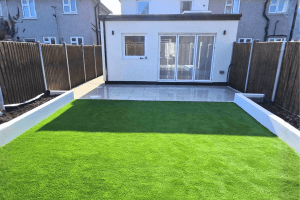
How Much Does Artificial Grass Cost in South East London? (2026 Full Breakdown)
You are tired of the lawn. Every spring it comes back patchy.
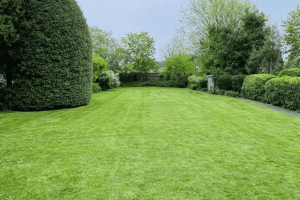
How Much Does Lawn Mowing and Lawn Care Cost in South East London? (2026 Price Guide)
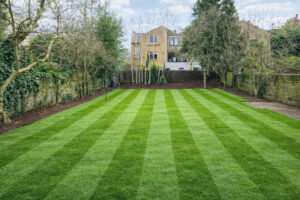
How Much Does Turfing Cost in South East London? New Lawn Price Guide 2026
If you spent last winter staring out at a muddy, patchy mess

Natural vs Artificial Grass: The Honest Pros and Cons for South East London Gardens
At some point, most South East London homeowners reach a decision point
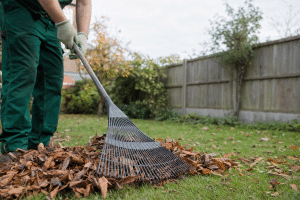
Leaf Clearance in South East London: What It Costs to Get Leaves Off Your Lawn

0 comments