

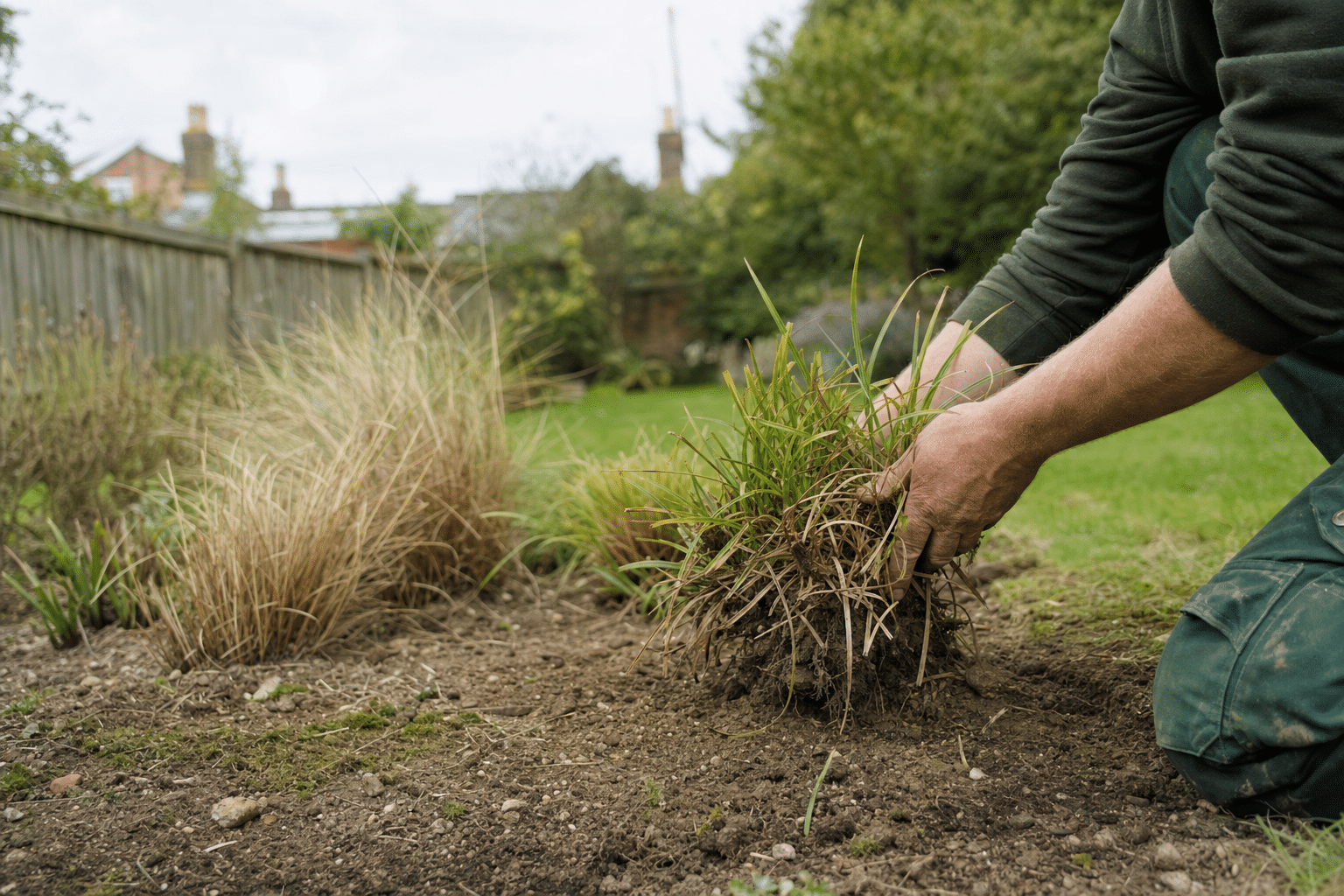
If you've bought a grass because it looked beautiful at the garden centre, planted it in a South East London border, and found a soggy brown crown there the following April, the grass wasn't the problem. Our soil is heavy London clay. It holds water all winter, and most grasses sold here come from places where the ground dries out.
The five that reliably survive a wet SE London winter are Miscanthus sinensis, Calamagrostis 'Karl Foerster', Molinia caerulea, Deschampsia cespitosa and Carex oshimensis 'Evergold'. Below: those five, six more worth the space, the ones that rot on clay, and the month you cut each type back.
What's in this guide
- The Quick Version: 5 Ornamental Grasses That Cope With SE London Clay
- Why Ornamental Grasses Fail in London Clay (And How to Stop It)
- Quick Reference Table: Height, Sun, Clay Tolerance and Evergreen or Not
- Tall Grasses for Structure and Screening: Miscanthus and Calamagrostis
- Mid-Height Grasses for Borders: Pennisetum, Panicum and Molinia
- Feathery Grasses for Movement: Stipa tenuissima and Feather Reed Grass
- Small Grasses for Pots, Courtyards and Front Gardens: Festuca and Carex
- Grasses for Shady SE London Gardens: Hakonechloa and Carex
- Grasses to Avoid or Treat With Care on Wet Clay
- How to Plant Ornamental Grasses in Clay Soil, Step by Step
- Designing a Grass Border That Works in a Small London Garden
- When to Cut Back Ornamental Grasses: Deciduous vs Evergreen
- How and When to Divide Overgrown Clumps
- Grasses That Spread: Running Types to Avoid and What to Do If They Take Over
- Frequently Asked Questions
- How Our Gardening Services Can Help
The Quick Version: 5 Ornamental Grasses That Cope With SE London Clay
These five go in without you rebuilding the border first.
- Miscanthus sinensis (maiden grass). The tall one, 1.5-2m. The RHS says it copes better than most grasses on heavy soils.
- Calamagrostis × acutiflora 'Karl Foerster' (feather reed grass). Upright to 1.5m, stays standing through wind and rain, tolerates all but the poorest soils.
- Molinia caerulea (purple moor-grass). Actively wants moist soil, so clay suits it.
- Deschampsia cespitosa (tufted hair grass). Native, sun or part shade, fine on damp ground.
- Carex oshimensis 'Evergold'. A small evergreen sedge, 30cm, keeps its cream stripe through January.
Want a border designed around the soil you actually have?
See how our garden landscaping and design service works →Why Ornamental Grasses Fail in London Clay (And How to Stop It)
Clay is made of tiny flat particles that pack together with almost no air gaps (think of a stack of wet playing cards). Water sits in it instead of draining through. In July that helps you. From November to March it's the thing that kills grasses.
Most ornamental grasses don't die of cold in London. They die of wet. The crown, the knuckle where the leaves meet the roots, sits in water for weeks and rots. You lift the plant in spring and the middle comes away in your hand.
Three things change that, and none cost much. Plant in spring, so the roots establish before the first wet winter. Set the crown a centimetre above the surrounding soil. Mix grit into the backfill for air gaps right where the crown sits. Horticultural grit runs about £6-£12 for a 20kg bag from UK suppliers, market estimate, not our rate.
If water stands on the surface after rain, grit won't fix it. That's a drainage job: see how to fix poor drainage in a South East London garden. Low-lying gardens in Catford SE6 and Lewisham SE13 get it worst.
Quick Reference Table: Height, Sun, Clay Tolerance and Evergreen or Not
| Grass | Height | Sun | On wet SE London clay | Evergreen? |
|---|---|---|---|---|
| Miscanthus sinensis | 1.5-2m | Full sun | Good, the best of the tall ones | No |
| Calamagrostis 'Karl Foerster' | 1.5m | Sun or light shade | Good if not waterlogged | No, stands brown till Feb |
| Panicum virgatum | 1-1.5m | Full sun | Fine with grit added | No |
| Molinia caerulea | 1.2m with flower stems | Sun or part shade | Very good, likes moisture | No |
| Pennisetum alopecuroides | 60-90cm | Full sun | Poor, hates winter wet | No |
| Stipa tenuissima | 60cm | Full sun | Needs drainage, use a pot | Semi |
| Deschampsia cespitosa | 1.2m with flower stems | Sun or part shade | Very good | Semi |
| Festuca glauca | 25cm | Full sun | Poor, needs sharp drainage | Yes |
| Carex oshimensis 'Evergold' | 30cm | Part shade | Good if not waterlogged | Yes |
| Carex elata 'Aurea' | 70cm | Sun or part shade | Good, wants it damp | No |
| Hakonechloa macra | 35cm | Light shade | Only in improved soil | No |
Heights are what a settled plant reaches after three years here, not what the pot label says.
Tall Grasses for Structure and Screening: Miscanthus and Calamagrostis
Miscanthus sinensis does a job rather than just decorating. A three-year-old clump is 2m of dense leaf that blocks the sightline from next door's upstairs window from June to February. The RHS grows it in moist but well-drained soil in full sun and warns against excessive winter wet, but of all the big grasses it's the most forgiving on heavy ground. 'Kleine Fontäne' and 'Malepartus' flower reliably in a London summer. Some of the very tall cultivars never flower here before the light goes.
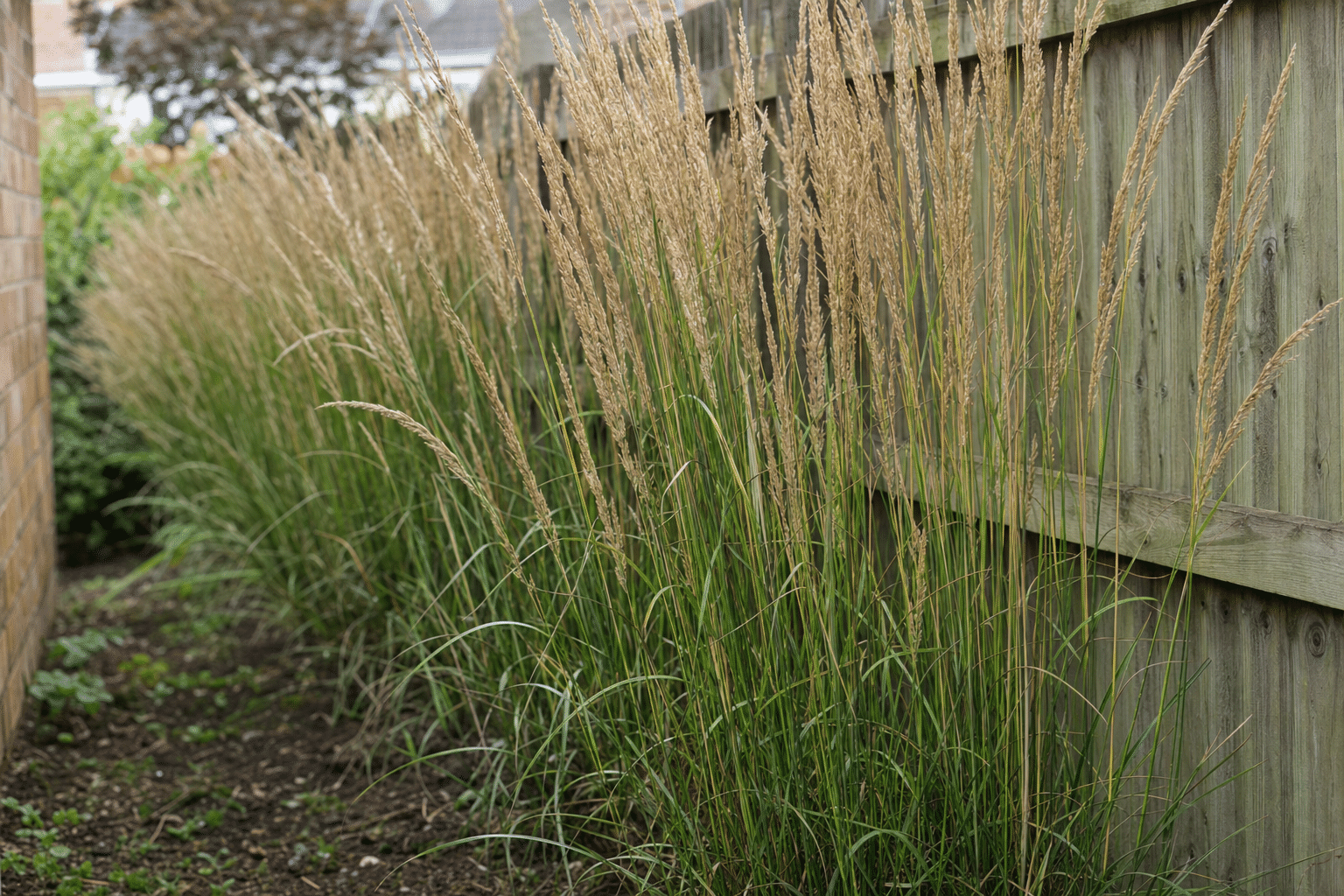
Calamagrostis × acutiflora 'Karl Foerster' is the vertical one, and it holds that shape in wind that flattens everything around it. Bronze plumes in June fade to pale straw and stay standing until you cut them down. On a narrow terraced plot in Peckham SE15 it takes 40cm of width and still reads as 1.5m tall.
Neither gives year-round cover. For an evergreen screen you want a hedge: the best trees and hedges for privacy in small SE London gardens.
Mid-Height Grasses for Borders: Pennisetum, Panicum and Molinia
Molinia caerulea is the honest recommendation for a clay border. The RHS grows it in any moderately fertile, moist but well-drained soil and notes it prefers neutral to acidic ground, which is most of SE London. Leaves stay around 60cm, then thin flower stems shoot to 1.2m, so you see straight through it. Good at the front of a border.
Panicum virgatum (switch grass) has upright blue-green leaves that turn red and bronze in October. It takes clay once you've added grit. 'Shenandoah' and 'Heavy Metal' colour up best here.
Pennisetum alopecuroides (fountain grass) has the nicest flowers of the three, soft bottlebrush plumes in late summer, and it's the one most likely to be dead by April. The RHS is blunt: Pennisetum will not thrive in heavy soils that tend to be wet, especially in winter. In a pot or a raised bed it's excellent. In a flat clay border in Forest Hill SE23 you'll be replacing it.
Not sure which grasses your garden can keep alive?
Send us photos of your border and we'll tell you honestly →Feathery Grasses for Movement: Stipa tenuissima and Feather Reed Grass
Movement is the reason to plant a grass: a border with one in it changes every time the wind gets up.
Stipa tenuissima (Mexican feather grass) is the softest, thread-fine leaves to 60cm that move in almost no wind. The RHS grows it in light, well-drained soil in full sun, and that's the catch on clay: it rots in a wet winter and seeds itself into gravel and patio cracks. Both problems go away in a large pot near where you sit.
The feathery plumes that last are on Calamagrostis. Its flowerheads dry to pale straw in September and are still standing in February, catching frost. For one grass that carries a clay border through winter, that's it.
Searching for feathery grasses? The soft look is Stipa, Calamagrostis and Deschampsia. The stiff, spiky look is Festuca and the Carex sedges.
Small Grasses for Pots, Courtyards and Front Gardens: Festuca and Carex
Festuca glauca (blue fescue) is a 25cm blue-grey hummock, evergreen, the one people plant along a front path. It needs sharp drainage. In a clay front garden in Brockley SE4 it looks tired within two winters. In a pot of gritty compost it lasts years. Comb the dead grey leaves out every spring or the middle goes bald.
Carex oshimensis 'Evergold' is the small grass we plant most, because it still looks like a plant in January. Cream centre, green edges, 30cm, takes part shade, doesn't mind clay as long as water isn't standing on it. Three at the front of a border cover the gap deciduous grasses leave from November to April.
Carex elata 'Aurea' (Bowles' golden sedge) is bright yellow and wants the wet corner nothing else will grow in. A boggy spot still damp in July is where it goes.
Grasses for Shady SE London Gardens: Hakonechloa and Carex
Most SE London gardens have a shady strip, usually the side return, the narrow passage between the house and the boundary wall. Few grasses flower in shade, but two look good there.
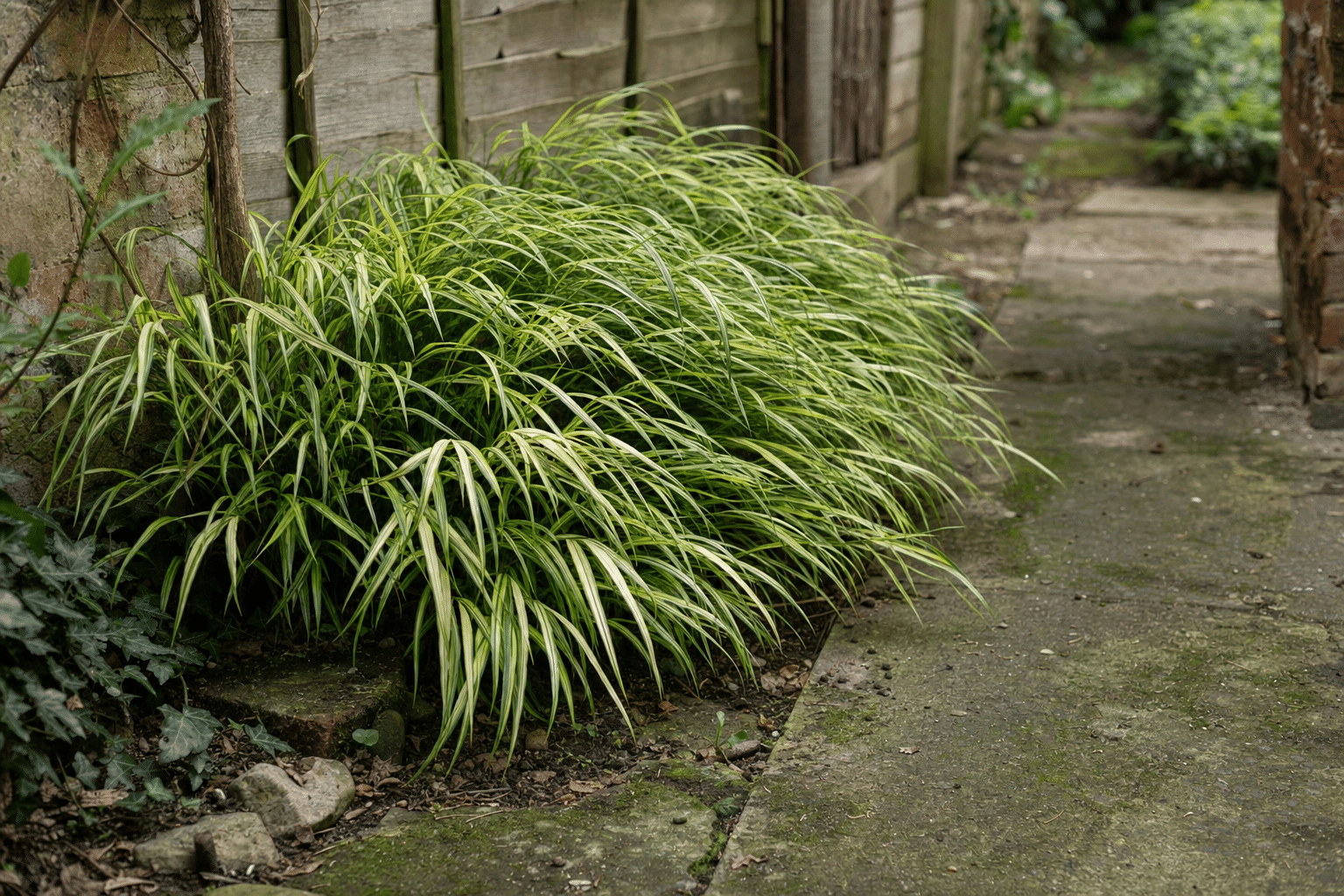
Hakonechloa macra (Japanese forest grass) is the best plant in this guide for a shaded spot. It arches over in layers like a small green waterfall, 35cm tall, turning amber in autumn. The RHS warns it will not do well in very heavy or excessively dry soil, so it's the one grass here that needs the ground improved first: a bucket of garden compost and a bucket of grit per plant. Our soil preparation guide, written in Eltham SE9 covers that. Skip it and you'll have three sad plants.
Carex sedges take shade with no soil work. 'Evergold' in light shade, Carex morrowii deeper under a tree.
Grasses to Avoid or Treat With Care on Wet Clay
Muhlenbergia capillaris (pink muhly grass) is all over social media and it's a bad bet in a London clay border. It comes from the warm south east of the United States and wants sharp drainage and heat. In a wet SE London winter the crown sits cold and saturated. Want that pink cloud? Large pot, sunniest spot, and accept you may lose it.
Cortaderia selloana (pampas grass) survives clay perfectly well. The problem is scale: a mature clump is 2.5m across with leaf edges sharp enough to cut a hand, and getting one out is a clearance job.
Pennisetum, Festuca glauca and Stipa tenuissima want pots, gravel or a raised bed.
Four of the eleven want work before they go in, and we'd rather say so now than sell you plants that die.
How to Plant Ornamental Grasses in Clay Soil, Step by Step
- Plant in April or May. Spring gives the roots six months to establish before the ground turns wet. Autumn planting on clay is where most losses come from.
- Dig a hole twice the width of the pot, no deeper than the pot. A deep hole in clay becomes a bucket that fills with water.
- Break up the sides of the hole with a fork. A spade slices clay smooth, and smooth walls stop roots getting out.
- Mix grit into the soil you took out, one part grit to three parts soil. Grit, not sand.
- Set the plant 2cm high, so the crown sits above the surrounding soil. Never below.
- Backfill, firm it with your hands, water once. Grasses on clay rarely need watering after the first fortnight.
- Mulch with 5cm of composted bark, kept clear of the crown. Mulch over the crown traps water against it.
- Space them at two thirds of the eventual spread, centre to centre.
Designing a Grass Border That Works in a Small London Garden
One grass on its own reads as a weed. Three of the same grass reads as a decision. In a garden under 10m long, plant in threes and use two or three species, not eight.
Put the tall ones where you look at them against the light. Grasses are mostly translucent, and low sun through a Miscanthus plume in October is the whole reason to own one. In most SE London gardens that means the western end.
They also need something solid beside them or the border turns into a haze: box balls, a dark-leaved shrub, a fence panel. The contrast is what makes the movement visible.
Leave the seedheads up over winter. Straw-coloured grass with frost on it is the best your garden looks in February.
In the larger gardens around Blackheath SE3 and Dulwich SE21 there's room for a proper drift of one grass, which is where these plants look best. On a 4m plot in New Cross SE14 it's three plants and one good pot. Finished borders are in our portfolio of South East London garden projects.
When to Cut Back Ornamental Grasses: Deciduous vs Evergreen
This gets the plants wrong more than any other question, and the answer splits cleanly in two.
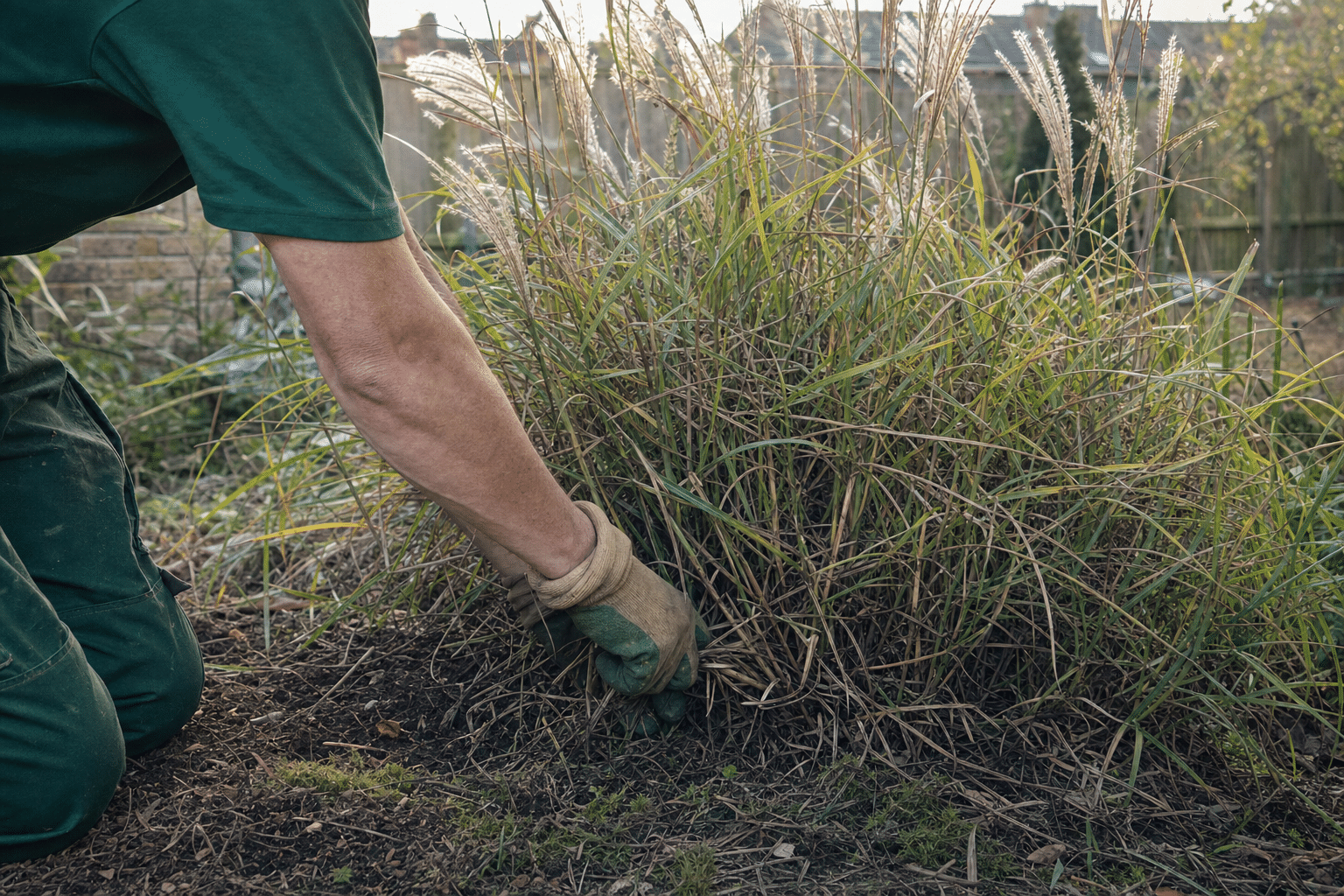
Deciduous grasses get cut back once a year, in late February or early March. Miscanthus, Calamagrostis, Panicum, Molinia, Pennisetum, Carex elata, Hakonechloa. The RHS guidance on cutting back ornamental grasses is to leave them standing over winter for structure, then work through the clump in spring cutting the old stems as low as possible with sharp secateurs. Cut to about 10cm, and do it before the new shoots are more than a few centimetres up, or you slice the tops off this year's growth and it shows all summer.
Evergreen grasses and sedges never get cut back. Festuca, Carex oshimensis. You comb them: fingers through the clump, pull out the dead leaves and old flower stems, rake up what comes away. A trimmed evergreen sedge looks shorn for the rest of the year.
Don't cut them down in November: the dead leaves shelter the crown from the worst of the wet.
One Miscanthus clump makes a lot of waste and it doesn't compost quickly. Cutting several? What garden waste removal costs in SE London.
Want the February cut-back done in one visit?
Book garden maintenance at £83 for the first hour →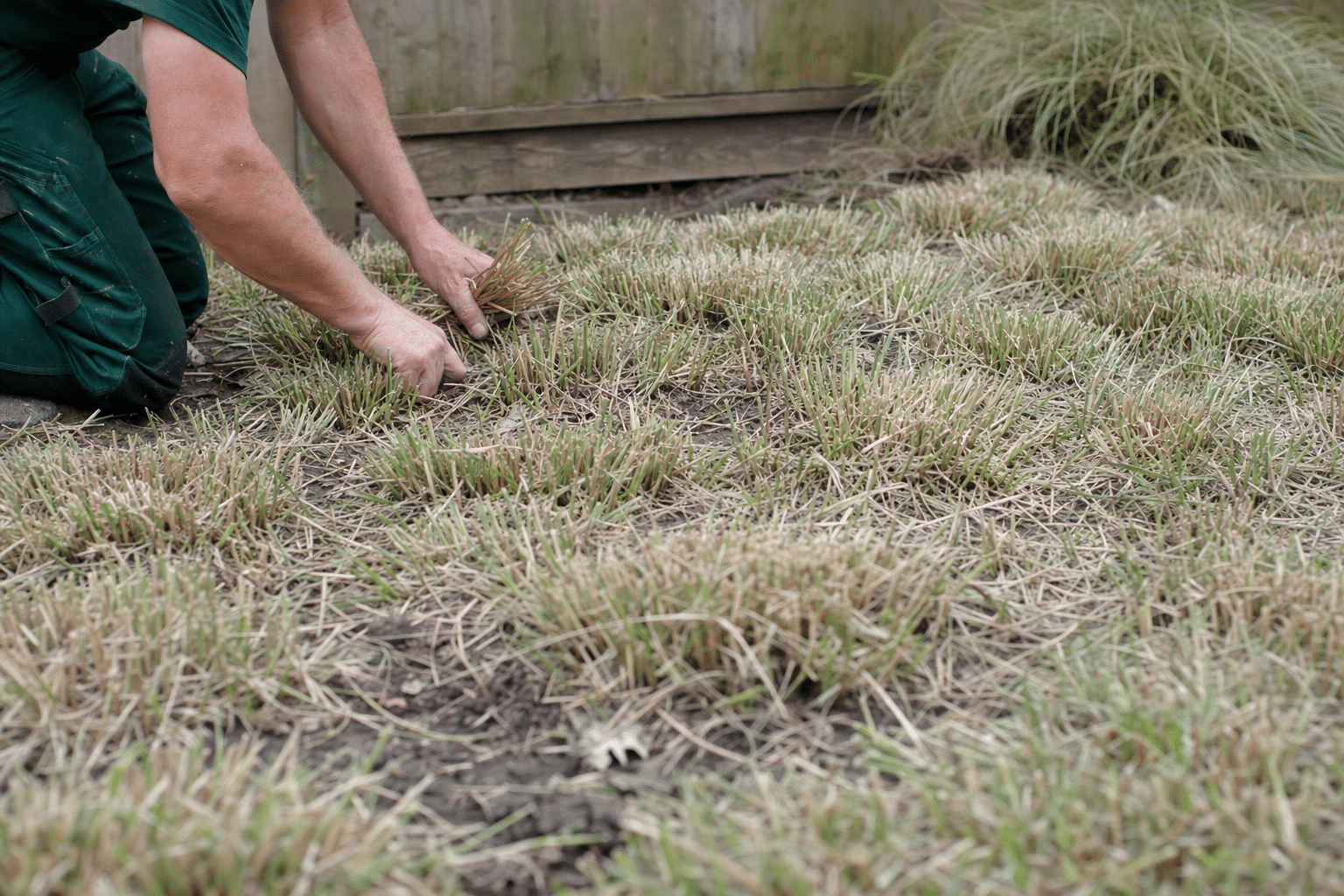
How and When to Divide Overgrown Clumps
After three or four years a clump goes hollow in the middle: live growth around the outside, dead thatch in the centre. That's the plant asking to be divided.
The RHS advice on dividing ornamental grasses splits the timing by where the grass comes from. Cool-climate grasses, meaning Carex, Calamagrostis, Deschampsia, Festuca, Hakonechloa, Molinia and Stipa, are divided as they come into growth in late winter to early spring, roughly every three years. Warm-climate grasses, Miscanthus, Panicum and Pennisetum, don't start growing until late spring, so leave those until May.
Lift the clump with a spade, push two forks back to back into the centre, and lever them apart. A mature Miscanthus root ball is heavy and an old one may need a saw through it. Replant the outer pieces, bin the dead middle. One clump gives three or four new plants, the cheapest way to fill a border.
Grasses That Spread: Running Types to Avoid and What to Do If They Take Over
Almost every grass here is clump-forming: it stays put and slowly gets wider. A few run instead, sending stems sideways underground and coming up a metre away.
Gardener's garters (Phalaris arundinacea var. picta) is the one you'll meet, a pretty white-striped grass on the RHS list of potentially invasive garden plants. It has a running rootstock, forms an extensive colony, and the RHS says it may need controlling. Keep it out of a border, or sink it in a pot.
If a runner has got away from you, digging out half makes it worse, because every bit of root left behind grows. The whole rooting area has to come out, which usually means lifting the plants you want to keep first. That's priced as garden clearance at £85 per hour for a 2-person team rather than maintenance, because of the digging. Running bamboo is the same problem several sizes up: why bamboo removal in SE London is harder than people expect.
Frequently Asked Questions
Which ornamental grasses grow well in heavy clay soil?
Miscanthus sinensis, Calamagrostis 'Karl Foerster', Molinia caerulea, Deschampsia cespitosa and Carex oshimensis 'Evergold', with no soil work needed. Molinia and Carex elata prefer damp ground. Add grit for Panicum and Hakonechloa, and keep Pennisetum, Festuca, Stipa and pink muhly grass in pots.
When should I cut back ornamental grasses in the UK?
Late February to early March, deciduous grasses only. Cut the old stems to about 10cm before the new shoots get going, and leave them standing all winter until then. Evergreens are never cut back, you comb the dead leaves out by hand.
Which ornamental grasses stay green all winter?
Festuca glauca and the Carex sedges, including 'Evergold' and Carex morrowii. Stipa tenuissima is semi-evergreen, so it keeps some green but looks scruffy by February. Everything else here turns straw-coloured, which still looks good.
What is the best ornamental grass for a small garden?
Carex oshimensis 'Evergold' for a border edge or a pot: 30cm, evergreen, takes shade. For height without width, Calamagrostis 'Karl Foerster' reaches 1.5m in 40cm of floor space, so it fits a bed a foot deep against a fence.
Do ornamental grasses need full sun?
Most do, and they flower far better in it. The shade exceptions are Hakonechloa macra and the Carex sedges. Molinia and Deschampsia manage in part shade. A grass in deep shade will grow, but it flops and rarely flowers.
How far apart should I plant ornamental grasses?
Two thirds of the plant's eventual spread, centre to centre. Roughly 90cm apart for Miscanthus, 50cm for Calamagrostis, 30cm for Festuca and 'Evergold'. Any closer and air stops moving through the clumps, which brings mildew in a sheltered London garden.
Do ornamental grasses spread and take over a border?
Clump-forming grasses, which is nearly all of them, get slowly wider and stay put. Running grasses like gardener's garters spread underground and do take over. Stipa tenuissima doesn't run but seeds itself everywhere, so pull the seedlings while they're small.
Can ornamental grasses grow in pots on a patio?
Yes, and for four of the eleven a pot is the better option. Pennisetum, Festuca, Stipa tenuissima and pink muhly grass want drainage a clay border won't give them. Use a pot 40cm wide or more with gritty compost, stood off the paving on feet.
How Our Gardening Services Can Help
We're a family-run team based in Eltham SE9, working across South East London since 2016, and grass borders are a regular part of what we do.
- Garden landscaping and design, for a border built from scratch: ground prep, drainage, soil improvement, planting. Free survey, written quote within 3 business days.
- Garden maintenance, at £83 for the first hour and £65 for every hour after, no minimum charge. The February cut-back, spring division, combing the evergreens.
- Garden clearance, at £85 per hour for a 2-person team, for digging out a runner or an overgrown pampas clump and taking the waste away.
- Our full price list, and the 2026 South East London gardener cost guide if you're comparing quotes.
Planting for a household with a dog? Check pet-friendly outdoor plants safe for dogs and cats first. More about our team and our 12 years in SE London.
Ready to plant a grass border this spring?
Ask us for a free survey and a written planting quote →Related reading
- Neighbour’s Hedge Over 2m in SE London: What You Can Legally Cut, Borough by Borough
- Garden Waste Removal in SE London: What It Costs and Who Takes It
- Garden Tidy Up in South East London: 7 Things We Do (And What It Costs)
- How Much Does a Gardener Cost in South East London in 2026?
- 7 Tips to Grow A Herb Garden On a Budget

0 comments