

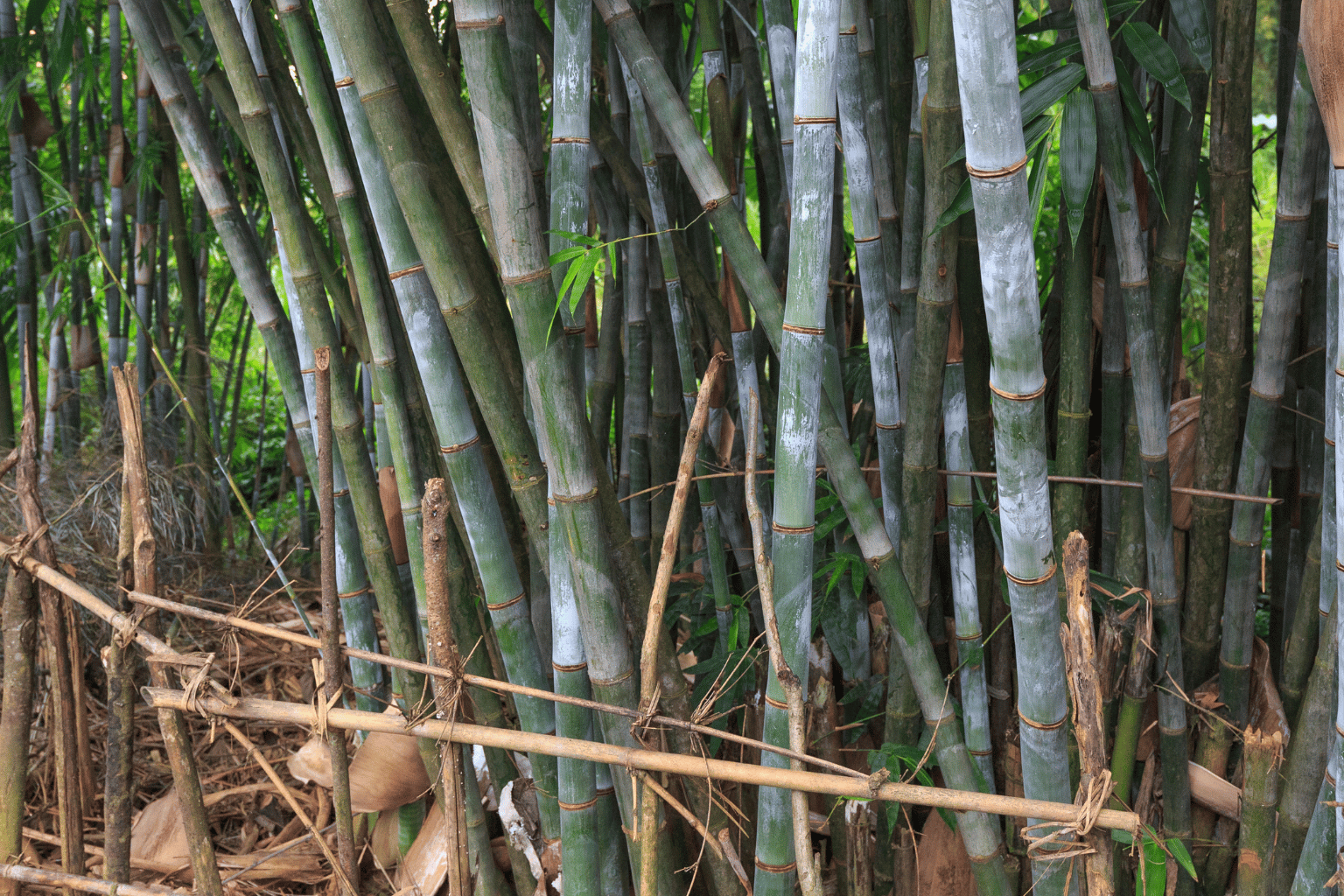
If you planted bamboo a few years ago for a quick, dense screen and now it's coming up through the patio, pushing under the fence, or showing up in your neighbour's flower bed, you're dealing with one of the most stubborn problems a garden can throw at you. Bamboo doesn't behave like a hedge or an overgrown border. Cut it back and it comes back stronger. Ignore it for a season and it can spread several metres underground before you ever see it above the surface.
This guide covers what bamboo removal actually costs in South East London, why it's priced and handled differently to a standard garden clearance, and what determines whether your job takes an afternoon or several days.
The short answer: Urban Gardeners prices bamboo removal at £80-£85 per hour for a two-person team, the same specialist band as our ivy removal service. Unlike most of our services, we can't give an accurate total from photos alone. Bamboo removal is one of the few jobs where we always recommend a site visit first, because the part of the plant that determines the price is underground and invisible until we start digging.
Got bamboo taking over your garden?
How Much Does Bamboo Removal Cost in South East London? (2026)
Urban Gardeners prices bamboo removal at £80-£85 per hour for a two-person team, tools included. This sits alongside our other specialist services like ivy removal and falls outside our standard garden maintenance and garden clearance rates, because bamboo work genuinely takes longer and needs a different approach.
Here's the honest part most companies won't tell you upfront: we can't give you a reliable total cost from photos. What you can see above ground, the canes and foliage, tells us very little about the size of the job. The real driver of cost is the underground rhizome network, and that's invisible until we start excavating. A modest-looking clump that's been in the ground for three or four years can easily have rhizomes running several metres in multiple directions, some of it already under your patio or your neighbour's fence.
That's why bamboo removal is one of the few jobs on our list that always needs a site visit before we can confirm hours and total cost. We'd rather tell you that honestly than give you a number based on a photo that turns out to be wildly wrong once we start digging.
To give you a sense of scale, here's roughly what different levels of bamboo problem tend to look like in terms of time:
| Scope of Job | Rough Time | Estimated Cost |
|---|---|---|
| Small, young clump, easily accessible | 2-3 hours | £160-£255 |
| Established clump, moderate spread | 4-6 hours | £320-£510 |
| Running bamboo with confirmed spread across the garden or under structures | Full day or more, sometimes across multiple visits | Quoted after site visit |
Prices can vary significantly depending on the extent of the rhizome network, access, and proximity to structures, so the figures in this guide are a realistic starting point rather than a fixed quote. A site visit is the only way to confirm the exact cost for your garden.
Compare that to the wider UK market: specialist invasive-plant contractors commonly charge anywhere from a few hundred pounds for a small clump up to £3,000-£20,000+ for a full excavation with a guarantee, often priced per square metre or as a fixed project fee rather than by the hour. Our hourly rate with a local team tends to work out significantly more affordable for the kind of garden bamboo problems we see across SE London, though for genuinely severe, structure-threatening infestations, a specialist invasive-plant company with excavation guarantees may be the better route, and we'll tell you honestly if that's the case.
For a full breakdown of how bamboo removal compares to our other specialist rates, see our complete gardener cost guide for South East London.
Want an honest answer on what your bamboo job will actually cost?
Why Bamboo Is Different From a Normal Garden Clearance
Most garden clearance work, brambles, overgrown borders, ivy on a fence, is about what you can see. Bamboo is different because the plant that's actually causing the problem is largely underground.
Bamboo spreads through rhizomes, thick underground stems that grow horizontally and send up new shoots wherever they reach. There are two broad types, and the distinction matters a lot for cost:
Running bamboo (Phyllostachys and similar varieties) is the aggressive kind. Its rhizomes can travel several metres from the original plant, popping up in flower beds, through patios, under fences, and into a neighbour's garden without warning. This is the type most commonly behind serious bamboo problems in UK gardens.
Clumping bamboo grows in tighter clusters with a shorter, denser root ball. It spreads far more slowly and rarely causes boundary problems, but a mature clump can still have a substantial, heavy root system that takes real time and effort to dig out.
Bamboo is also famous for regrowing from almost nothing. A rhizome fragment left in the soil, even a few centimetres, can regenerate an entire new plant. That's why cutting the canes down without dealing with the roots achieves almost nothing beyond a few weeks of tidiness.
Bamboo removal is still firmly a gardener's job rather than a tree surgeon's, even though it's specialist work. If you're ever unsure who to call for a particular garden problem, our guide on when to call a gardener versus a tree surgeon in SE London covers the dividing line and what each typically costs.
Bamboo vs Japanese Knotweed: Know the Difference
This is worth addressing directly because the two get confused constantly, and the legal picture is genuinely different.
Bamboo is not listed under Schedule 9 of the Wildlife and Countryside Act 1981, and it's not officially classed as an invasive species under UK law. That means there's no statutory requirement to remove it or specific legal disposal rules attached to it, though if it spreads into a neighbour's property and causes damage, you can still be held liable under general nuisance law.
Japanese knotweed is a different plant entirely, and it is specifically regulated. It requires specialist, often accredited, contractors to handle removal and disposal, and it can seriously affect property sales and mortgage applications if not properly documented.
If what's growing in your garden turns out to be Japanese knotweed rather than bamboo, we'll tell you honestly and point you toward a specialist rather than attempt to treat it as a standard clearance job. Getting this distinction right matters, both legally and for your peace of mind.
What's Included in Our Bamboo Removal Service
- Cutting back all visible canes to ground level
- Excavating the accessible rhizome network by hand or with appropriate tools
- Careful removal of root fragments to minimise regrowth risk
- An honest assessment of whether the job is fully contained in one visit or needs a follow-up
What's not included as standard:
- Root barrier installation (available separately if you want to keep some bamboo contained)
- Herbicide treatment programmes for very large, established running bamboo
- Structural repairs if bamboo has already damaged paving, decking, or fencing
- Japanese knotweed treatment, which needs a specialist invasive-plant contractor
- Full collection and disposal of all cut canes and excavated material
We'll always confirm exactly what's involved before starting, and flag anything outside standard scope before doing extra work.
What Affects the Final Cost
Running vs Clumping
Running bamboo takes noticeably longer to remove properly because the rhizome network has to be traced and excavated over a wider area. Clumping bamboo is more contained but the root ball itself can still be dense and heavy.
How Long It's Been Established
A clump planted two or three years ago is a very different job to one that's been left to spread for a decade. The longer bamboo has been in the ground, the further the rhizomes have likely travelled and the more woody and difficult the root system becomes.
Proximity to Structures
Bamboo growing near a patio, fence, wall, or the house itself needs to be excavated more carefully to avoid damage, which takes longer than clearing an open border. The Building Research Establishment recommends keeping running bamboo species at least 7-10 metres from structural foundations, which gives you an idea of how far root systems can realistically extend.
Access
Bamboo in an easily reached front or side garden is more straightforward than bamboo in an enclosed rear courtyard, where every barrowload of excavated material and cut cane has to be carried out by hand.
Waste Volume
Bamboo canes and root material are bulky, dense, and don't compress well. A modest clump can still produce a surprising volume of waste once it's all cut and dug out, and this is factored into the time (and therefore cost) of the visit.
Whether It's Crossed a Boundary
If bamboo has already spread into a neighbour's garden, the job may need to be coordinated across both properties to avoid the classic problem of clearing your side while regrowth continues to arrive from next door.
Not sure if what you've got is worth removing or containing?
£80-£85 per hour for a two-person team. Honest assessment, no inflated quotes. We'll tell you straight whether it's a job we can quote from photos or one that genuinely needs eyes on the ground first.
Explore our services: Garden Clearance, Garden Maintenance, or Garden Fencing.
Bamboo and Your Neighbours: What You Should Know
Bamboo disputes between neighbours are becoming more common across SE London as gardens planted with running bamboo 10-15 years ago have had time to spread properly. A few things worth knowing:
Unlike Japanese knotweed, bamboo isn't classed as a statutory nuisance, so councils generally won't intervene directly. That said, if your bamboo spreads into a neighbour's garden and causes damage, whether to their planting, fencing, or a hard surface, you can be held responsible for the cost of removal and any repairs under general nuisance law.
If you can see bamboo starting to approach a boundary, dealing with it early, either by removing it or installing a proper root barrier, is significantly cheaper than waiting until it's established on both sides of the fence. We covered a real example of this in our before and after garden transformations guide, where a Lewisham client's garden had become overrun with bamboo and invasive ground elder before we cleared it.
DIY Bamboo Removal vs Professional
Bamboo is one of the few garden jobs where DIY genuinely tends to make things worse rather than just taking longer.
Why Partial Removal Backfires
Cutting bamboo canes down without removing the rhizomes doesn't slow it down, it often triggers more vigorous regrowth as the plant redirects energy from its root system. Homeowners who've had a go with a spade and secateurs often find shoots appearing in new spots weeks later, because disturbing the rhizome network without fully removing it can actually spread fragments further.
The Equipment Gap
Removing an established rhizome network properly means digging to a real depth, tracing rhizomes as they run under paths and borders, and screening excavated soil to catch every fragment. Domestic tools can handle a small, young clump, but anything established genuinely needs the right equipment and the patience to do it thoroughly, not just quickly.
The Waste Problem
Bamboo waste is heavy, bulky, and doesn't fit neatly into standard garden waste collections. Most councils treat it like any other green waste, but the sheer volume from a proper removal job is more than most households can manage without several trips to a waste facility.
DIY makes sense for: a small, young clumping bamboo plant that hasn't had time to establish, where you can remove the whole root ball in one go with a spade and mattock.
Professional makes sense for: anything running, anything established for more than a couple of years, anything near a boundary or structure, and any job where getting it wrong means starting over with a bigger problem than you began with.
If bamboo is just one part of a wider overgrown garden, our guide on how to clear an overgrown garden covers the right order to tackle everything else without wasting effort or removing plants worth keeping.
Best Time of Year to Remove Bamboo
Unlike hedge trimming or ivy removal, bamboo removal isn't tied to a strict seasonal window, since bird nesting concerns are far less relevant to dense bamboo canes than to hedges and climbing ivy. That said, a few things are worth knowing.
Excavation work is genuinely easier in drier conditions. SE London's clay-heavy soil becomes significantly harder to dig through after a wet winter, which can add time (and therefore cost) to a job compared to tackling it in a drier spell.
If herbicide treatment is part of the plan for very established running bamboo, this is more effective during the growing season (spring through early autumn) when the plant is actively drawing nutrients down into the rhizome system, carrying the treatment with it.
The most important timing factor isn't the season, it's how long you wait once you've spotted a problem. Bamboo left untreated for even one more growing season can spread significantly further, turning a straightforward job into a much bigger one.
Bamboo Removal Across SE London Areas
We deal with bamboo problems across SE London regularly, and it tends to show up in a fairly consistent pattern.
In Blackheath SE3 and Eltham SE9, larger, more established gardens often have bamboo planted decades ago as a screening hedge that's since spread well beyond its original bed.
In Catford SE6 and Brockley SE4, we see it most often in smaller terraced gardens, where running bamboo planted along one boundary has already crossed into a neighbour's plot.
In Charlton SE7 and Camberwell SE5, bamboo problems often come up as part of a wider clearance on a garden that hasn't been touched in years.
In Woolwich SE18 and Abbey Wood SE2, we've dealt with bamboo encroaching under patios and decking on some of the newer riverside developments as well as the older Victorian terraces further inland.
We also cover Lewisham, Greenwich, Bromley, Bexley, and the wider DA and BR postcodes. Visit our Areas We Cover page for the full list, or get in touch to check we cover your postcode.
Bamboo Removal in South East London FAQ
Yes, particularly running bamboo species. Rhizomes can spread under patios, driveways, and fences, and the Building Research Establishment recommends keeping running bamboo at least 7-10 metres from structural foundations. Bamboo roots are less forceful than some invasive species, but they can still exploit existing cracks and weak points.
No. Bamboo is not listed under Schedule 9 of the Wildlife and Countryside Act 1981, unlike Japanese knotweed, and there's no statutory requirement to remove it. However, if bamboo spreads into a neighbour's property and causes damage, you can still be held liable under general nuisance law.
No. Cutting canes without removing the rhizomes doesn't stop bamboo, and can trigger even more vigorous regrowth. The rhizome system needs to be physically excavated or properly treated for the removal to be permanent.
For a small, young clumping bamboo plant, yes, with a spade and mattock. For anything running, established, or near a boundary or structure, DIY removal is unlikely to be permanent and can make the problem worse by disturbing the rhizome network without fully removing it.
For most bamboo jobs, yes. Unlike hedge trimming or standard clearance, the part of the job that determines cost is underground and invisible in a photo, so we recommend a free site visit to give you an honest, accurate total.
We'll tell you honestly. Japanese knotweed is a different, legally regulated plant that needs a specialist invasive-plant contractor, and we'll point you in the right direction rather than attempt to treat it as a standard removal job.
How Our Gardening Services Can Help
Bamboo problems rarely show up on their own. Here are the services SE London customers most often need alongside bamboo removal.
- Garden clearance - for gardens where bamboo is part of a wider overgrowth problem, £85/hour
- Ivy removal - another specialist job often tackled alongside bamboo, £80-£85/hour
- Garden maintenance - ongoing upkeep once the garden is back under control, £83 first hour, £65 after
- Hedge trimming - if bamboo was originally planted as a screening hedge alternative and you're weighing up options, £83 first hour, £65 after
- Garden fencing - a fresh boundary once bamboo along a fence line has been cleared
- Garden landscaping and design - if you're planning to replant or redesign the space once bamboo is fully removed
Not sure if you're dealing with running or clumping bamboo, or whether it's something else entirely?
Send us a few photos and we'll give you an honest read on what you're looking at and what it will take to sort it.

0 comments