

Hay fever affects somewhere between one in five and one in four people in the UK depending on which study you read, and if you live in South East London your own garden is probably making it worse. Plane trees on every street, a grass lawn flowering from May to July, and the urban heat that stretches the pollen season longer here than it runs in Kent. Enclosed terraced gardens trap the lot.
You do not have to concrete over the garden to fix this. The right plants and a few layout changes cut the pollen load enough that most sufferers can actually sit outside in June.
We have been redesigning gardens across Eltham, Blackheath, Lewisham, Greenwich and the surrounding SE postcodes since 2016, and allergy-driven redesigns come up more often every year. Here is what actually works.
The quick version
- The principle: choose insect-pollinated plants (heavy, sticky pollen that stays on the flower) over wind-pollinated plants (light, airborne pollen that gets up your nose)
- Best choices: hydrangeas, roses, camellias, hardy geraniums, begonias, lavender, clematis, fuchsia, heuchera
- Worst offenders: ryegrass lawns, birch, privet, Leylandii, male yew, ornamental grasses
- Biggest single change: deal with the lawn. Around 95% of UK hay fever sufferers react to grass pollen
- Best time to be in the garden: late morning to mid afternoon. Pollen peaks early morning and again in the evening
- Want help? Book a free on-site survey or call 07760800457 (Mon to Sat, 9am to 6pm)
Why Hay Fever Is Worse in South East London Gardens
This is not the same problem as living in the countryside. Four things stack up here.
London plane trees. They line the streets across Greenwich, Lewisham, Blackheath and most of SE London. In late spring they shed fine irritant hairs along with pollen. You cannot do anything about street trees, but you can avoid adding more wind-pollinating trees inside your own boundary.
The urban heat island. Built-up areas hold heat longer than open countryside, which stretches the pollen season at both ends. Hazel and alder can be in the air from February, birch peaks through April and May, and grass pollen can hang on into August. The Met Office runs its pollen forecast from mid-March to mid-September, and London routinely sits at the early end of every window. The Met Office pollen calendar gives the national windows; London tends to run wider than those.
Trapped pollen. Terraced streets and enclosed gardens are the norm across SE London. Pollen does not blow through. It settles on patios and furniture, collects in corners and gets stirred back up on warm days.
Pollution. Nitrogen dioxide and other traffic pollutants damage pollen grains and make them more allergenic. Urban pollen irritates more than rural pollen at the same count. It is one reason people who never had hay fever growing up develop it after moving to London.
None of this means you cannot have a garden. It means plant choice matters more here than it would in Sevenoaks.
The One Rule: Insect-Pollinated vs Wind-Pollinated
This is the whole thing. Get this and every plant decision after it becomes obvious.
Wind-pollinated plants fire out enormous quantities of light, dry pollen designed to travel on air currents. That is the pollen that reaches your eyes and lungs. Grasses, birch, oak, plane, privet, male yew and most conifer hedging are wind-pollinated. They cause the overwhelming majority of hay fever.
Insect-pollinated plants make heavier, stickier pollen that clings to bees and hoverflies. It is engineered to travel on an insect, not on the wind, so very little of it becomes airborne. Roses, hydrangeas, camellias, lavender, clematis and almost every showy flowering plant fall in this camp.
The shortcut: big, bright, obvious flowers means insect-pollinated and safe. Small, dull, green or catkin-like flowers means wind-pollinated and a problem. If the flower is not trying to attract anything, it is broadcasting into the wind instead.
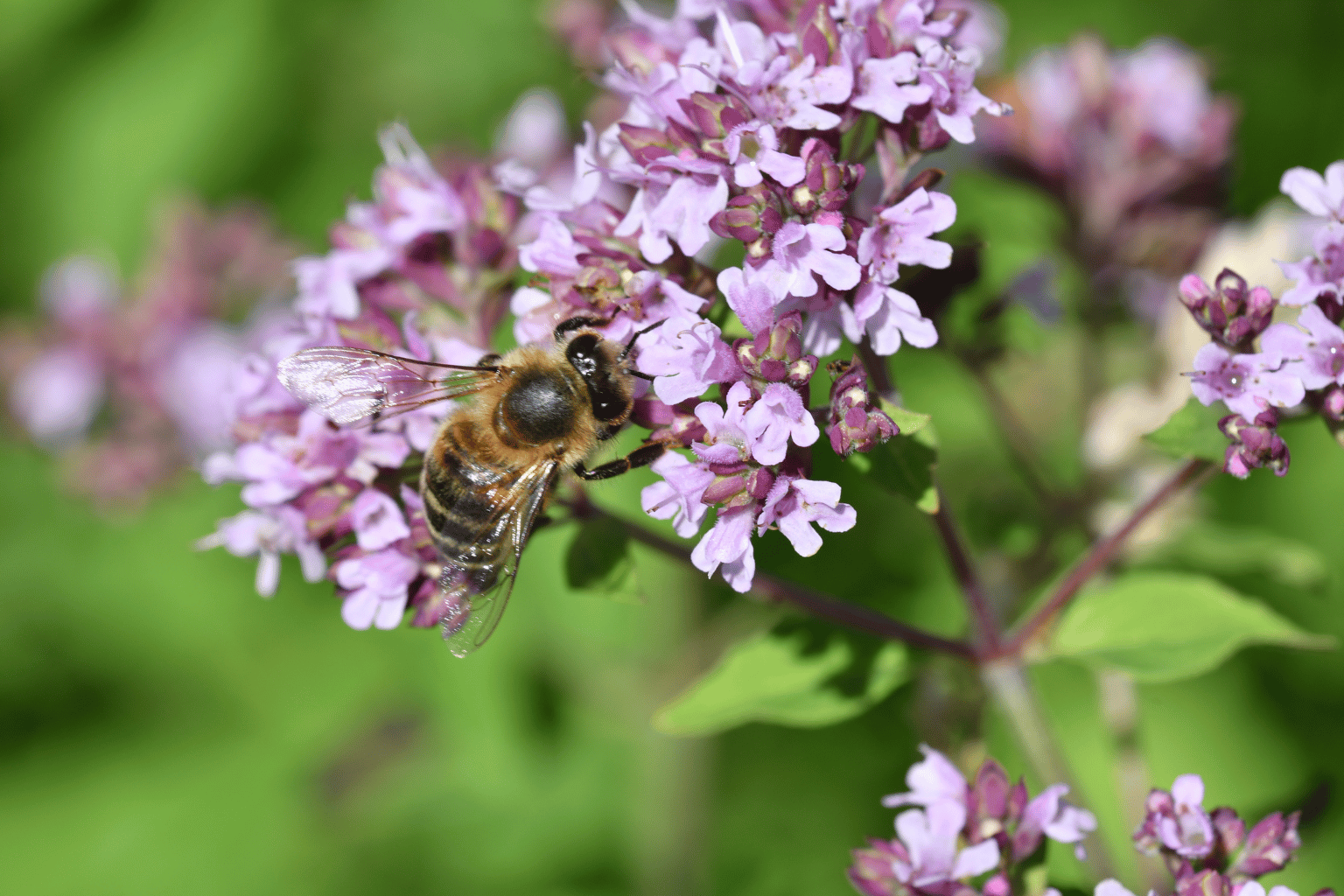
Bee pollinating a flower
There is one useful side effect here. Insect-pollinated planting is also the planting that supports bees and butterflies, so an allergy-friendly garden and a pollinator-friendly garden are largely the same garden.
Best Low-Pollen Plants for South East London Gardens
These all cope with what SE London actually throws at plants: London clay, partial shade from neighbouring buildings and extensions, mild wet winters.
Find the light level you are working with, then read the notes on that plant below.
| Low-pollen plant | Light | Use it as |
|---|---|---|
| Hydrangea | Partial shade | Border shrub |
| Rose | Sun to light shade | Climber or shrub |
| Hardy geranium (Geranium) | Sun or shade | Ground cover, gap filler |
| Begonia | Shade | Bedding, containers |
| Lavender | Full sun | Container or raised bed |
| Fuchsia | Partial to full shade | Border shrub |
| Heuchera | Shade | Ground cover |
| Clematis | Sun to partial shade | Climber |
| Camellia | Partial shade | Evergreen shrub |
| Female holly (Ilex) | Sun or shade | Hedge, screening |
| Ilex crenata / Euonymus japonicus | Sun or shade | Low clipped hedge |
| Magnolia | Sun to partial shade | Feature tree |
| Apple, pear, cherry | Full sun | Fruit tree |
| Japanese maple (Acer palmatum) | Sheltered partial shade | Feature tree |
Flowering plants for borders and beds
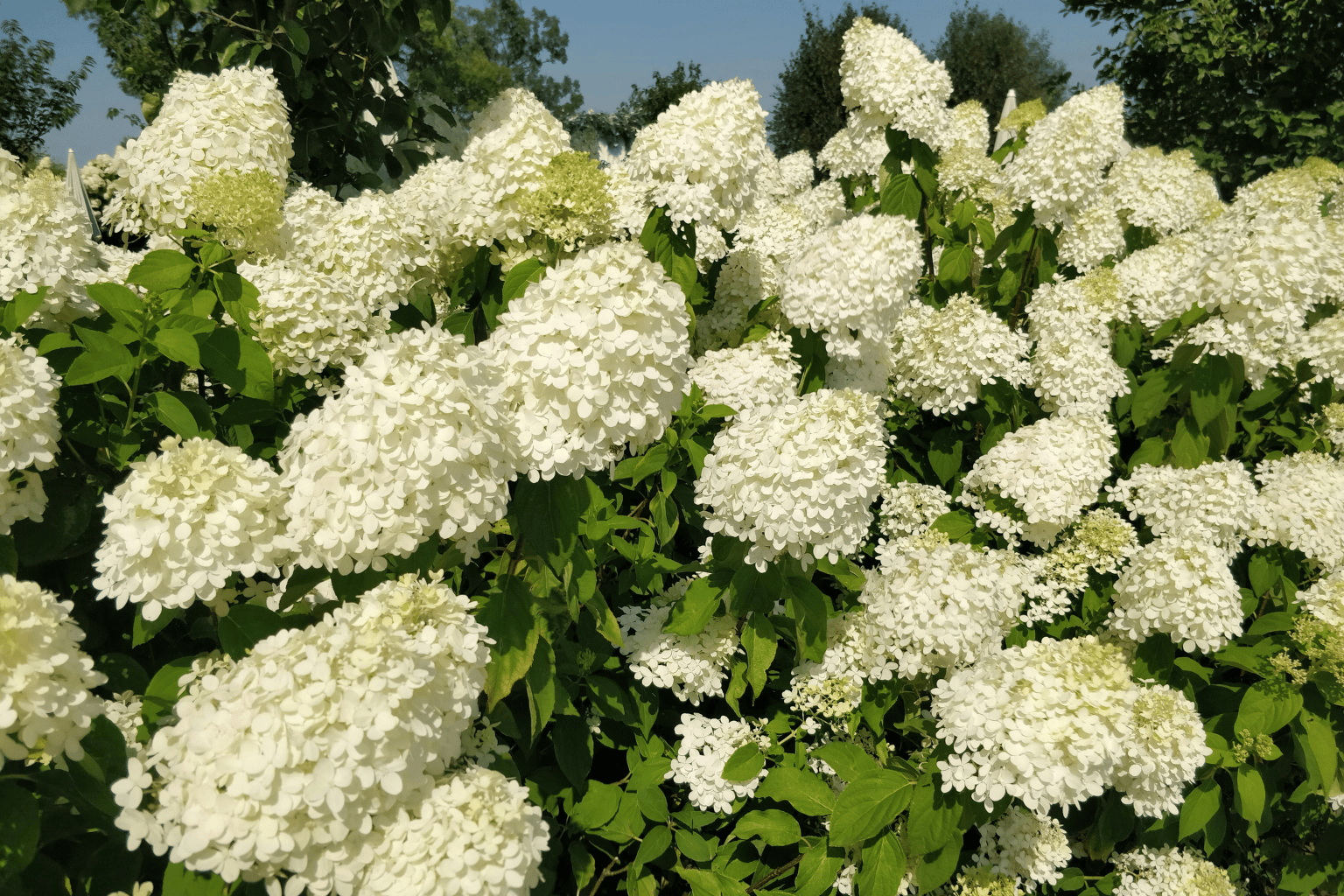
Hydrangeas. Reliable in London clay and happy in the partial shade that most SE London gardens have too much of. Huge flower heads, insect-pollinated, effectively no airborne pollen. Mophead and lacecap both fine.
Roses. One of the safest choices there is. Heavy sticky pollen moved by bees. Everything from climbers for a fence to compact shrub roses for a small courtyard.
Hardy geraniums (Geranium). Very low pollen, tough as anything, spreads to fill gaps and suppresses weeds. Worth being precise here because the names get muddled: hardy geranium is Geranium, the bedding "geranium" is Pelargonium and is not frost hardy in the UK. Both are low pollen, but only one survives a Lewisham winter outdoors.
Begonias. Shed almost no pollen at all. Fibrous and tuberous types both safe. Excellent in the shaded, north-facing plots that are common behind SE London terraces.
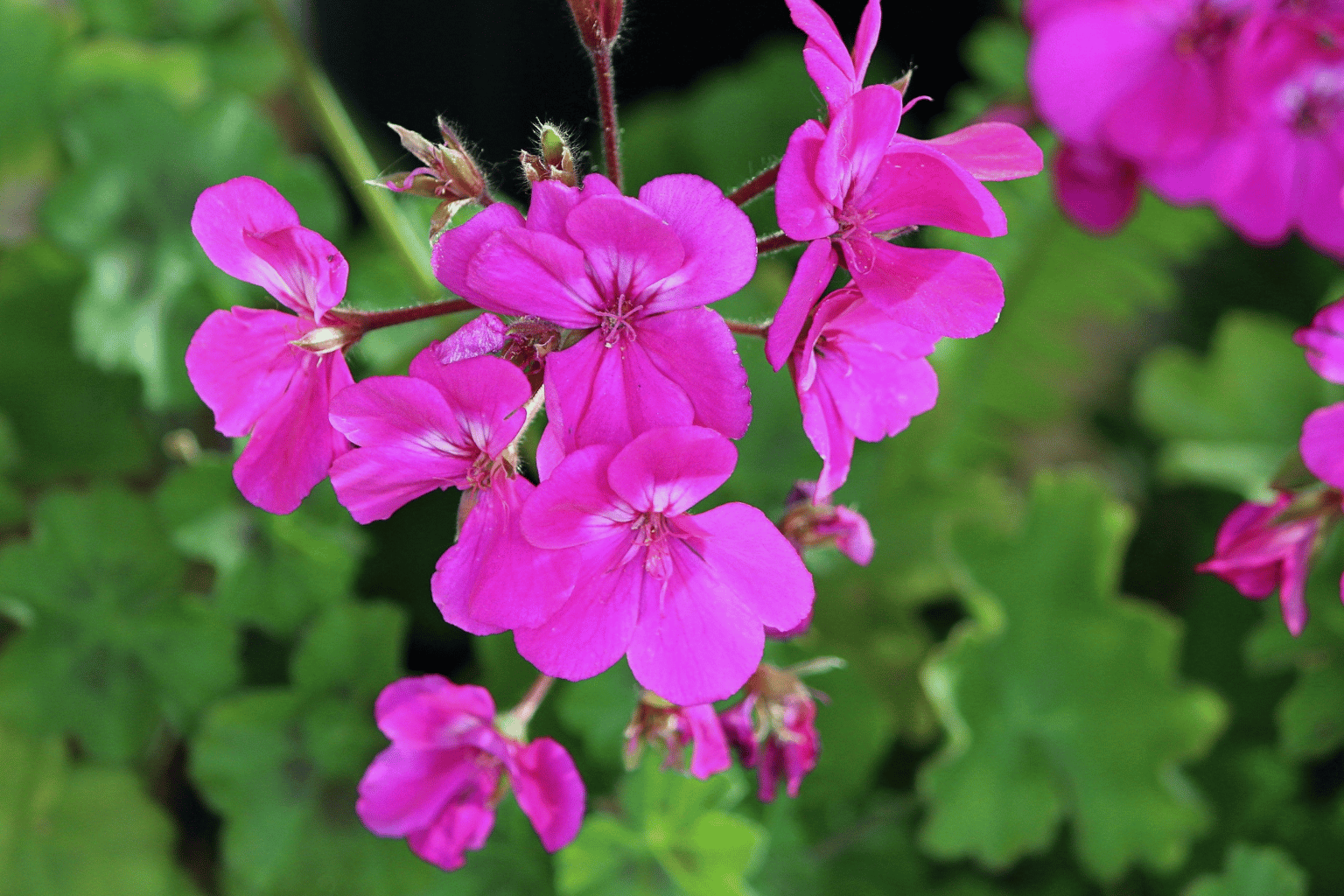
Pink geranium flowers
Lavender. Insect-pollinated and generally well tolerated. Needs the sunniest spot you have and sharp drainage, so on heavy London clay put it in a raised bed or a container rather than fighting the soil.
Fuchsia. Thrives in partial shade, insect-pollinated, no meaningful airborne pollen. One of the best performers in a north-facing SE London garden.
Heuchera (coral bells). Low-growing foliage plant with tiny insect-pollinated flowers. Enormous range of leaf colours, and it works as ground cover, which suppresses weeds. Fewer weeds means fewer weed flowers, which means less pollen. Weed control is an underrated part of an allergy garden.
Clematis. Insect-pollinated climber, ideal for walls, fences and trellis where a small SE London garden has no floor space left to give.
Shrubs and hedging
Camellias. Heavy, sticky, insect-carried pollen and gorgeous early spring flowers with evergreen structure the rest of the year. They want acidic to neutral soil, which you get naturally around the Blackheath pebble beds and parts of Greenwich, but most of SE London sits on neutral-to-slightly-alkaline London Clay. Test your soil first, or plant in ericaceous compost in a large pot.
Female holly (Ilex). Produces no pollen whatsoever. Holly is dioecious, meaning separate male and female plants, and only the males release pollen. Buy named female varieties such as 'J.C. van Tol' or 'Golden King' (which is, confusingly, female). Good dense evergreen screening and berries for birds.
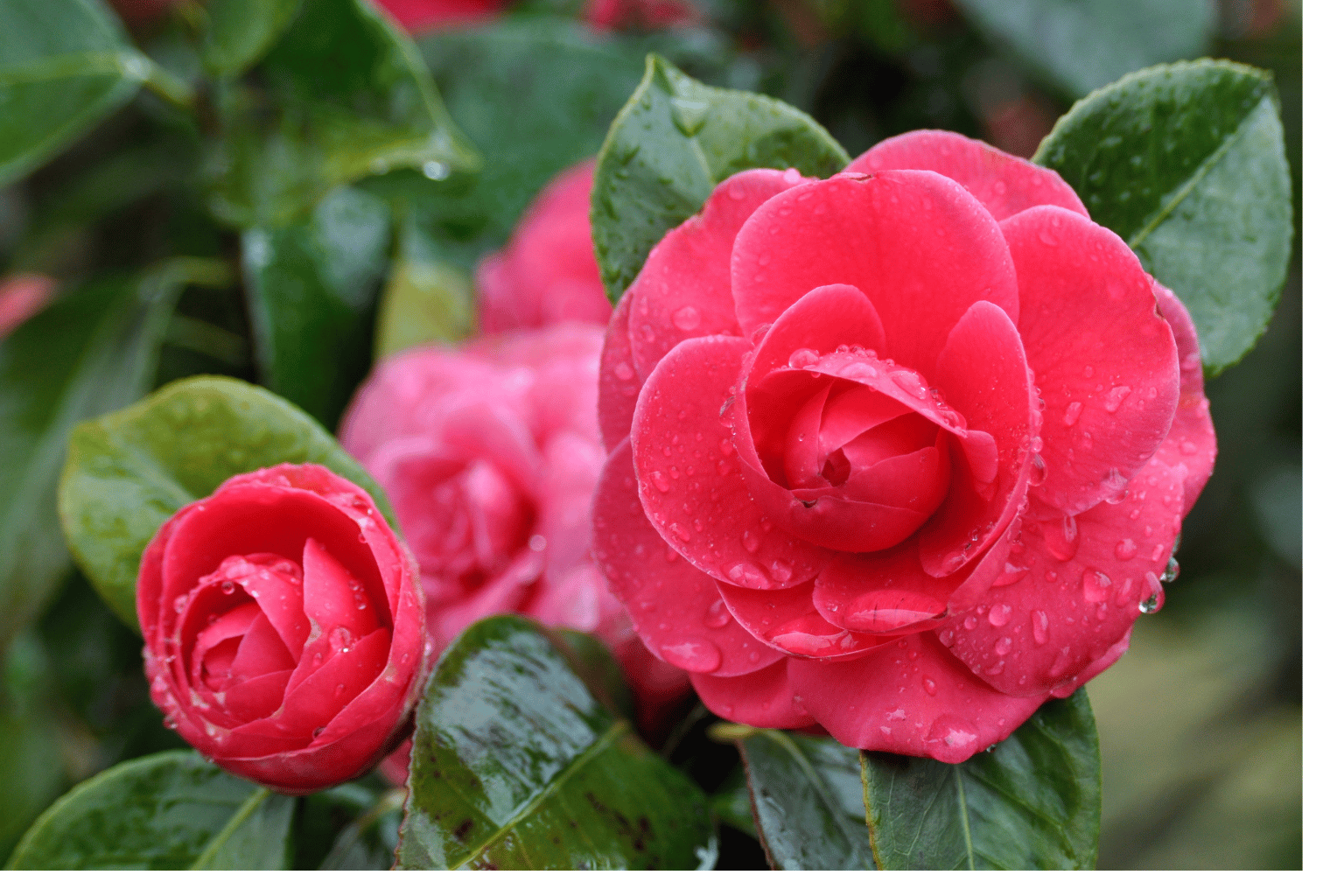
Pink Camellias flowers
Ilex crenata or Euonymus japonicus instead of box. Box (Buxus) is often recommended in allergy articles, and it is low pollen, but we will not specify it in SE London any more. Box blight and box tree caterpillar have hit London and the South East harder than anywhere in the country, and the RHS now maintains a dedicated box alternatives trial because of it. Japanese holly gives you the same clipped look without the near-certainty of defoliation.
A warning on yew. Yew is regularly listed as a low-allergen hedge. That advice is only true for female plants. Male yew scores 10 out of 10 on the Ogren Plant Allergy Scale, the worst possible rating, while female yew scores 1. Hedging yew sold in UK garden centres is not sex-selected, so you are effectively tossing a coin. Avoid it in an allergy garden unless a nursery can guarantee female stock in writing.
Trees, if you have the space
Magnolia. Insect-pollinated, huge showy flowers, handles London clay well.
Apple, pear and cherry. All insect-pollinated. Blossom stays on the flower, and you get fruit out of it. Good for medium and larger gardens.
Japanese maple (Acer palmatum). Minimal pollen, gives structure and serious autumn colour, and does well in the sheltered conditions an enclosed SE London garden provides.
Not sure what you have got, let alone what to replace?
Send us a few photos through our contact page and tell us who uses the garden and what triggers the worst symptoms. We will tell you honestly whether a planting swap will fix it or whether you need to look at the lawn. Photo-based quotes come back within 24 hours. For larger jobs, a free on-site survey with a written quote within 3 business days. Call 07760800457 (Mon to Sat, 9am to 6pm)
Plants to Avoid or Remove
These are the common garden plants doing the most damage to hay fever sufferers. Peak months are for London, which typically runs a week or two ahead of the national average.
| Plant | Why it is a problem | Peak months |
|---|---|---|
| Ryegrass lawn | Wind-pollinated, and the single biggest pollen source in most gardens | May to July |
| Male yew | Rated 10 out of 10 on the Ogren allergy scale, the worst possible score | Feb to April |
| Birch | One of the worst UK offenders and a major London trigger | April to May |
| Leylandii and cypress | Wind-pollinated, heavy pollen load, and a poor neighbour generally | Feb to April |
| London plane | Fine irritant hairs as well as pollen. Usually the council's tree, not yours | April to May |
| Privet hedging | Wind-pollinated, and a heavy pollen producer | June to July |
| Ornamental grasses | They are grasses. Wind-pollinated and they flower | June to Sept |
| Chrysanthemum, dahlia, sunflower | Asteraceae family. Pollen plus contact dermatitis from the foliage | July to Oct |
| Wisteria | Moderate pollen, and the fragrance alone sets some sufferers off | May to June |
Four of those need a bit more than a table row.
Privet is the one people miss. If you have a mature privet hedge and bad June symptoms, that hedge is very likely a bigger contributor than anything in your borders.
Replacing a conifer boundary? Fencing plus climbers is usually the better answer in a small SE London garden, because a replacement hedge takes years to screen and eats width you do not have.
Ornamental grasses. We have written about ornamental grasses for accent planting and we stand by that post for most gardens. But if anyone in the house has hay fever, skip them, or cut the flower heads off before they open.
Dahlias are salvageable. Double-flowered forms hold their pollen in tightly and are the least problematic of the Asteraceae if you do not want to lose them.
Buddleia. Worth being accurate about this one. Buddleia is insect-pollinated and is not a major hay fever plant. But some people do react to it, and it is one of the most common self-seeding invasives in London. If you react to yours, take it out. If you do not, keep it for the butterflies.
What to Do About the Lawn
For most sufferers the lawn is the elephant in the room. It looks completely harmless and it is the single largest pollen source in the garden. Grass pollen is the main trigger during the season, affecting around 95% of hay fever sufferers according to the Royal Meteorological Society.
Four options, cheapest first.
Option 1: Keep it, but mow aggressively
Grass only pollinates once it gets long enough to flower. Cut it before that happens and you cut most of the pollen. That means weekly during the growing season, ideally twice weekly in May and June. This does not eliminate the problem but it makes a real difference, and it is free if you already own a mower.
Cost if you do not: our lawn mowing and maintenance runs £80 for the first hour, £60 per hour after that, with no minimum charge. A small SE London lawn is usually inside the first hour. Fortnightly is not enough during peak season, so book weekly from May to July.
Option 2: Swap to a low-allergen grass mix
Not all grass is equal. Fine fescues produce far less pollen than the perennial ryegrass in standard UK turf. You still mow, but the pollen output drops noticeably.
Cost: £15 to £28 per m² including turf, topsoil, ground prep and laying. A small lawn up to 30m² comes in around £450 to £840. Full numbers in our turfing cost guide for South East London.
Option 3: Replace with artificial grass
This removes grass pollen from the equation entirely. No mowing, no flowering, no pollen, and nothing to bring into the house on the dog. For a severe sufferer it is the single most effective change available.
Cost: £60 to £90 per m² installed, including excavation, sub-base, membrane, grass and labour. A small lawn up to 30m² is £1,800 to £2,700. Before you commit, read our honest pros and cons of natural vs artificial grass and our artificial grass maintenance guide, because it is not maintenance-free, just mowing-free.
Option 4: Lose the lawn entirely
Gravel, paving, raised beds and ground-cover planting can replace turf completely and give you a genuinely low-maintenance, low-pollen garden. Heuchera, ajuga and creeping thyme all work as walkable-ish ground cover.
Cost: this is a garden landscaping and design project. Small refresh with new borders, gravel paths and planting typically £1,200 to £3,500. See our low-maintenance garden design guide and the full price list for everything else.
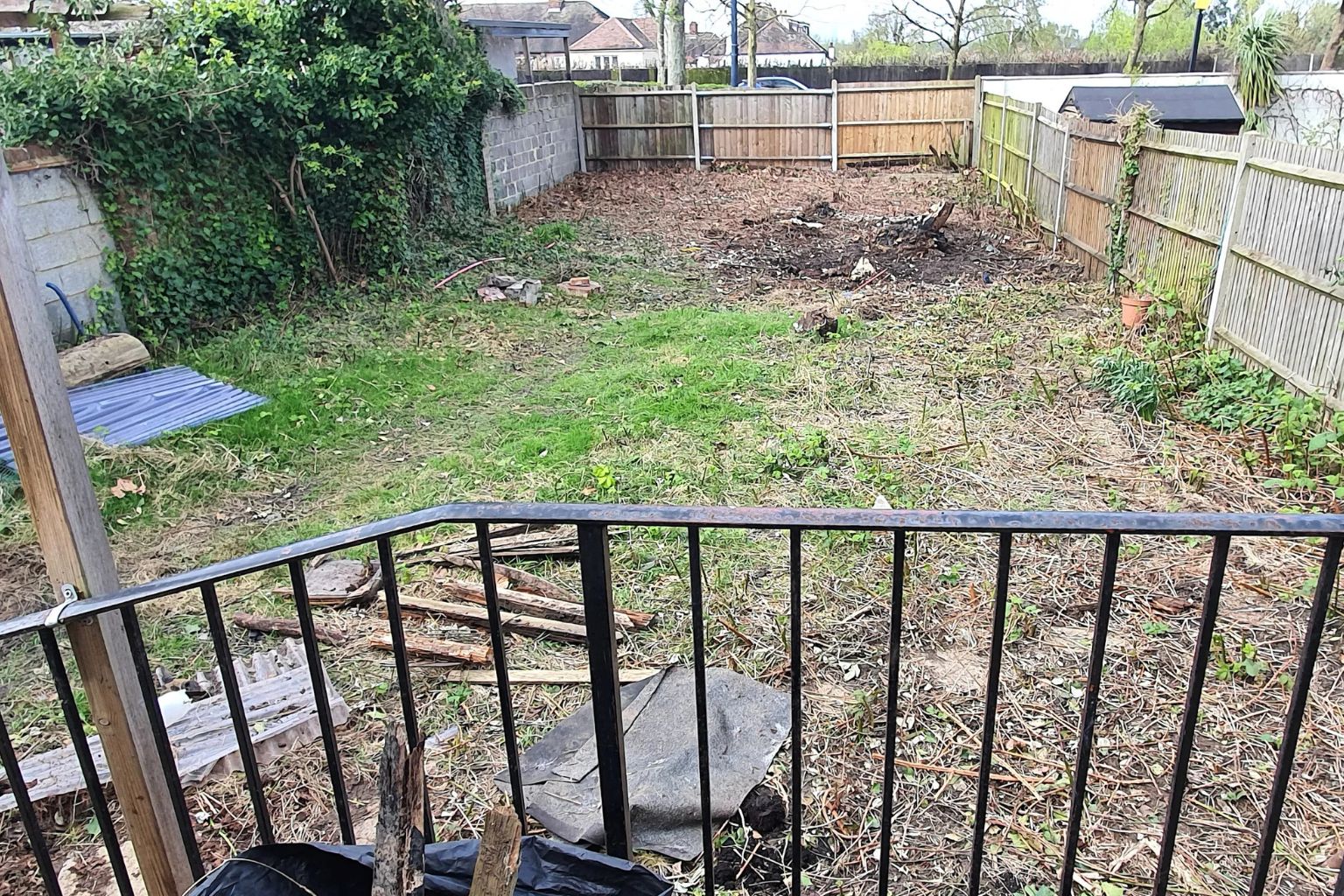
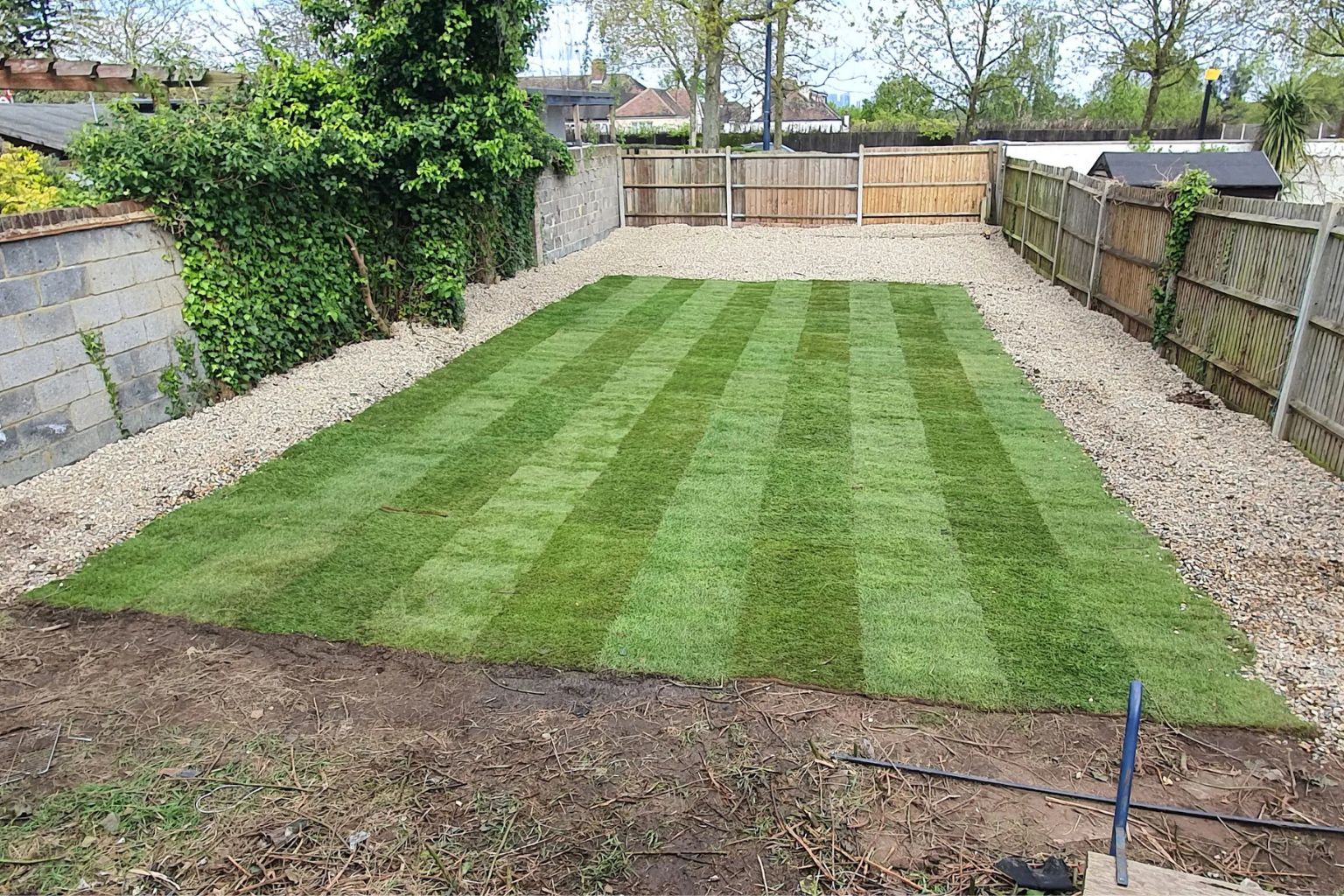
Turfing Installation by Urban Gardeners
Layout Changes That Cut Pollen Exposure
Plant choice is half of it. How you arrange the garden is the other half.
Use a hedge as a pollen filter. A dense low-allergen hedge on the windward boundary traps airborne pollen coming in from neighbouring gardens and street trees before it reaches your seating area. Female holly and Ilex crenata both do this well. Keep it properly trimmed so it stays dense at the base, which is where a leggy hedge stops working as a filter.
Mulch the borders. Bare soil grows weeds, weeds flower, flowers make pollen. A 5cm layer of bark or gravel suppresses weed growth, holds moisture, and removes one whole category of allergen. Cheapest high-impact job on this list.
Move the seating away from the problem. If you cannot remove every wind-pollinated plant, at least put distance between it and where you sit. In most SE London gardens the patio is against the house and the planting is at the far end, which already helps.
Wash the hard surfaces. Pollen settles on patios, decking and furniture and gets kicked back into the air every time you walk across. A sweep once a week helps, and a proper patio and decking clean at the start of the season strips out the built-up layer. We charge £4/m², minimum £140, and use no harsh chemicals, which matters if the reason you are cleaning is that somebody in the house has sensitive airways.
When to Be in the Garden (Free, and Nobody Mentions It)
Pollen counts are not flat across the day. They typically peak in the early morning, roughly 5am to 10am, as warming air lifts pollen off the plants, dip around midday and rise again in the early evening as the air cools and pollen sinks back down.
So the practical advice is: garden and sit outside between late morning and mid afternoon. Avoid the early evening pint in the garden in June, which is exactly when most people want it. Check the Met Office pollen forecast before planning a day outside, and see the NHS hay fever guidance for symptom management, which is a doctor's job, not a gardener's.
If we are cutting your grass, tell us if hay fever is an issue and we will schedule the visit for the middle of the day and bag every clipping rather than leaving them on the lawn.
Pets and Children
If you are redesigning for allergies and you have either, two extra points.
Pets carry pollen indoors on their coat after every trip outside, so reducing pollen at ground level, which mostly means the lawn, cuts what ends up on your sofa. Worth factoring into the artificial grass decision.
Children. Avoid anything toxic if eaten: foxglove, laburnum, yew berries, lily of the valley. Everything recommended in this guide is non-toxic, but check any additions before planting if children use the garden unsupervised. Our guide to pet-friendly plants safe for dogs and cats covers a lot of the same ground.
What an Allergy-Friendly Garden Redesign Costs in 2026
Based on our actual SE London rates, not national averages.
| Change | Typical cost |
|---|---|
| Weekly lawn mowing through pollen season | £80 first hour, £60/hour after |
| Bark or gravel mulching of existing borders | Quoted after survey |
| Seasonal patio and decking clean | £4/m², minimum £140 |
| Replacing a small lawn (up to 30m²) with low-allergen fescue turf | £450 to £840 |
| Replacing a small lawn (up to 30m²) with artificial grass | £1,800 to £2,700 |
| Removing a privet hedge and replacing with a low-allergen hedge | Quoted after free survey |
| Small garden refresh: new borders, gravel paths, low-pollen planting | £1,200 to £3,500 |
| Mid-size redesign with new patio and planted borders | £3,500 to £8,000 |
| Full garden transformation | £4,000 to £18,000 |
All ranges include labour and materials. Final pricing depends on garden size, ground conditions, access and material choices. Full breakdown on our prices page.
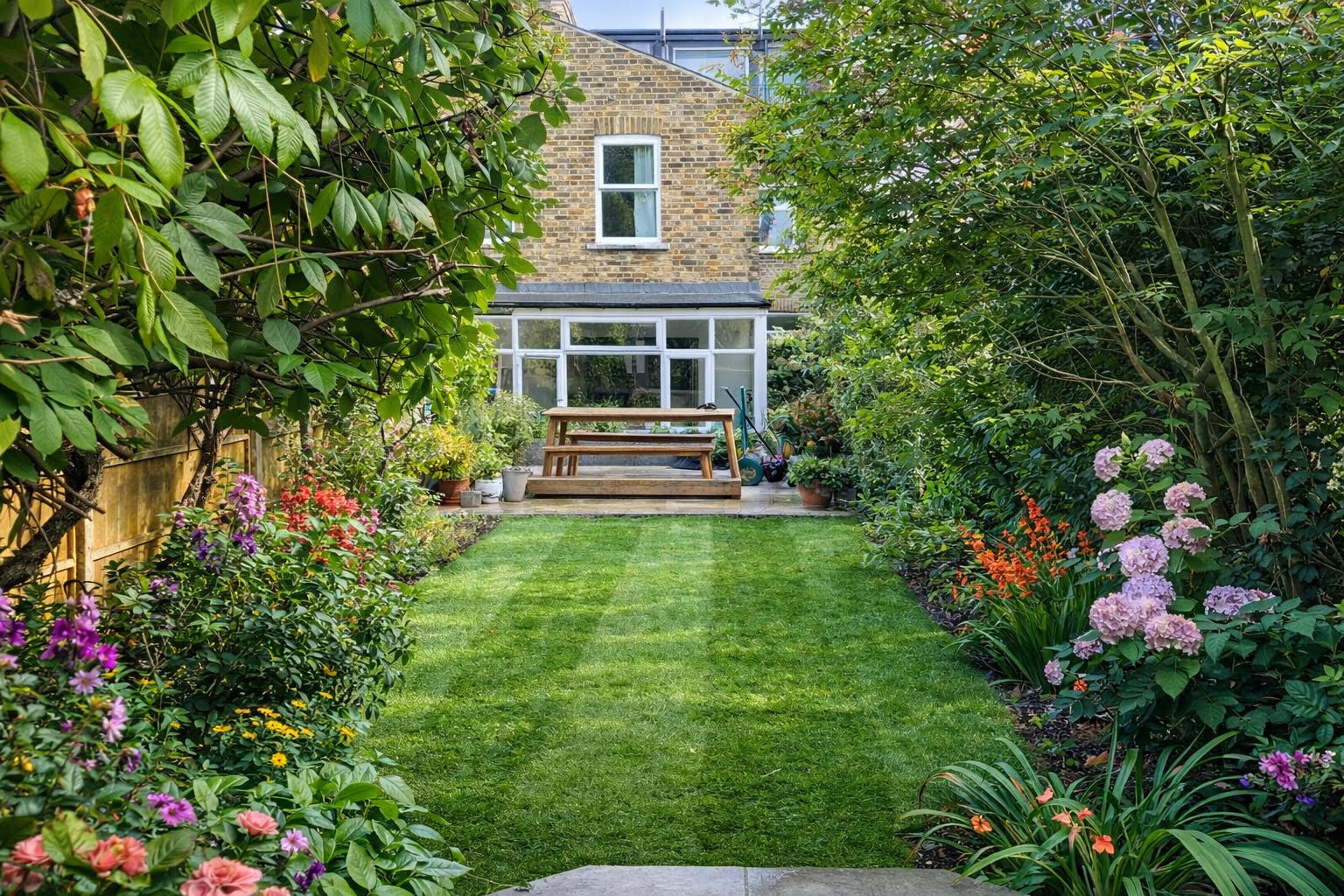
Turfing Installation
Frequently Asked Questions
Yes, for grass pollen specifically. Artificial grass produces no pollen and never flowers, which removes what is usually the largest single pollen source in a garden. It will not protect you from tree pollen drifting in from the street, so it works best alongside a low-allergen boundary hedge.
Grass pollen generally runs from mid-May to July across the UK, with two peaks. London's urban heat island tends to stretch that at both ends, so expect symptoms from early May into August. Tree pollen comes earlier: hazel and alder from February, birch through April and May.
Yes. Privet is wind-pollinated and releases significant pollen in June and July, usually right at head height along your boundary. It is one of the most commonly overlooked triggers in an established SE London garden.
Counts usually peak early morning, around 5am to 10am, and again in the early evening. Late morning to mid afternoon is generally the most comfortable window for being outside.
Yes. We handle everything from a planting swap through to a full redesign across all SE, BR and DA postcodes. Send photos for a quote within 24 hours, or book a free on-site survey and get a written quote within 3 business days.
Get an Honest Answer About Your Garden
Send us a few photos through the contact page with a note on who uses the garden and what makes the symptoms worst. We will tell you straight whether swapping a few plants will do it or whether the lawn is the real culprit, and we will not sell you a full redesign you do not need.
Family-run since 2014, based in Eltham SE9 since 2016, 111 Google reviews at 4.5+, fully insured, holding a Gardening and Landscape Design Business Diploma and Certificate.
For larger projects: free on-site survey, written quote within 3 business days.
Call 07760800457 (Mon to Sat, 9am to 6pm) or send your photos here. We reply within 24 hours.
We cover all South East London postcodes including Lewisham, Greenwich, Eltham, Blackheath, Catford, Sidcup and all surrounding Bromley, Bexley and Dartford postcodes. See our portfolio for before and after projects.
About Urban Gardeners
Urban Gardeners is a local gardening and landscaping company based in Eltham SE9, serving South East London since 2016. We are a small, fully insured team that works directly with homeowners, landlords and letting agents across all SE London postcodes plus Bromley, Bexley and Dartford.
We hold a Gardening and Landscape Design Business Diploma and Certificate, and we have completed thousands of jobs across the area, from quick garden tidy-ups to full garden transformations. We currently have 111+ verified Google reviews at a 4.5+ rating.
If you want to see what our work actually looks like, browse our completed project portfolio or read more on our about page.
Posts You Might Like
Can You Still Lay New Turf During the Hosepipe Ban in South East London?

Hosepipe Ban in South East London: What You Can and Cannot Do in Your Garden
You step outside, coffee in hand, and there it is again. That
When to Call a Gardener vs a Tree Surgeon in SE London (And the Cost Difference)
You have a tree in your SE London garden that needs attention.

How to Deal with Flooding and Mud in the Garden During the Rainy Season in South East London
As the rainy season arrives in London, homeowners often face a frustrating
Poor Drainage in South East London: How to Fix It (And Whether a Channel Drain Is What You Need)
South East London gardens don't drain well. That's not an opinion -
August Garden Problems? Here’s How to Keep Your Garden Thriving
August is a key month for garden maintenance in South East London.
Easy Steps to Handle a Deceased Tree in The Garden
Do you know how to deal with a deceased tree? Well, tackling

0 comments