

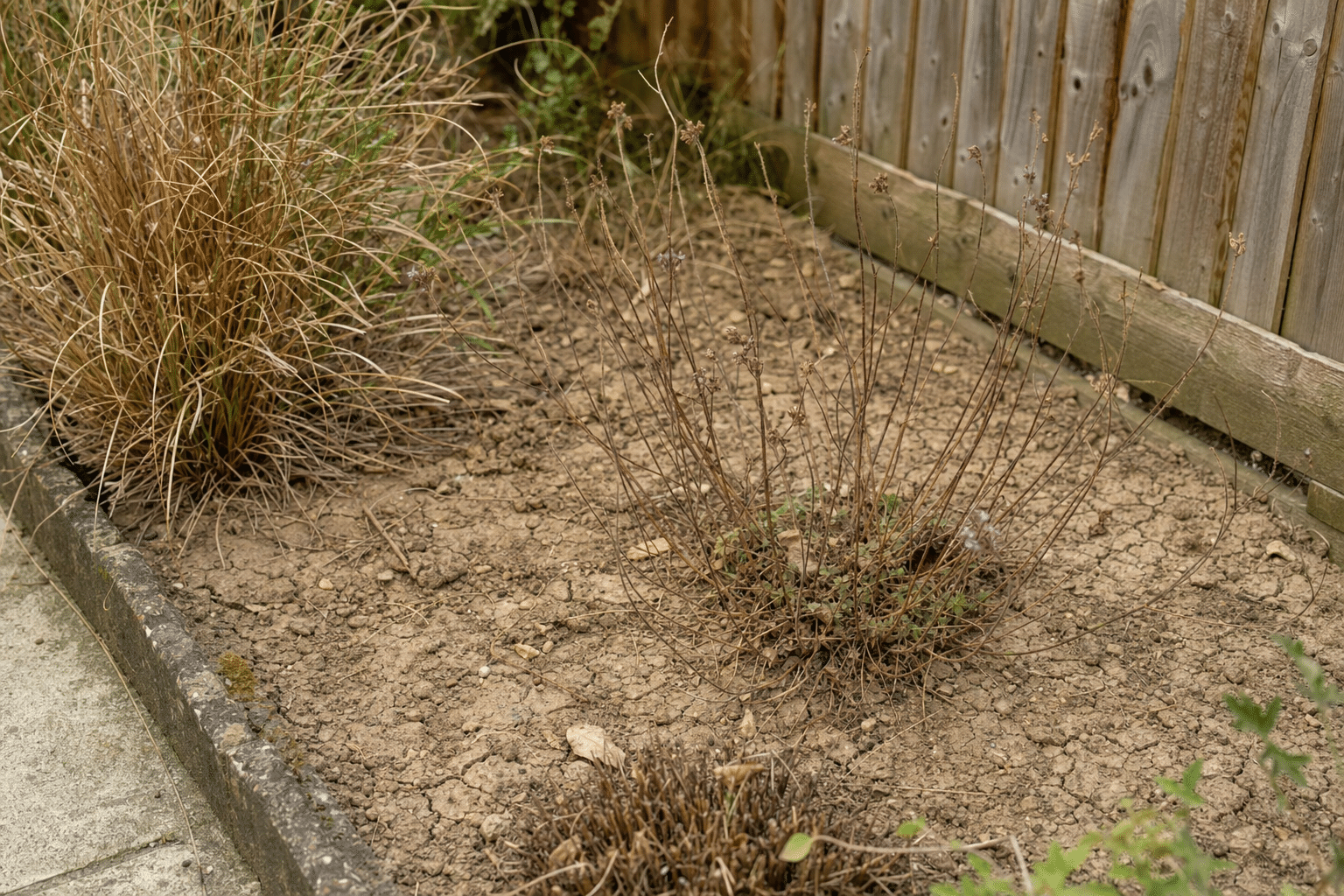
If your border has gone from “the nice bit of the garden” to “brown sticks and cracked mud,” you are not alone. This was the summer that found every planting mistake in South East London. No hose allowed, ground like a pavement, and by mid-August whole borders looked switched off at the wall.
We planted and maintained borders across SE London right through it. Some plants did not flinch. Others were gone by the end of July. This guide is about drought tolerant plants for clay soil here, a different list from the one most gardening sites give you.
What’s in this guide
- The Quick Version: What Came Back
- Drought Tolerant Plants for Clay Soil: What Survived the 2026 Summer in SE London
- Clay-Tough and Drought-Tough Are Two Different Things
- The Plants That Took the Drought and Then Died in Winter
- What Actually Lived: The SE London Clay List
- The Grit Build-Up: How We Plant a Dry Border on Clay
- What a Border Planting Job Includes, and What It Does Not
- What Changes the Cost of a Drought-Proof Border
- When to Plant on SE London Clay, Month by Month
- Watering a New Border While the Hosepipe Ban Is On
- DIY or Bring Us In
- Where We See Burnt Borders Across South East London
- Frequently Asked Questions
- How Our Services Can Help
The Quick Version: What Came Back
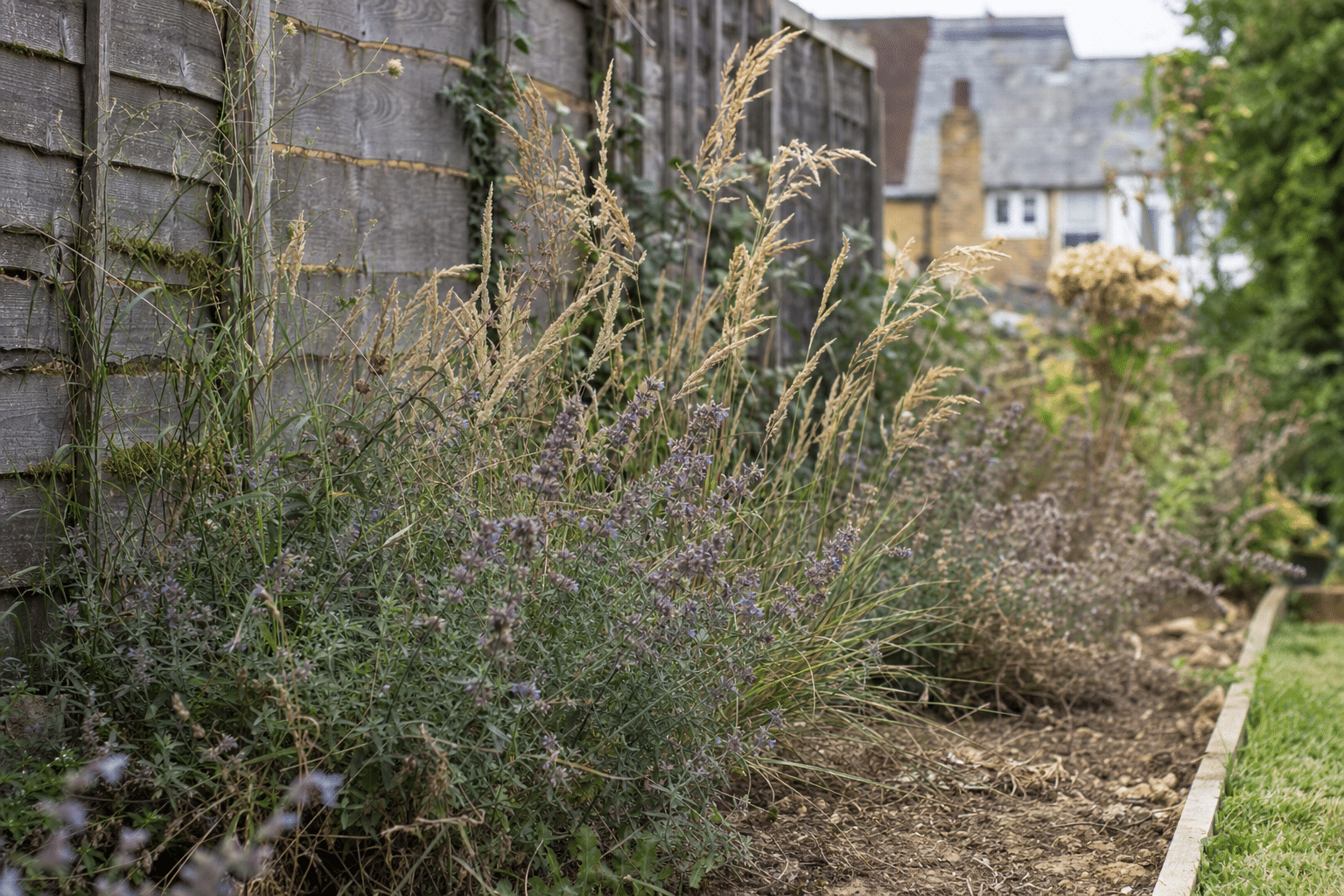
The short answer: on South East London clay, the plants that came back were hardy perennials and grasses, not Mediterranean shrubs. Catmint, hardy geraniums, Crocosmia, Achillea, Hylotelephium and Calamagrostis grasses carried on flowering with no water at all. Lavender, rosemary and Cistus also sailed through the drought, then plenty of them died over the following wet winter, because clay holds water in January the way it refuses it in July.
That is the problem in one sentence. A plant here has to survive two opposite things, six months apart.
Border burnt brown and you want it replanted properly this autumn?
Drought Tolerant Plants for Clay Soil: What Survived the 2026 Summer in SE London
Some numbers first, so you know this was not just a warm spell.
England had its driest July since records began in 1836, with 6.5mm of rain across the whole month, against a previous record of 13.4mm set in 1911. Southern England got 1.9mm, 3% of normal, the driest month ever recorded here. Thames Water’s hosepipe ban started on 23 July 2026 and is still running.
So nothing got watered, which makes this the most honest plant trial SE London has had in decades. Every border was tested at once, with no help.
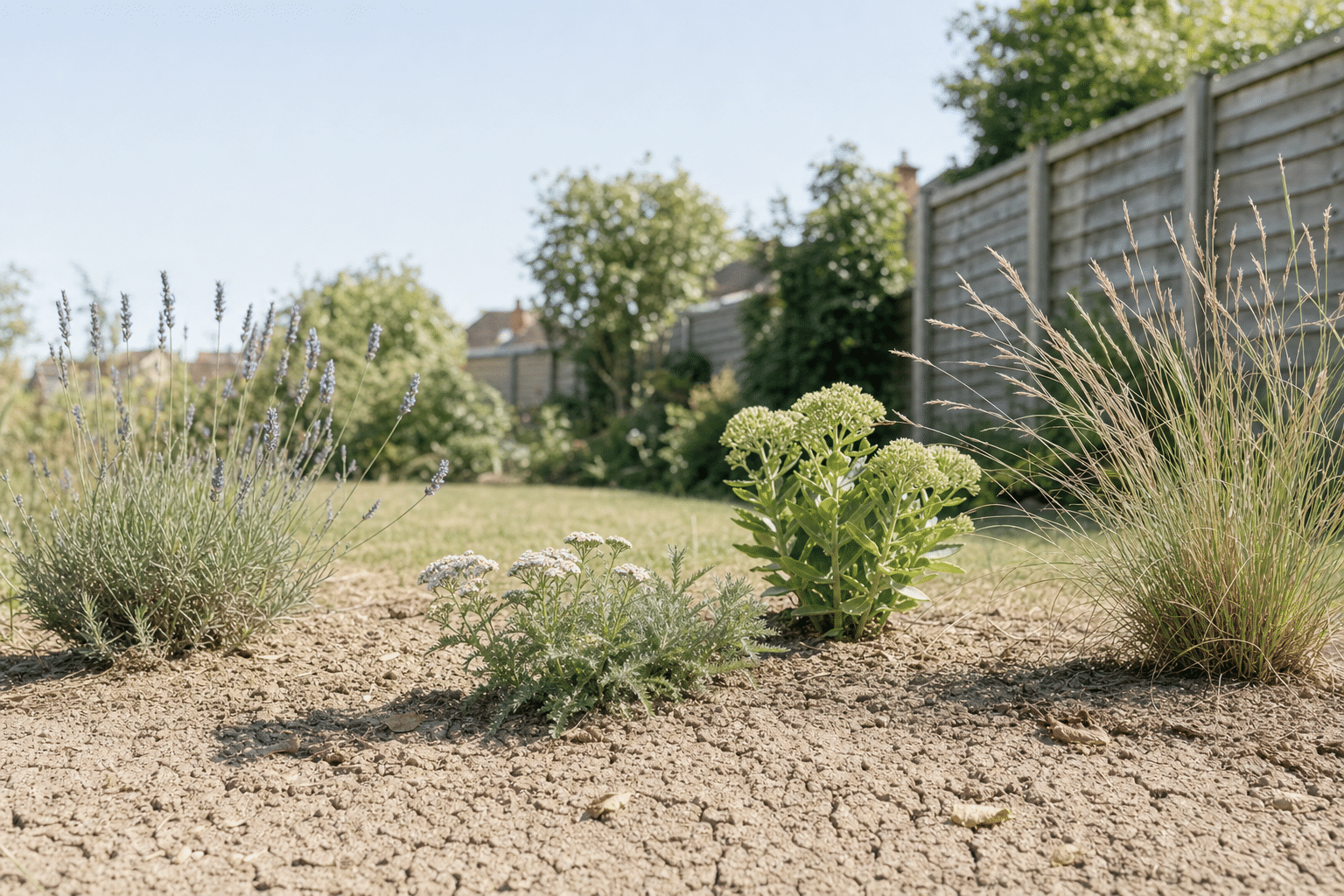
The survivors had one of two things going for them. Either deep roots already two years in the ground, or leaves built to lose less water: narrow, grey, waxy or hairy.
New planting from this spring mostly died, whatever the species. Two-year-old planting of the same species mostly lived. Age in the ground beat plant choice.
Clay-Tough and Drought-Tough Are Two Different Things
This is the bit the big gardening sites skip, and why their lists fail here.
Clay soil (heavy sticky soil that sets like concrete when dry and holds water like a bucket when wet) asks two separate questions. Can a plant cope with no water in July? Can it cope with sitting in cold wet ground from November to March? Plenty pass one and fail the other.
| Plant | Took the 2026 drought | Survives wet clay in winter | Verdict for SE London |
|---|---|---|---|
| Nepeta (catmint) | Yes, kept flowering | Yes | Plant it |
| Hardy geranium (‘Rozanne’) | Yes, wilted then recovered | Yes | Plant it |
| Crocosmia ‘Lucifer’ | Yes | Yes | Plant it |
| Calamagrostis ‘Karl Foerster’ | Yes | Yes | Plant it |
| Hylotelephium (the old ice plant) | Yes | Yes, if not in a dip | Plant it, raised slightly |
| Achillea (yarrow) | Yes | Only in raised, gritty soil | Build the bed up first |
| Lavender | Yes, easily | Often no, rots at the base | Only in raised, gritty soil |
| Rosemary | Yes, easily | Often no | Only in raised, gritty soil |
| Cistus (sun rose) | Yes | Usually no | Skip it here |
| Hydrangea | No, collapsed by July | Yes, loves clay | Shade only, still needs a can |
| Hosta and Astilbe | No, burnt to nothing | Yes | Shade and damp corners only |
Those are our own observations from SE London gardens this summer, not a lab test. Treat the table as a realistic starting point, not a guarantee: a south-facing Blackheath garden and a shaded Peckham side return behave like different counties.
The Plants That Took the Drought and Then Died in Winter
Search for drought tolerant planting and you get lavender, rosemary, Cistus, Santolina and olive trees. Every one is brilliant in a dry summer. On free-draining soil in Provence they will outlive you.
On London clay they are a two to four year plant. They come through the drought looking smug, then winter rain sits in the clay around the roots, the base goes brown and woody, and by March the middle is dead. People blame themselves. It was the soil.
The RHS says the same about heavy ground: break up the bottom and sides of the planting hole so water cannot collect in it, work in bulky organic matter, and hold off planting until late winter or early spring.
We have pulled dead lavender out of Catford and Lee front gardens three winters running. The plants were fine. The hole was a sump.
What Actually Lived: The SE London Clay List
What we would plant in a full sun border on clay here, having watched this summer.
Perennials that did not need a drop:
- Nepeta ‘Six Hills Giant’, catmint, grey leaves, flowered June to September untouched
- Geranium ‘Rozanne’ and ‘Johnson’s Blue’, wilted flat, back up days after rain
- Crocosmia ‘Lucifer’, the tall orange-red one, thrives on clay
- Achillea ‘Terracotta’, flat flower heads, held colour into September
- Hylotelephium ‘Herbstfreude’ (sold for years as Sedum ‘Autumn Joy’), fleshy water-storing leaves
- Euphorbia characias, grey-blue, structural all year
- Alchemilla mollis, the frothy lime green one, browned off then came back
Grasses that carried the whole border:
- Calamagrostis ‘Karl Foerster’, upright, stayed straight through everything
- Molinia caerulea, softer and see-through, good in a small garden
- Stipa gigantea, tall gold oat-like flower heads
Grasses did more work than anything else this year. If your border looked dead in August and your neighbour’s did not, grasses are usually the difference. More in our guide to ornamental grasses that add texture to a garden.
Shrubs and small trees that held: Viburnum tinus, evergreen and uncomplaining. Elaeagnus x ebbingei, leathery leaves, good informal screen. Cotoneaster and Berberis, both properly happy on clay. Crataegus (hawthorn) and Malus (crab apple), both fine. For one of our busiest postcodes, see the top 5 plants that thrive in Camberwell gardens SE5.
The Grit Build-Up: How We Plant a Dry Border on Clay
This decides if the planting is alive in two years, and almost nobody talks about it.
Digging a hole in clay and filling it with gritty compost makes a bathtub. Water runs in off the surrounding clay, has nowhere to go, and the plant drowns in slow motion. So we build the border up instead of down.
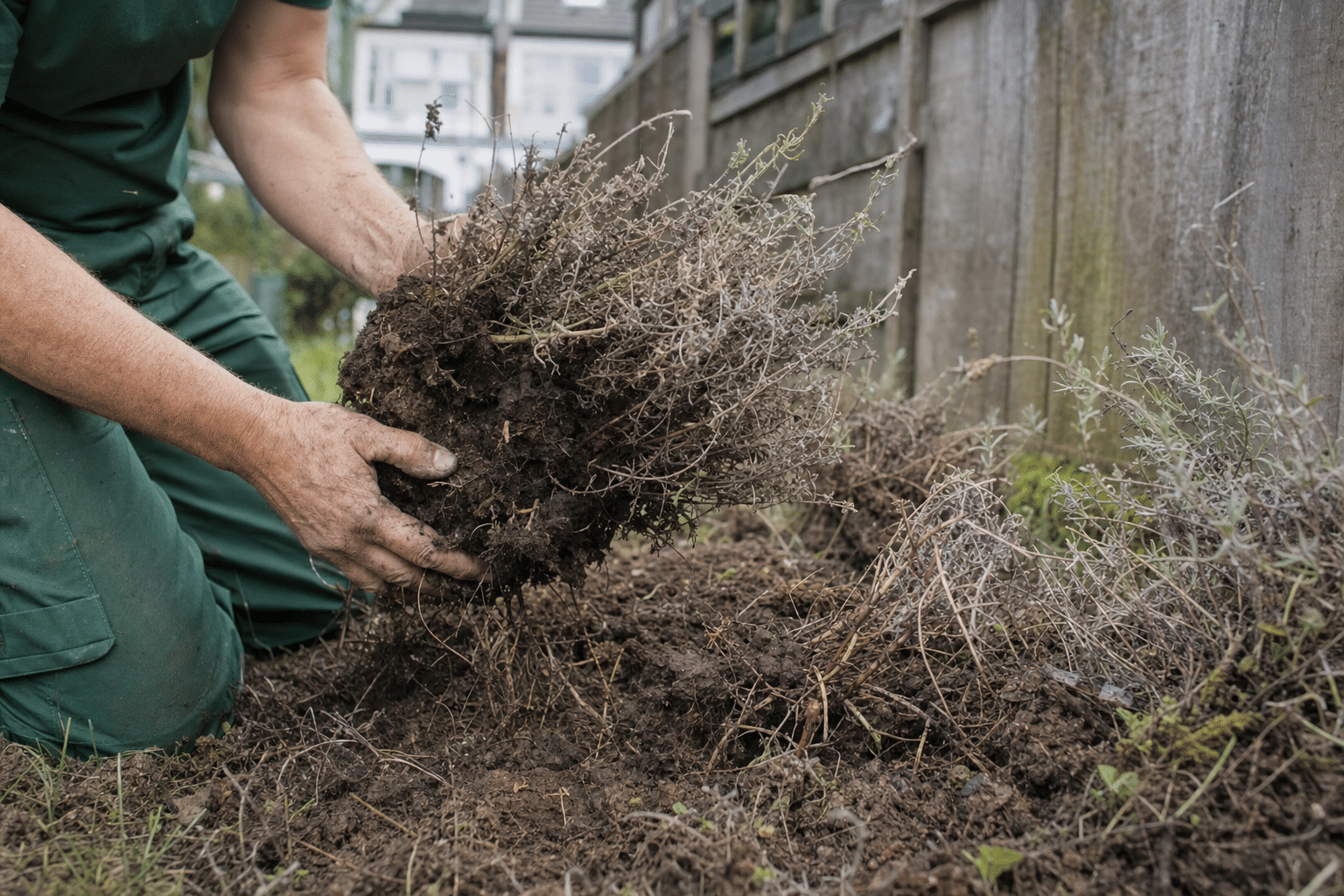
- Clear out the dead planting and the weed root.
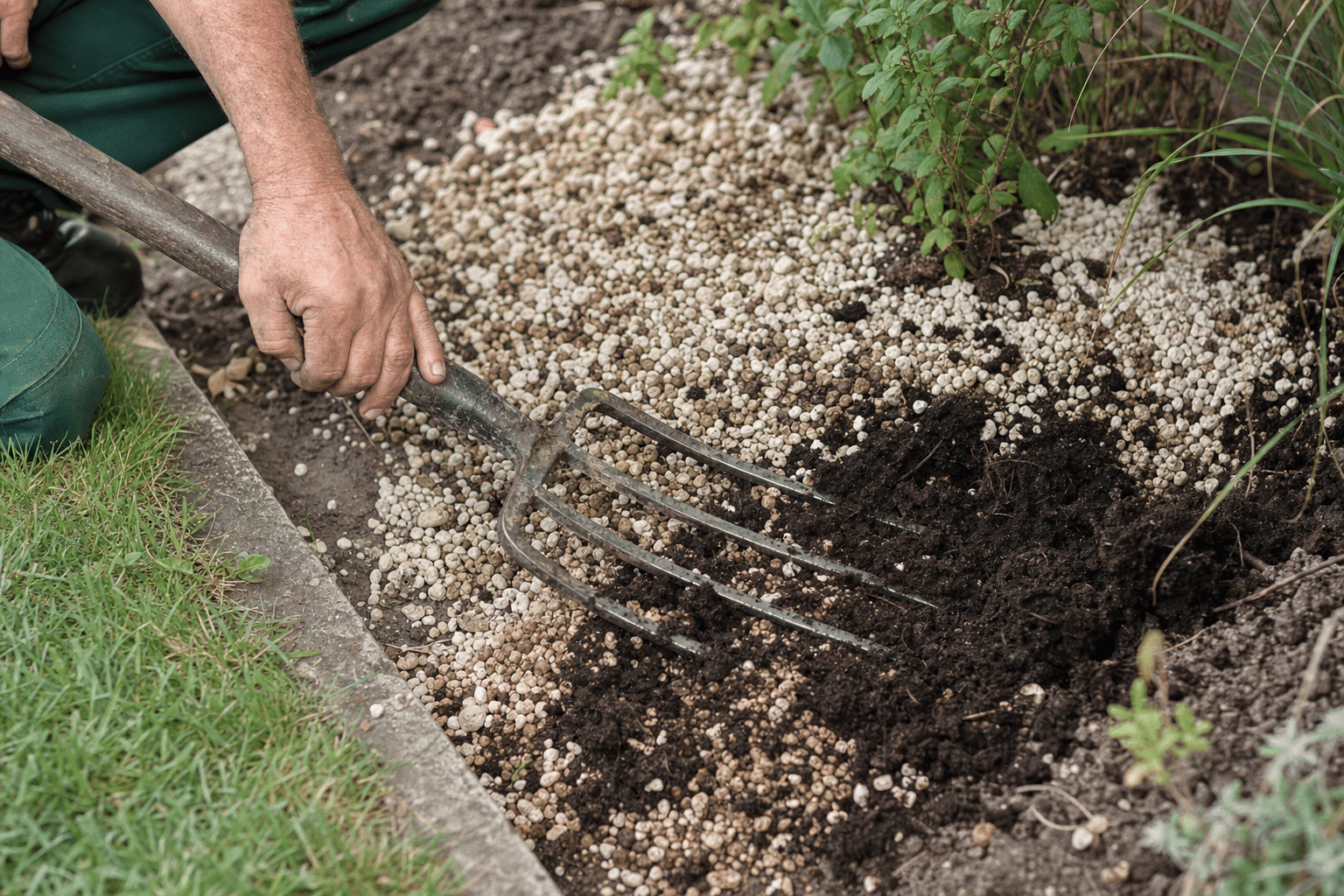
- Fork over the whole bed, not just the holes, and break the sides of every hole so roots can get out.
- Spread 100mm of compost or composted bark across the entire bed and mix it in.
- Turn horticultural grit (sharp gravel chippings, 2-6mm) through the top 200mm of the whole bed. It stays in the soil for good and stops the clay sealing shut.
- The finished bed sits 100-150mm proud of the path. That height is the drainage. Winter water runs off instead of standing.
- Plant, water in by can, then mulch. For the Mediterranean plants we use 50-75mm of gravel mulch instead of bark, so the neck of the plant stays dry.
Point 5 is the trick. Raising the bed gives a lavender a fighting chance on clay in a way that grit in a hole never will. Same reason raised beds work so well in London gardens.
Horticultural grit runs roughly £4-£20 for a 25kg bag depending on supplier, a market estimate across UK suppliers, not our rate. A 4 metre by 1.5 metre border swallows a lot of bags, so we bring it in bulk.
Want the ground done properly before a single plant goes in?
What a Border Planting Job Includes, and What It Does Not
Planting and border work sits under our garden landscaping and design service, with a free on-site survey and a written quote within 3 business days.
Included:
- Clearing the dead planting, and the green waste taken away
- Forking over the full bed, not just planting pockets
- Compost and horticultural grit worked through the whole border
- Building the bed up above path level for winter drainage
- Plants supplied and planted at the right spacing, watered in
- Mulch over the finished bed, and aftercare instructions for watering by can
Not included:
- Irrigation systems or leaky hose. That is a specialist job, not ours.
- Garden lighting or garden electrics. Again, a specialist.
- Ponds and water features.
- Tree felling or crown reduction. That needs a qualified tree surgeon, and the Arboricultural Association keeps a register of them.
- Any guarantee on plant survival through a second record summer. Nobody honest sells that.
What Changes the Cost of a Drought-Proof Border
There is no planting or border line on our price list, so the figures here are market ranges. Border planting typically runs £50-£150 per square metre across the UK, and London and the South East usually sit 20-30% above that. Both are market estimates, not our rate. Yours comes from the survey.
How Much Dead Material Comes Out First
A border that lost six plants is a different job from one that lost everything plus three years of bindweed. A proper strip-out is priced as garden clearance at £85 per hour for a 2-person team, tools included, and the planting starts from clean ground.
How Bad the Clay Is
Some SE London gardens have 300mm of decent topsoil over the clay. Others have 50mm. The thinner the topsoil, the more compost and grit goes in, and the longer the preparation takes.
Access Down the Side Return
Every SE London terrace has this. If compost and grit come through the house or down a 700mm side passage in buckets, that is real hours. A garden with rear or side gate access is genuinely cheaper to do.
Size of Plant You Want
A mixed perennial border takes 5-9 plants per square metre, a low shrub planting 3-5. Shrubs and perennials in 2-5 litre pots typically cost £8-£25 each from UK suppliers, a market estimate, not our rate. Small plants establish better and cost less. Big plants look finished on day one and need far more watering.
Time of Year
Autumn planting needs almost no watering afterwards. Spring and summer planting needs a lot. The bigger picture on money is in our garden landscaping cost guide for South East London.
When to Plant on SE London Clay, Month by Month
| Month | What to do on clay |
|---|---|
| September to early November | The best window. Warm ground, rain returning, roots grow all winter with no watering from you. |
| Late November to January | Too wet. Walking on saturated clay squeezes the air out of it. Plan, do not plant. |
| February to March | Second best. Good for lavender, rosemary and anything silver-leaved, which hate going in before the cold wet is over. |
| April to May | Fine, but everything needs watering by can through the first summer. |
| June to August | Don’t. We will tell you to wait. Planting a border in a July drought wastes your money. |
That last row costs us work every summer. We would rather book you for October than take payment for poor odds.
Watering a New Border While the Hosepipe Ban Is On
The Thames Water hosepipe ban has been in force since 23 July 2026 and covers South East London. No hose, no sprinkler, no pressure washer on the garden. Watering cans, buckets and water from a butt are all still allowed, which is the part people miss.
For a new border that is workable. New planting wants a big soak once or twice a week, not a splash every day. Two full 10-litre cans poured slowly at the base of one new shrub beats five minutes of hose waving. Push a finger 50mm into the soil first: if it is damp down there, skip it.
The full rules are in our hosepipe ban guide for South East London gardens. For the lawn, is my lawn dead or just dormant has two tests you can do in a minute.
Is your border dead or just dormant?
DIY or Bring Us In
The plant choosing is the easy half, and you can do it yourself off the list above.
The hard half is the ground. Getting 100mm of compost and a load of grit through a terraced house and turned into clay by hand is heavy, slow work. A 6 square metre border is roughly 600 litres of compost plus the grit, which is a lot of trips.
DIY makes sense for: small borders, gaps in existing planting, anything you can reach from a path, and gardens with rear access for a delivery.
Professional makes sense for: a whole border rebuilt from scratch, gardens with only a narrow side return, thin topsoil over solid clay, and anyone who has lost one set of plants already.
There is a middle option people forget. We do the ground preparation and the levels under garden maintenance at £83 for the first hour and £65 for every hour after with no minimum charge, and you plant it yourself at the weekend. Often the cheapest route to a border that lasts.
Where We See Burnt Borders Across South East London
In Blackheath SE3 and Eltham SE9 the gardens are bigger and sunnier, with long open borders that took the full force of July. Grasses and Crocosmia earned their place there.
Round Brockley SE4, Peckham SE15 and East Dulwich SE22 it is Victorian terraces with one sunny strip and one permanently shaded strip. Two different plant lists, two metres apart. That is where people go wrong buying one tray of everything.
In Catford SE6 and Greenwich SE10 we see the winter side of it, low-lying gardens where the border that baked in July sits under standing water in February. Those need the bed built up more than anywhere, and poor drainage in South East London and how to fix it is worth reading first.
We cover the rest of the SE, BR and DA postcodes too, listed on our areas we cover page. Before and after photos sit in our portfolio, and the team is on our about us page.
Frequently Asked Questions
Will lavender ever work on London clay?
Yes, if you change the ground rather than the plant. Build the bed 150mm above path level, turn grit through the top 200mm, and mulch with gravel instead of bark. Planted flat into clay it looks lovely for two summers, then goes brown in the middle one winter.
Which plants survived the 2026 drought with no watering at all?
In the gardens we look after: Nepeta, hardy geraniums, Crocosmia ‘Lucifer’, Achillea, Hylotelephium, Euphorbia characias, Viburnum tinus, Elaeagnus, Cotoneaster, and the grasses Calamagrostis, Molinia and Stipa gigantea. All had been in the ground at least two seasons.
Is it too late to plant this year?
No, autumn is the best time to plant on clay. September to early November gives warm soil, returning rain and months of root growth before next summer. Past late November the clay gets too wet to work.
Do I need to dig grit into the planting hole?
No, and doing only that causes the problem. A gritty hole surrounded by solid clay fills with water and the plant drowns. Spread compost and grit across the whole bed and mix it in, then raise the finished level above the path.
My hydrangeas died and they are supposed to like clay. What happened?
Hydrangeas are excellent on clay and terrible in drought. Shallow roots and big soft leaves lose water fast, so they were among the first to collapse in July. Keep them, move them into shade if they are in sun, and accept they need a can in a dry spell.
Can you plant while the hosepipe ban is on?
Yes. Cans, buckets and water butt water are all still allowed, and autumn planting needs very little watering anyway. We plan the aftercare around cans, not hoses.
How Our Services Can Help
- Garden landscaping and design, for new borders, the ground preparation under them, and full redesigns. Free on-site survey, written quote within 3 business days.
- Garden clearance at £85 per hour for a 2-person team, for stripping out dead planting and overgrowth before anything new goes in.
- Garden maintenance at £83 for the first hour and £65 for every hour after, no minimum charge, for cutting back, mulching, weeding and keeping a new border going.
- Turfing if the lawn went with the border and you want to start again.
Ready to replant the border while the soil is still warm?
Related reading
- Soil Preparation: 7 tips for creating a nutrient – rich foundation for your plants in Eltham
- Best Tips To Get Rid of Unwanted Plants in Your Garden
- The Best Pet-Friendly Outdoor Plants Safe for Dogs and Cats
- Top 5 Plants That Thrive in Camberwell Gardens (SE5)
- The Best Plants to Sow in Late August in South East London

0 comments