

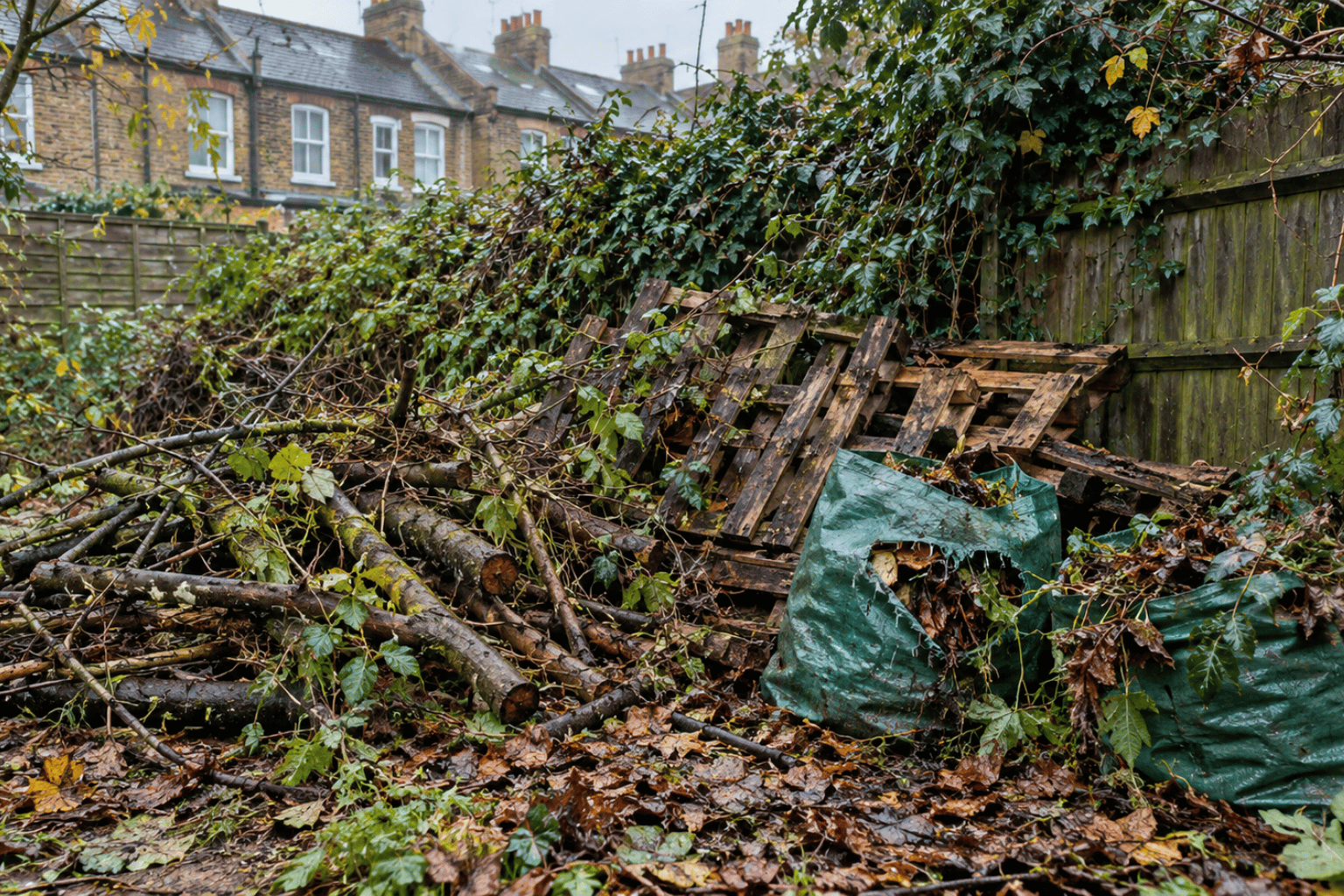
If your back garden has gone from “a bit wild” to “I am not walking down there anymore,” and you have spotted a flattened track through the brambles or a hole at the edge of the decking, you are not alone. Every September our phone rings with the same call. The garden got away from someone over the summer, the nights have turned cold, and something is living in it.
This guide covers what works when you want to know how to get rid of rats in a garden in South East London, why the poison-first approach keeps failing in SE London terraces, what the clearance costs, and the part of the job that is your council’s problem rather than yours.
What’s in this guide
- The Quick Version
- How to Get Rid of Rats in a Garden in the UK: The Order That Works
- What Rats Are Actually Living In, Garden by Garden
- Harbourage or Food: Which One You Have Changes Everything
- Why Bait on Its Own Puts the Rats Back by February
- What a Garden Clearance Removes, and What It Does Not
- What Changes the Hours on a Rat Clearance
- When It Is the Council’s Job, or Thames Water’s
- Why September to November Is the Window
- Decking: The Hardest One to Fix
- DIY or Professional: The Honest Version
- Where We See This Most Across South East London
- Frequently Asked Questions
- How Our Services Can Help
The Quick Version
What stops rats is taking away the cover they nest in. Not bait. Our rate for that work is £85 per hour for a 2-person team, minimum 2 hours, all tools included. Most overgrown SE London back gardens are a 4 to 8 hour job.
We do not sell poison or bait contracts. Baiting is a licensed pest controller’s job, and if rats are inside the house you need one. What we do is remove the harbourage (harbourage just means the cover they live in: brambles, ivy mounds, log piles, the gap under the decking). Rats will not settle in a garden with nowhere to hide.
How to Get Rid of Rats in a Garden in the UK: The Order That Works
Do these in order. Doing them out of order is why people are still dealing with it in March.
- Take away the food. An open compost heap of kitchen scraps is a rat hotel with heating, so switch to a closed bin on a slab, no cooked food, meat or bread. Put a tray under the bird feeder, sweep the spilled seed weekly, pick up fallen apples. The same list keeps other visitors out, which is why our post on strategies that keep foxes away from your garden in South East London overlaps.
- Take away the water. Rats drink every day. Empty the cracked water butt, clear the blocked gully, tip out the pot saucers.
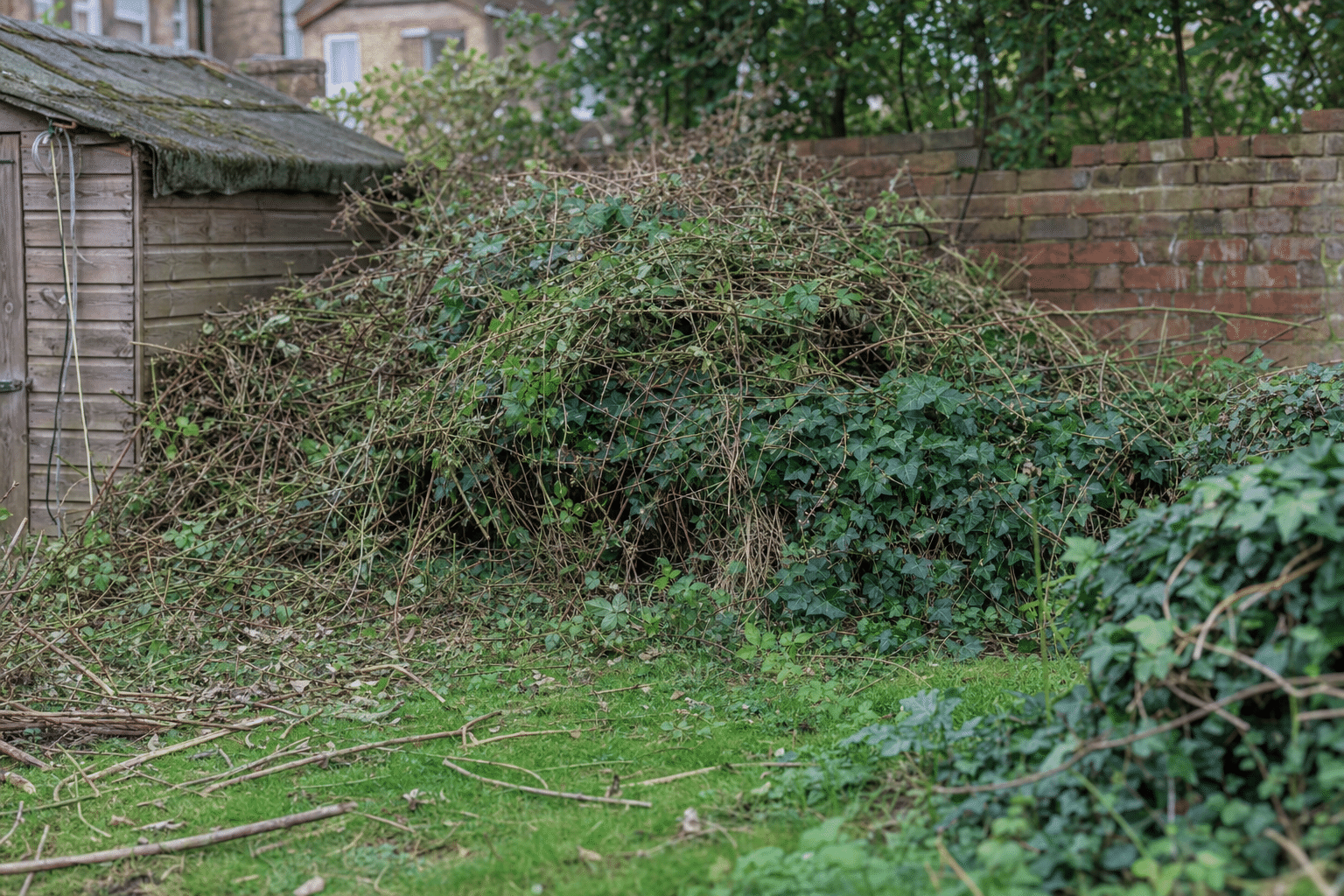
- Take away the cover. Brambles, long grass, ivy on a fence, a pile of old timber, bags of garden waste sat there since spring. This is the big one, and the one people skip because it is hard physical work.
- Block the ways in. Gaps under sheds, holes into the decking, a broken drain cover, a gap where a fence post has rotted out.
- Only then, if activity carries on, bring in a pest controller. With the cover gone their bait works, because there is nowhere left to sit it out.
Step 3 is where we come in, and most guides give it one sentence.
Can you see a flattened run through the brambles?
Send us photos and we’ll price the clearance within 24 hours →
What Rats Are Actually Living In, Garden by Garden
After twelve years across SE London we see the same five hiding places over and over.
| What it is | Why rats want it | What fixes it | Rough time |
|---|---|---|---|
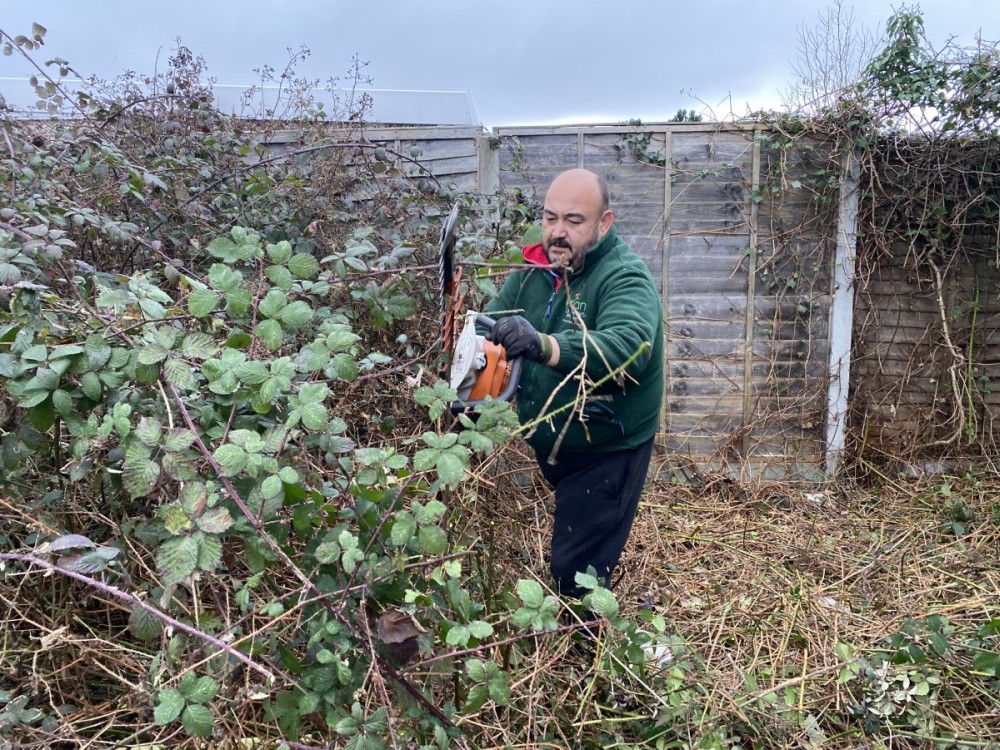
| Bramble and nettle thicket | Dense cover at ground level, thorns keep cats and foxes out | Cut to the ground, dig the crowns out, clear the cuttings | 3-6 hours |
| Ivy mat on a fence or wall | Warm, dry, hidden, nests built inside the mat | Strip the ivy, cut the stems at the base | 2-5 hours |
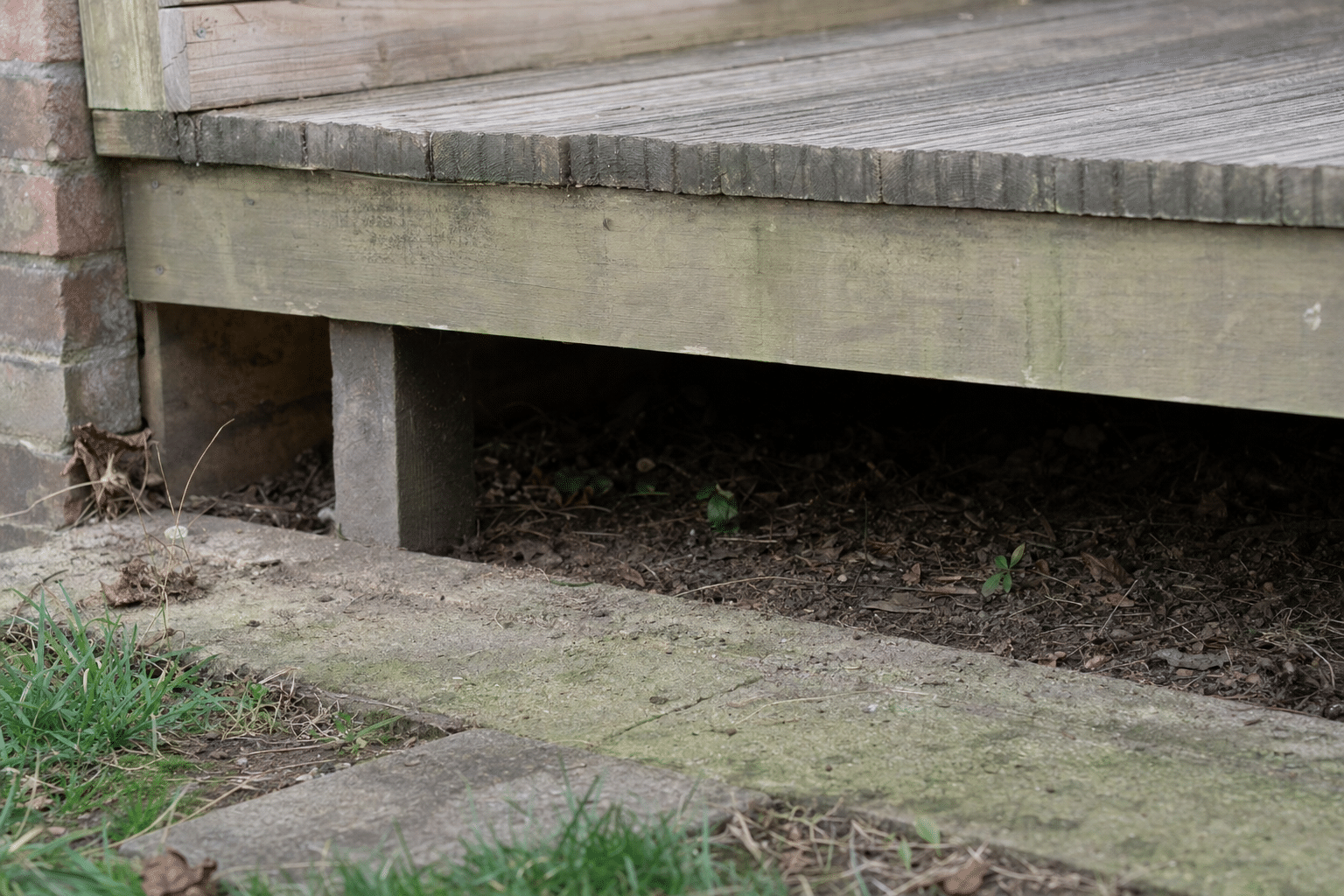
| Gap under raised decking | Dry, dark, safe, impossible to reach | Lift edge boards or mesh the perimeter | 2-4 hours |
| Log, timber or rubble pile | An instant burrow system with a roof on it | Remove it, take the waste away | 1-3 hours |
| Bagged garden waste left months | Warm from rotting, soft nesting material inside | Remove and dispose of it properly | 1-2 hours |
Those timings are a realistic starting point for a 2-person team, not a fixed quote. A garden with all five is a full day, and we would rather tell you that from a photo than surprise you on the day.
Harbourage or Food: Which One You Have Changes Everything
A food problem looks like rats crossing the garden at dusk, chewed bin bags and droppings near the back door, but no burrows. They live somewhere else, usually a sewer or a neighbour’s garden. Fix the food and the visits stop inside a fortnight.
A harbourage problem looks like burrow holes 50mm to 80mm across with fresh loose soil fanned out at the entrance, smooth runs worn under a fence, and gnaw marks on timber. They live with you and they are breeding. No amount of bin discipline moves them.
Most overgrown gardens we clear are both, and plenty of people spend a few hundred pounds on bait for the first while the second carries on in the brambles at the bottom.
If you cannot tell which you have, count the holes. One with cobwebs across it is abandoned. Three or four with clean edges and loose soil is an active colony. Our guide to autumn garden pests and what to do about them covers the insect side of the same season.
Not sure if this is a clearance job or a maintenance visit?
Why Bait on Its Own Puts the Rats Back by February
A private rat treatment in London runs roughly £150-£320 for a course of 2 to 3 visits, the market rate across UK pest control firms and not our rate. That course kills the rats that are there now and does nothing to the reason they chose your garden.
A female rat can have five or six litters a year. An empty, sheltered nest site in a warm bramble bank does not stay empty, because the next rats along the fence line find it. So the bait works, activity stops, and in February there is fresh soil at the same hole. Clearing the cover changes the garden itself, which makes it a one-off cost instead of a recurring one.
What a Garden Clearance Removes, and What It Does Not
Being straight about the second list matters more than the first.
Included in our garden clearance service at £85 per hour:
- Brambles, nettles and overgrowth cut back to ground level
- Roots dug out so the brambles do not come straight back
- Ivy stripped off fences, walls and trees
- Log piles, rubble piles and old bagged waste removed
- Long grass strimmed, tree and shrub cutting up to 3-4 metres
- Green waste collection and disposal on request
- A straight answer on which holes look active and which are old
Not included, and we will say so on site if you need it:
- Poison, bait boxes or traps. We do not place them. That needs a licensed pest controller.
- Sealing the house itself against rodents, which is a builder’s or pest controller’s work.
- Any drain repair or sewer work.
- Japanese knotweed. We will tell you if we find it, and that is a specialist’s job, not ours.
What Changes the Hours on a Rat Clearance
How Long It Has Been Left
One summer is a strimmer and a rake. Three years is woody bramble stems as thick as your thumb rooted into London clay, which means loppers, a mattock and a lot of pulling, and roughly triple the time.
Access Down the Side Return
Most SE London terraces have a side return, that narrow alley between the house and the boundary, sometimes 700mm wide with a gate on it. Every barrow of bramble goes out through it by hand, so rear access off an alley is cheaper.
Whether the Waste Goes With Us
The biggest single variable on the bill. A full van load of green waste costs real money to tip. If you can compost some or run it to the tip yourself, say so and we price it lower. Our guide on what garden waste removal costs in SE London and who takes it runs through the options.
How Wet the Clay Is
SE London sits on heavy clay. In November wet clay lets bramble crowns come out whole with a spade. In August the same ground is like concrete, so autumn is the cheaper season for root removal.
How Much Ivy There Is
Ivy is slower and more destructive to remove, so it sits on its own band. We charge £80-£85 per hour for ivy removal with a 2-person team, and our ivy removal cost guide explains why walls, fences and trees each need a different approach.
When It Is the Council’s Job, or Thames Water’s
Three parts of this are genuinely somebody else’s.
Rats in substantial numbers have to be reported. Under section 3 of the Prevention of Damage by Pests Act 1949, the occupier of land must tell the local authority in writing once they know rats or mice are living on the land in substantial numbers. It is a legal duty and a free phone call.
Your borough may treat them cheaper than a private firm. Lewisham charges £150 for rat treatment covering up to three visits, free for residents on housing benefit, council tax reduction or Universal Credit, which is the council’s own pest control price and not our rate. Southwark, Greenwich, Bromley and Bexley each set their own fee and concessions, so check yours.
Rats coming out of the sewer are the water company’s problem. Thames Water will investigate and repair their sewer if rats are confirmed to be getting in through a defect in the public sewer, like a collapsed pipe or a broken chamber. You need a reference number from the council or a pest controller first. If both your neighbours have the same trouble at once, rule this out before spending anything.
Why September to November Is the Window
Rats move into shelter as the temperature drops, so the work has to land before they settle.
September. The best month. Growth has stopped, the ground is softening, and bird nesting season is over. Under the Wildlife and Countryside Act 1981 it is an offence to destroy an active nest, which is why we will not rip out a bramble bank in May without checking it first.
October. Leaves are down, so runs and holes show up on bare soil, and the clay is wet enough to dig roots out cleanly.
November. Still fine for cutting. By December the colony has dug in and you are dealing with established burrows.
December to February. It still works, but you are evicting rather than preventing.
March to August. Nesting season. We check for birds before cutting anything dense, and sometimes a section waits.
Want the cover gone before the cold properly sets in?
Decking: The Hardest One to Fix
Raised decking on a wooden frame, so it sits off the wet ground, is the most common rat harbourage we find in SE London. Dry, dark, warm, and nothing can get at them under there. Rats need a gap of about 15mm to get in, roughly two fingers, and most decks have gaps far bigger than that at the edges.
There are two real options. Fit galvanised steel mesh around the whole perimeter, buried 150mm into the ground so they cannot dig under it, which usually means lifting the edge boards. Or, if the deck is near the end of its life anyway, replace it properly: our decking installation service builds with a closed skirt from the start.
Do not fill the gap with expanding foam. They chew through it in a night.
DIY or Professional: The Honest Version
Plenty of this you can do yourself, and we would rather say so than pretend otherwise.
For a small bramble patch you need long-handled loppers, thick gauntlets, and a mattock for the roots. Loppers and a mattock together run about £40-£90 from UK suppliers, a market estimate and not our rate. Hiring a petrol brushcutter for a day costs roughly £25-£45 plus VAT across UK tool hire firms, again a market estimate.
The waste catches people out. A 6-yard skip in London typically costs £250-£400, market estimate across UK skip firms, and a skip permit adds roughly £30-£120 if it sits on the road, a market range across SE London boroughs rather than any one council’s fee. At that point a 2-person team with a van for 4 hours at our rate is often the cheaper number. Our step-by-step on DIY garden clearance and how to tame a wild garden covers a small one without us.
Rat urine can carry leptospirosis, so wear gloves, cover any cuts, and wash your hands before eating. Never put a bare hand into a bramble bank or under decking to feel for a hole.
DIY makes sense for: a bramble patch under about 10 square metres, a garden you can get waste out of easily, and anyone reasonably fit with a free weekend.
Professional makes sense for: anything over about 20 square metres, woody growth left more than two years, ivy on a fence or wall, runs under decking or a shed, a narrow side return, and any job that has to be finished by a date.
Where We See This Most Across South East London
In Catford SE6 and Brockley SE4 the long thin Victorian back gardens back onto each other in continuous blocks, so one bramble bank connects to twenty others. Clearing three gardens next to each other changes the whole block.
In Peckham SE15 and New Cross SE14 it is decking and ivy: small terraces where a deck went in straight onto soil five years ago and ivy has matted over the boundary fence.
In Blackheath SE3 and Eltham SE9 the gardens are larger with mature planting, so it is usually a neglected back third with a log pile and a shed in it. Bigger jobs, better value per hour, because one visit covers more ground.
In Forest Hill SE23 and Sydenham SE26 the slopes mean retaining walls, and the cavity behind an old one is a burrow system you cannot see from the garden.
We also cover Abbey Wood SE2, Deptford SE8, Greenwich SE10, Lewisham SE13, Woolwich SE18, Sidcup DA14 and Welling DA16, all on our areas we cover page.
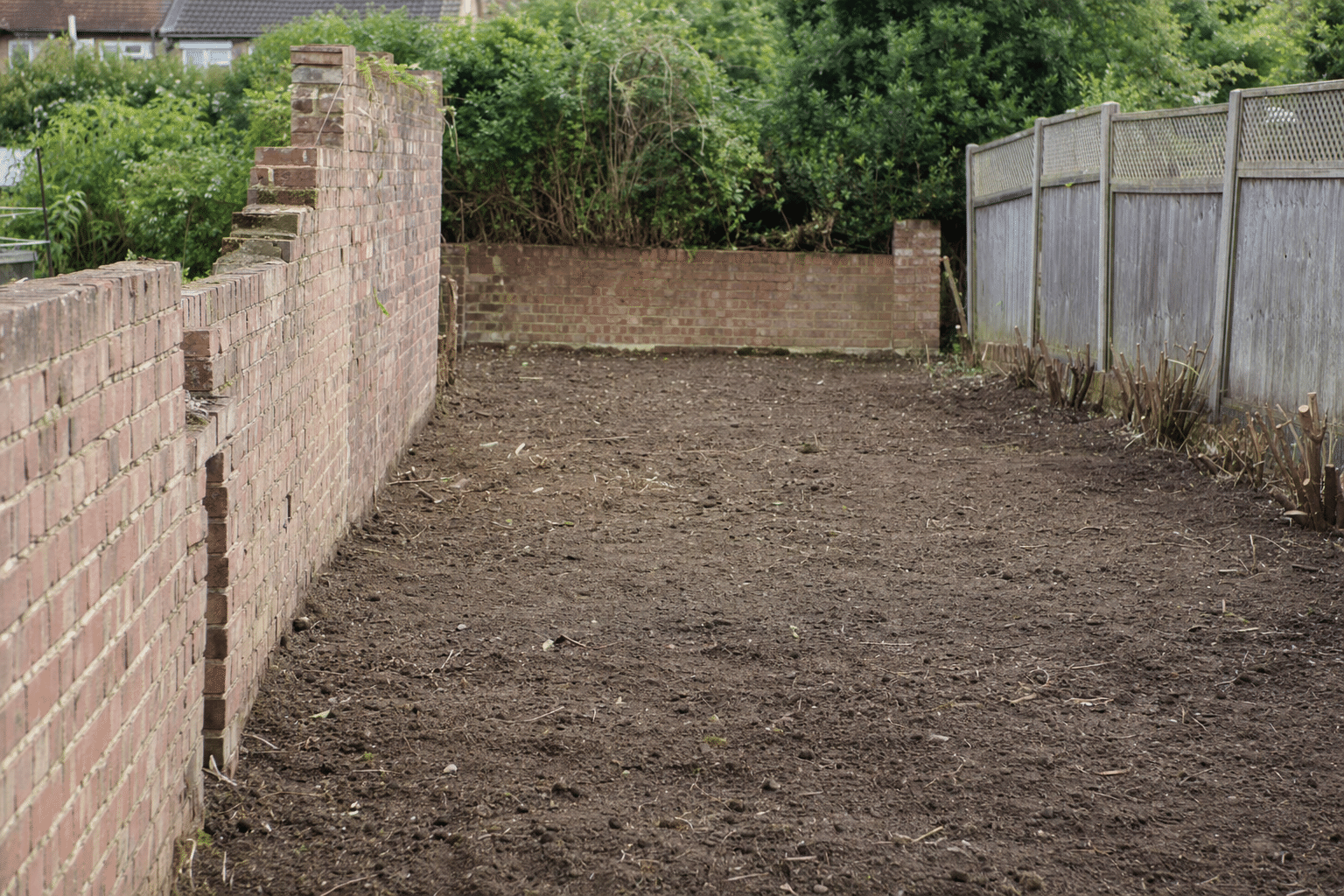
Frequently Asked Questions
What actually gets rid of rats in a garden for good?
Removing the cover they nest in, plus the food and water. Bait kills the rats that are there and does nothing to stop the next lot taking the same nest site. If you only do one thing, cut the brambles and long grass to the ground and take the waste away.
How do I know if it is rats and not mice or foxes?
Rat burrow holes are 50mm to 80mm across with loose soil fanned out in front, usually at the base of a wall, fence or bramble bank. Fox digs are wider and messier with a strong smell. Rat droppings are dark, about 15mm long, pointed at one end.
Will clearing the brambles just push the rats next door?
Partly, yes, and we will not pretend otherwise. They go where the next bit of cover is. Tell your immediate neighbours, because a block of gardens cleared together works far better than one on its own. If the neighbouring cover is on council land, report it at the same time.
Do I have to tell the council if I have rats in the garden?
Yes, if there are substantial numbers. Section 3 of the Prevention of Damage by Pests Act 1949 puts that duty on the occupier of the land, in writing. It costs nothing, and in most SE London boroughs it also gets you cheaper treatment than a private firm.
Is it safe to clear an overgrown garden that has rats in it?
With sensible precautions, yes. Thick gloves, long sleeves, boots, cuts covered. Do not reach blind into dense growth or under decking.
How much does it cost to clear an overgrown garden in South East London?
Our rate is £85 per hour for a 2-person team with a 2-hour minimum, tools included, waste removal priced on top. A small overgrown garden is usually 4 hours and a neglected full-size one is a day. The breakdown is in our garden clearance cost guide for South East London, and we quote from photos within 24 hours.
Can I keep the compost heap?
Yes, in a closed bin standing on a slab or a sheet of mesh, with no cooked food, meat or bread going in.
How Our Services Can Help
- Clearing an overgrown garden at £85 per hour, 2-person team, tools included. The job that takes the harbourage away.
- Garden maintenance at £83 for the first hour and £65 every hour after, no minimum charge. Regular visits stop the garden getting back to this state.
- Removing ivy from a fence or wall at £80-£85 per hour for a 2-person team. Ivy mats are prime nesting cover.
- Bamboo removal at £80-£85 per hour. A neglected clump hides rats as well as brambles do.
We are a family-run team based in Eltham SE9, working across SE London since 2016, with 111 Google reviews and full insurance. More about Urban Gardeners, or look through our portfolio of finished gardens.
Ready to take away the cover the rats are living in?
Get a written garden clearance quote for your SE London garden →
Related reading
- Best Tips To Get Rid of Unwanted Plants in Your Garden
- How to Easily Get Rid of Mushrooms in Your Garden (And Stop Them Coming Back)
- Garden Waste Removal in SE London: What It Costs and Who Takes It
- Garden Tidy Up in South East London: 7 Things We Do (And What It Costs)
- 7 Tips to Grow A Herb Garden On a Budget

0 comments