

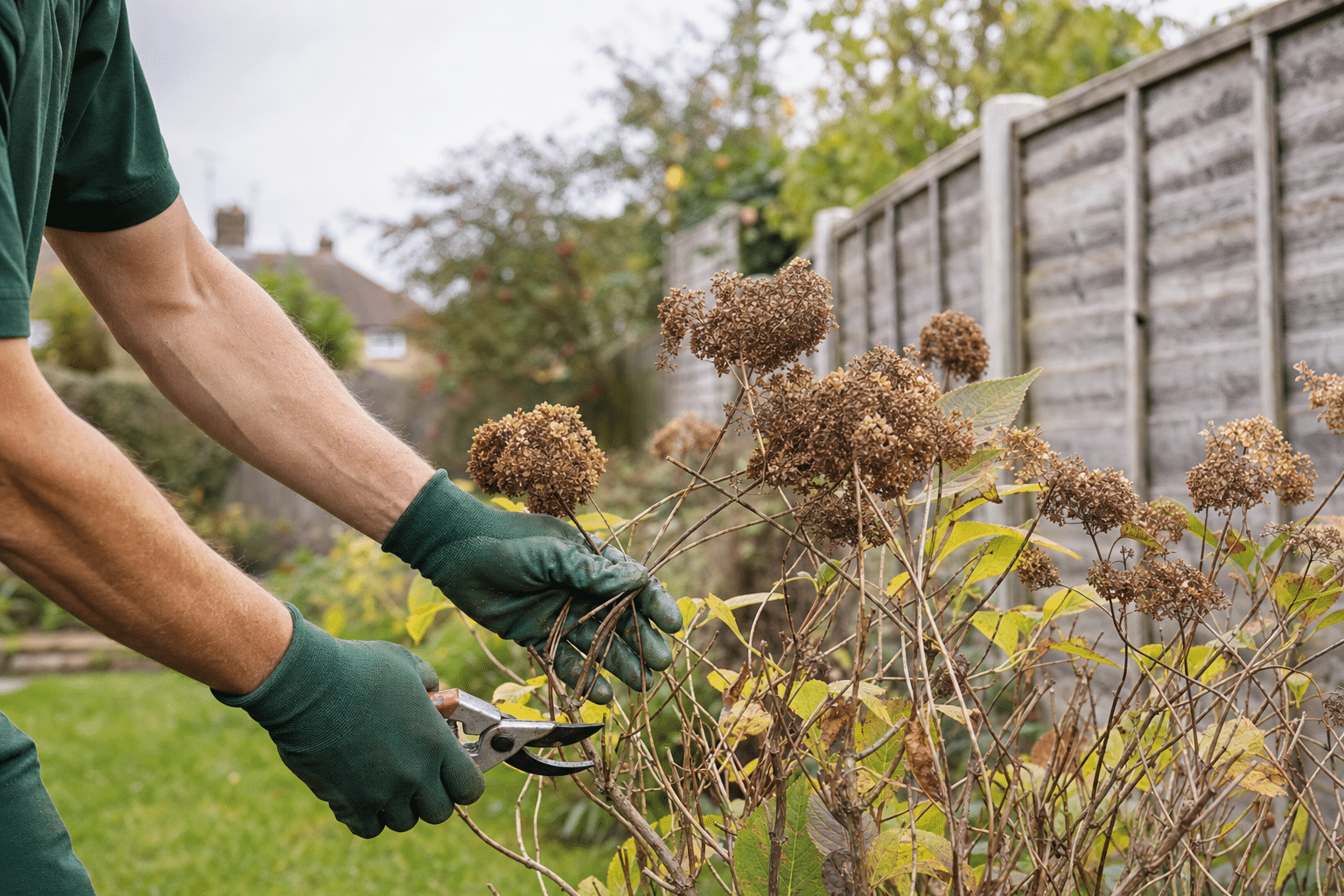
The hostas have collapsed into brown slime. The asters are lying across the path, and the hydrangea by the back door is covered in papery heads that look finished. Every instinct says to get the secateurs out and take the lot down to the ground.
Half of that instinct is right. The other half costs you next summer’s flowers, a hedgehog’s winter bed and, on the clay under most South East London gardens, a border you can’t stand on until April. This guide covers what to cut back in autumn plant by plant, what to leave until spring, where the cuttings go, and what it costs if you’d rather we did it.
What’s in this guide
- The Quick Version: Cut These Now, Leave These Until Spring
- Why Timing Matters More on South East London Clay
- Perennials to Cut Back in October and November
- Perennials to Leave Standing Until March: Seed Heads, Hollow Stems and Grasses
- Shrubs Not to Prune in Autumn: Hydrangeas, Forsythia, Lilac and Evergreens
- Hedges: Why Autumn Is the Clean Window After Bird Nesting Season
- Roses and Climbers: A Light Tidy Now, the Real Prune Later
- Cut Back or Leave: The Side by Side Table
- Leaves Off the Lawn, Paths and Drains
- Leave Some Cover for Hedgehogs and Insects, but Not for Rats
- Mulching Borders After the Cut Back
- Where the Cuttings Go: Compost, Council Garden Waste Bins and Tip Runs
- What an Autumn Cut Back Costs If We Do It
- A Real Autumn Border Cut Back in South East London
- DIY or Book a Gardener: The Honest Version
- Frequently Asked Questions
- How Our Services Can Help
- Posts You Might Like
The Quick Version: Cut These Now, Leave These Until Spring
Cut back in October and November: soft perennials that have gone brown and floppy, such as hostas, hardy geraniums, daylilies, peonies and most delphiniums, plus anything with mildew or black spot. Hedges get their last trim now too, after a nest check.
Leave until March or April: ornamental grasses, seed heads like sedum and echinacea, penstemons, mophead hydrangeas, lavender, and spring-flowering shrubs like forsythia and lilac. Evergreens get a tidy, never a hard cut.
If we do it for you: our garden maintenance rate is £83 for the first hour and £65 for every hour after, with no minimum charge.
Would you rather someone else did the cutting this year?
Why Timing Matters More on South East London Clay
Dig a spade’s depth almost anywhere from Eltham SE9 to Brockley SE4 and you hit sticky grey-brown London clay. Clay holds water. From November to March a clay border can stay wet for weeks, and every footstep presses the air out of it. That squashed soil dries into a hard crust in spring.
Most national guides say to leave everything standing until spring. The RHS adds a caveat that matters here: its advice on cutting back perennials says that where soil is prone to waterlogging, the cut back is better done in autumn. That describes a lot of gardens in Catford SE6, Lewisham SE13 and Lee SE12.
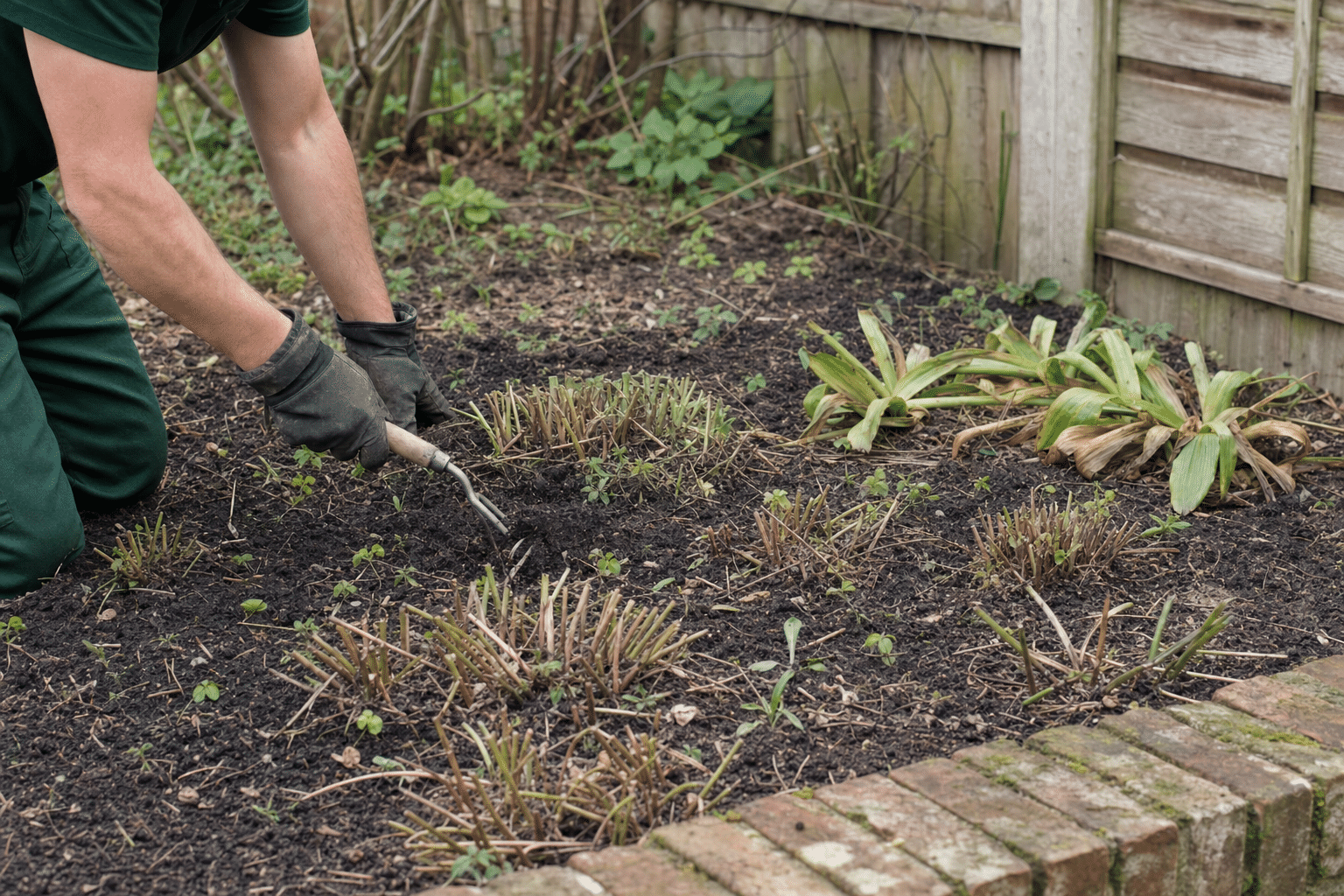
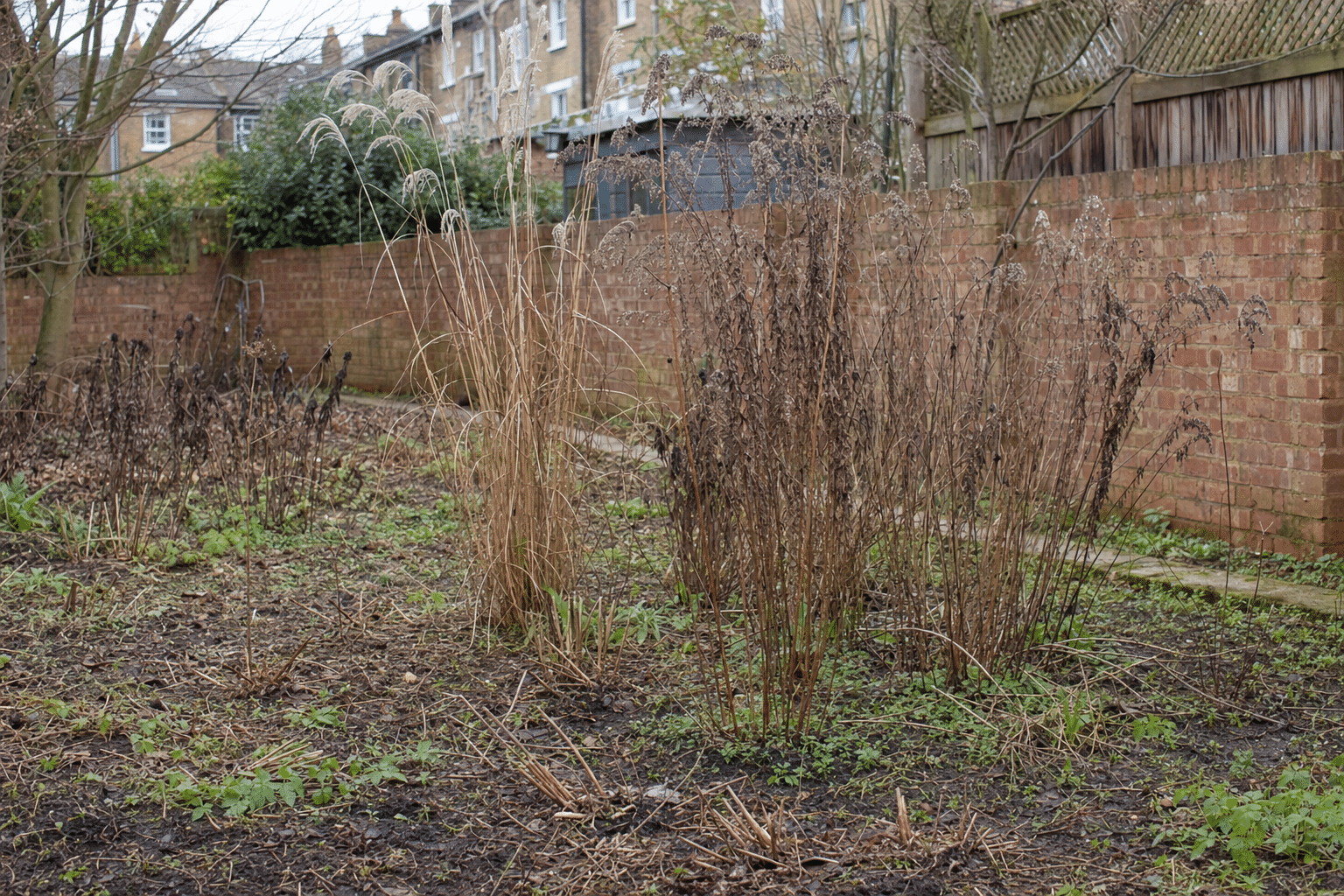
So on clay we split the job. The soft, rotting growth comes out in October and early November, while the ground is still firm. The sturdy stems, grasses and seed heads stay, and come out in one quick visit in March. If you must work on a wet border, stand on a plank to spread your weight.
Perennials to Cut Back in October and November
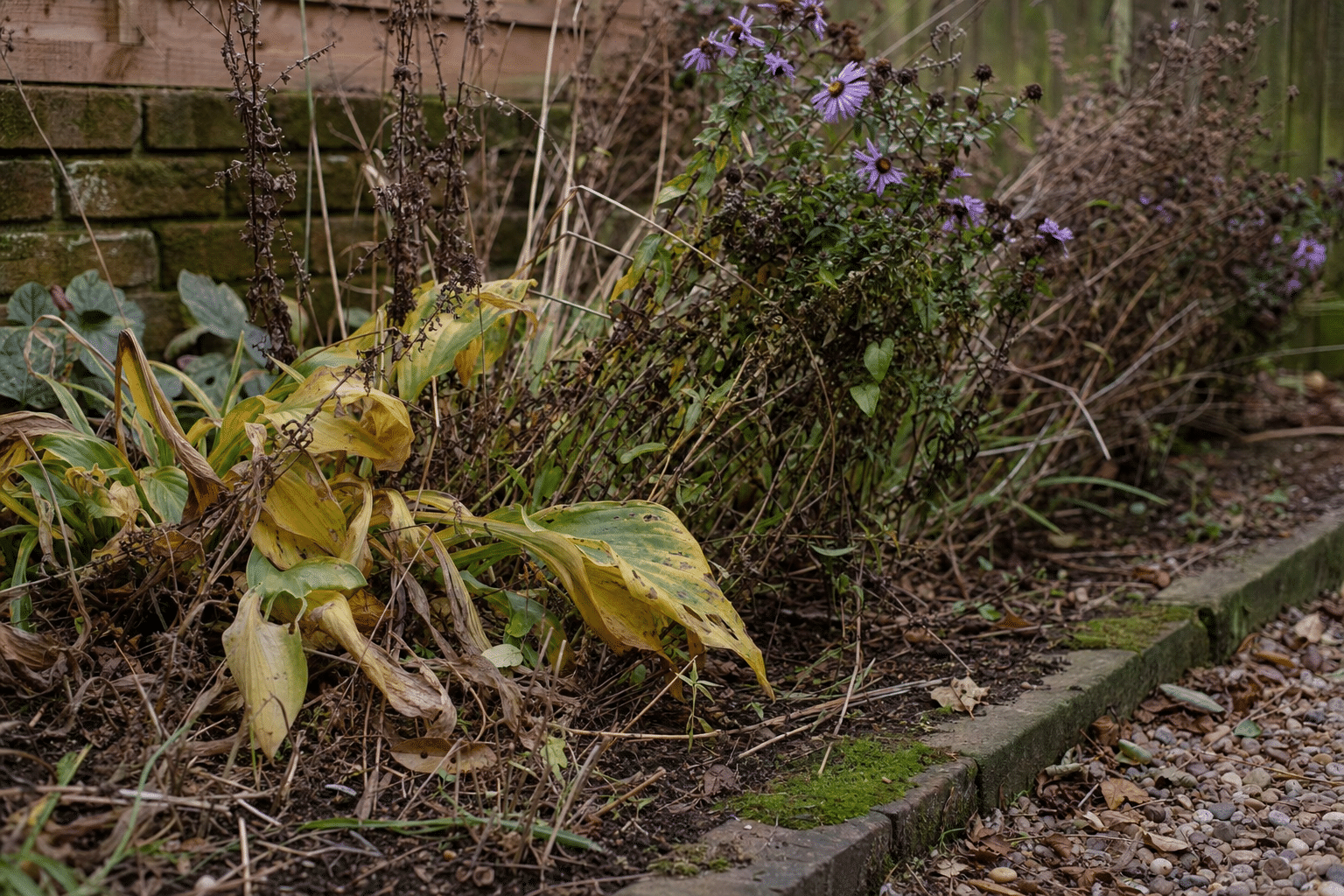
The test is simple. If the leaves have turned yellow or brown, gone soft and are lying on the soil, cut them. Cut close to the crown, the base where next year’s shoots come from. If green shoots are already showing, cut just above them.
These come down on almost every autumn visit we do:
- Hostas: collapsed leaves become a winter home for slugs. Clear every one.
- Hardy geraniums, catmint, astrantia and Shasta daisies: cut to the ground for fresh clumps in spring.
- Daylilies: pull or cut the yellow leaves before they rot into the crown.
- Peonies: cut to soil level, and bin the leaves, because they often carry fungal spots.
- Delphiniums: cut most stems, but leave a few standing.
- Asters: cut more lightly, as new shoots often show at the base already.
- Dahlias: wait for the first frost to blacken the leaves, then cut to about 10cm. On wet clay the tubers can rot, so lift them or cover the crown with thick mulch.
Anything with powdery mildew, rust or leaf spot comes out whatever the plant. The spores sit in dead leaves all winter.
Perennials to Leave Standing Until March: Seed Heads, Hollow Stems and Grasses
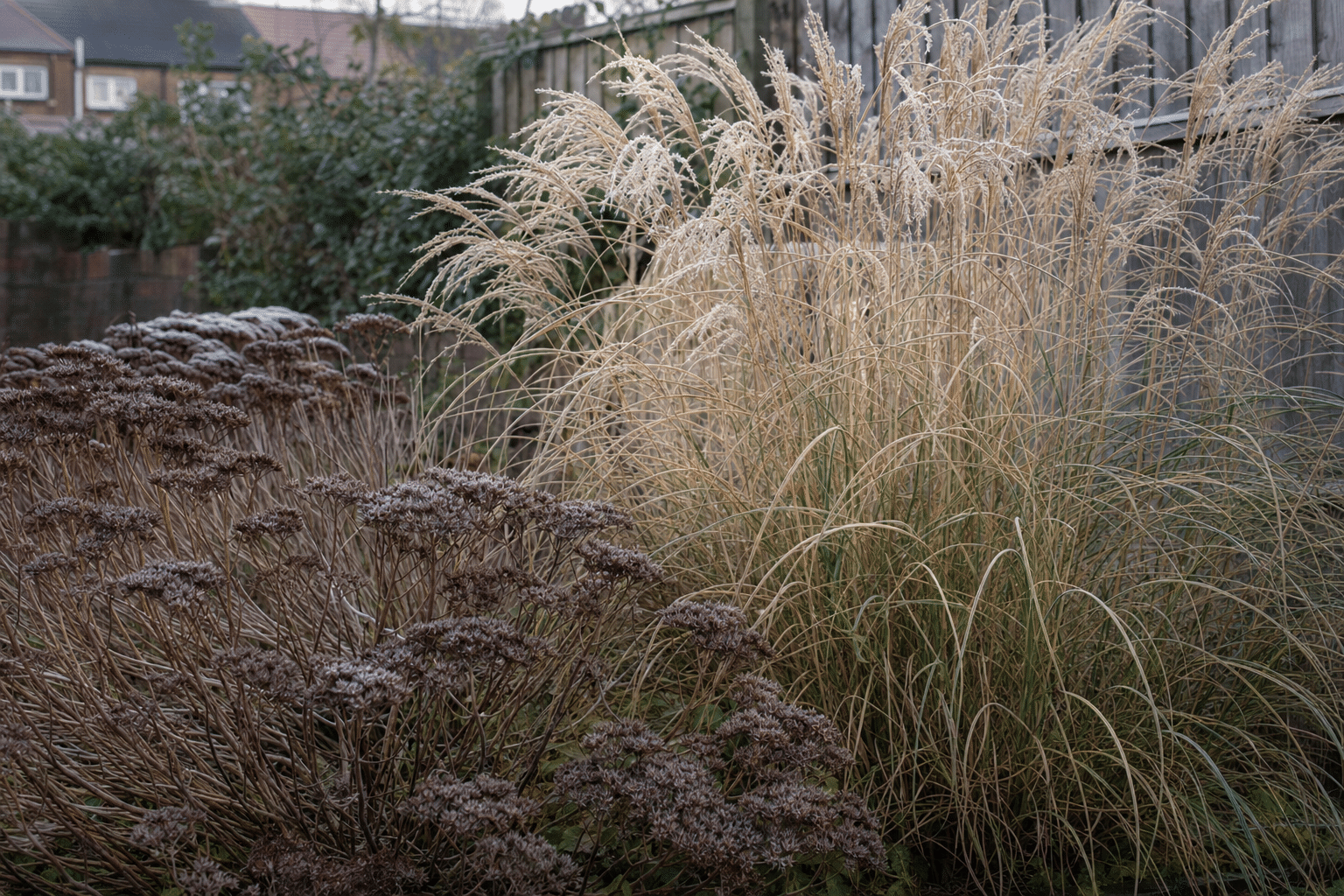
The plants worth leaving are the ones that still look good dead. Sedum, echinacea, rudbeckia and sea holly keep their seed heads upright all winter, and goldfinches pick the seeds out.
Hollow stems shelter ladybirds and solitary bees. A few delphinium stems, verbena bonariensis and fennel are enough, so leave a clump at the back of the border and cut the rest.
The RHS says to cut deciduous grasses back in early to mid-spring, and Miscanthus from mid-March to April, before new shoots appear. Evergreen grasses like carex and blue fescue never get a hard cut: comb the dead leaves out with your fingers. Our guide to ornamental grasses that thrive on SE London clay covers each one.
Penstemons stay too, because the old stems protect the crown from frost until April or May. Red hot pokers, bergenia and heuchera only lose their dead leaves. Hellebores are the exception: take the old leaves off in December or January so the flowers show and leaf spot doesn’t spread.
Shrubs Not to Prune in Autumn: Hydrangeas, Forsythia, Lilac and Evergreens
Most shrubs that flower before mid-June have already made next year’s flower buds. Cut them in October and you cut the flowers off.
Mophead hydrangeas catch people out most. The RHS hydrangea pruning guide says to leave the dead heads on over winter, because they shield the buds below from frost. Take them off in early spring, back to the first strong pair of buds.
Forsythia, lilac, weigela and mock orange get pruned straight after they flower in spring. Lavender gets a late summer trim, never an autumn one, because it won’t regrow from old brown wood. Evergreens like photinia, choisya and laurel shouldn’t be cut hard now either, as the soft new leaves get burnt by the first frost.
Dead, broken or diseased branches can come off any shrub at any time. Small trees up to 3-4m are part of our maintenance visits. Anything taller is a job for a tree surgeon, not us, and our post on when to call a gardener or a tree surgeon explains the line.
Hedges: Why Autumn Is the Clean Window After Bird Nesting Season
Bird nesting season runs from March to August, but the law itself has no calendar. Section 1 of the Wildlife and Countryside Act 1981 makes it an offence to take, damage or destroy the nest of any wild bird while it’s in use or being built, in any month.
By October most hedges in South East London are empty, which makes it the cleanest window of the year. Still watch the hedge for a few minutes for birds going in and out before you start.
Privet, laurel, photinia, beech, hornbeam and yew all take a final trim now, and it holds their shape until spring. Beech and hornbeam trimmed in autumn keep their brown leaves all winter, which helps if the hedge is there for privacy. Never cut leylandii back into brown wood, because it won’t green up again.
Our hedge trimming price guide shows how long different hedges take. If the problem is next door’s, read what you can legally cut of a neighbour’s hedge over 2m first.
Roses and Climbers: A Light Tidy Now, the Real Prune Later
Bush and shrub roses get a light cut in October or November: shorten the longest stems by about a third. Tall roses catch the wind, and on clay the rocking opens a hollow round the stem that fills with water and rots the roots.
Pick up every fallen leaf with black spot. Black spot and mildew survive the winter in damp leaves, and they’re back on the new growth by May. Those leaves go in the council bin, not the compost. The real rose prune is in February and March.
Climbers need tying in more than cutting, because loose stems snap in winter storms. Wisteria gets its main prune in February, and late-flowering clematis gets cut hard in February or March.
Cut Back or Leave: The Side by Side Table
| Plant | Cut back now or leave? | When to do it | Why |
|---|---|---|---|
| Hostas | Cut now | October to November | Rotting leaves shelter slugs |
| Hardy geraniums, catmint, astrantia | Cut now | October to November | Fresh clumps in spring |
| Peonies | Cut now, to soil level | October to November | Old leaves carry fungal spots |
| Daylilies | Cut now | October to November | Leaves turn to mush on wet clay |
| Delphiniums | Cut most, leave a few | October to November | Hollow stems shelter insects |
| Dahlias | Cut after frost | After the first frost, to 10cm | Lift or mulch thickly on clay |
| Sedum, echinacea, sea holly | Leave | March | Seed heads feed birds |
| Deciduous grasses (Miscanthus) | Leave | Mid-March to April | Cut before new shoots appear |
| Evergreen grasses (carex, fescue) | Comb, don’t cut | Spring | A hard cut can kill them |
| Penstemons | Leave | April or May | Old stems protect the crown |
| Red hot pokers, bergenia, heuchera | Tidy only | Any time | Evergreen, dead leaves only |
| Hellebores | Remove old leaves | December to January | Shows the flowers |
| Mophead hydrangeas | Leave the heads | Early spring | Heads protect next year’s buds |
| Forsythia, lilac, weigela | Leave | Straight after spring flowering | Flower buds already formed |
| Lavender | Leave | Late summer | Won’t regrow from old wood |
| Bush roses | Light trim by a third | October to November | Stops wind rock |
| Hedges (privet, laurel, beech) | Trim | September to October, after a nest check | Holds shape through winter |
Can’t tell which of your plants is which?
Leaves Off the Lawn, Paths and Drains
Grass still needs light in winter, and a mat of wet leaves blocks it completely. The damp layer also invites snow mould, also called Fusarium patch (Microdochium nivale). It shows as round, matted patches of dead grass, and it needs no snow, only cold wet weather under leaves.
Rake the lawn once a week while the trees are dropping, which here usually runs from late October into December. Wet leaves on patio slabs and steps are slippery, so clear those too.
Then clear drains, gullies and grates. On clay, a blocked gully by the back door leaves rainwater pooling against the house. Our post on leaf clearance costs in South East London covers bigger leaf falls.
Leave Some Cover for Hedgehogs and Insects, but Not for Rats
Hedgehogs start hibernating around November and sleep until March or April, in leaf piles and under dense shrubs. Leave one pile of leaves and twigs in a quiet corner, and check any bonfire heap before 5 November. A 13cm gap at the bottom of a fence lets them travel between gardens.
The worry we hear most is that cover invites rats. Rats want shelter and food together, so keep the two far apart. Put the wild corner at the end of the garden, away from the house and the compost bin. Sweep up under bird feeders, and keep cooked food out of the compost.
Clear the cover where rats like to run: along the base of the house, under the shed, and in thick ivy on the back fence. Gardens backing onto a railway embankment, common in Brockley SE4 and Forest Hill SE23, need extra care. Our guide on stopping rats moving into gardens before winter covers the signs.
Mulching Borders After the Cut Back
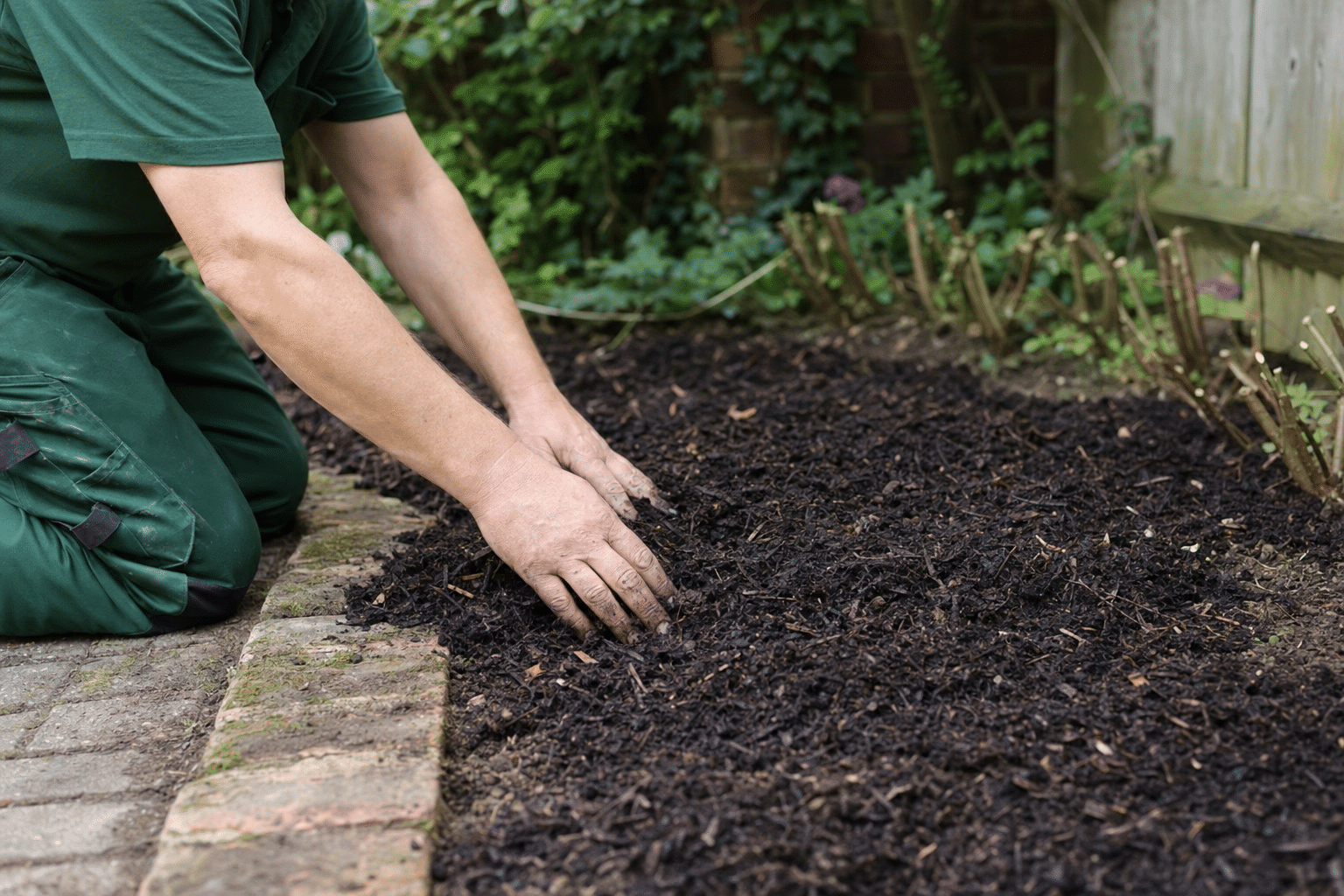
A cut back border is bare soil, and bare clay over winter goes either sticky or rock hard. A mulch fixes both. The RHS recommends a layer at least 5cm thick, put down any time from November to February. Garden compost, well-rotted manure or composted bark all work.
Over winter, worms pull that organic matter down into the clay and open it up, so each year the border drains a little better. Spread it on moist soil, never frozen ground, and keep it a hand’s width from shrub stems.
A 5cm layer over 10m² of border needs 500 litres. That’s ten 50-litre bags, more than most people expect.
Where the Cuttings Go: Compost, Council Garden Waste Bins and Tip Runs
Healthy soft stems and leaves go on the compost heap, chopped short so they rot by summer. Fallen leaves make leaf mould: fill a black bin bag, poke holes in it and leave it behind the shed for a year or two. Diseased leaves and seeding weeds stay out of the compost.
Lewisham Council charges £100.63 a year for a 240-litre garden waste bin collected weekly, which is their price, not our rate. Branches must be no more than 10cm thick and 50cm long, so hedge cuttings need chopping first. Every borough runs its own scheme, and one bin goes fast when a border and a hedge come down on the same weekend.
Tip runs to your borough’s reuse and recycling centre work if you have a car. If we do the cut back, we can take the waste away for recycling. Waste removal is priced separately and confirmed with you before anything is loaded. Our post on garden waste removal in SE London compares the options.
What an Autumn Cut Back Costs If We Do It
Autumn cut backs come under garden maintenance, at £83 for the first hour and £65 for every hour after, with no minimum charge. For a first visit we recommend booking at least 2 hours, the first at £83 and the second at £65. Each hour after that adds another £65. Green waste removal is extra, and we confirm it with you first.
A garden left for a year or more is a different job: garden clearance at £85 per hour, with a minimum of 2 hours. Send us a photo and we’ll tell you honestly which applies, rather than quoting the higher rate by default. The full breakdown is in our garden maintenance cost guide for South East London.
How Long Since It Was Last Done
A border cut back every autumn is quick work. One left for two seasons has dead stems tangled through new ones.
Access
A side gate lets us carry bags straight to the van. In a terrace with no rear access, everything goes through the house, which adds time.
How Much Is Coming Down
Three hostas and a geranium bed is a short visit. A long border plus a hedge plus the leaves fills the day.
Green Waste Volume
Soft perennials squash down in a bag. Hedge cuttings don’t, and they decide how many bags leave.
These figures are a realistic starting point, not a fixed quote. Your photos give you the real number.
Want a price for your own garden this week?
A Real Autumn Border Cut Back in South East London
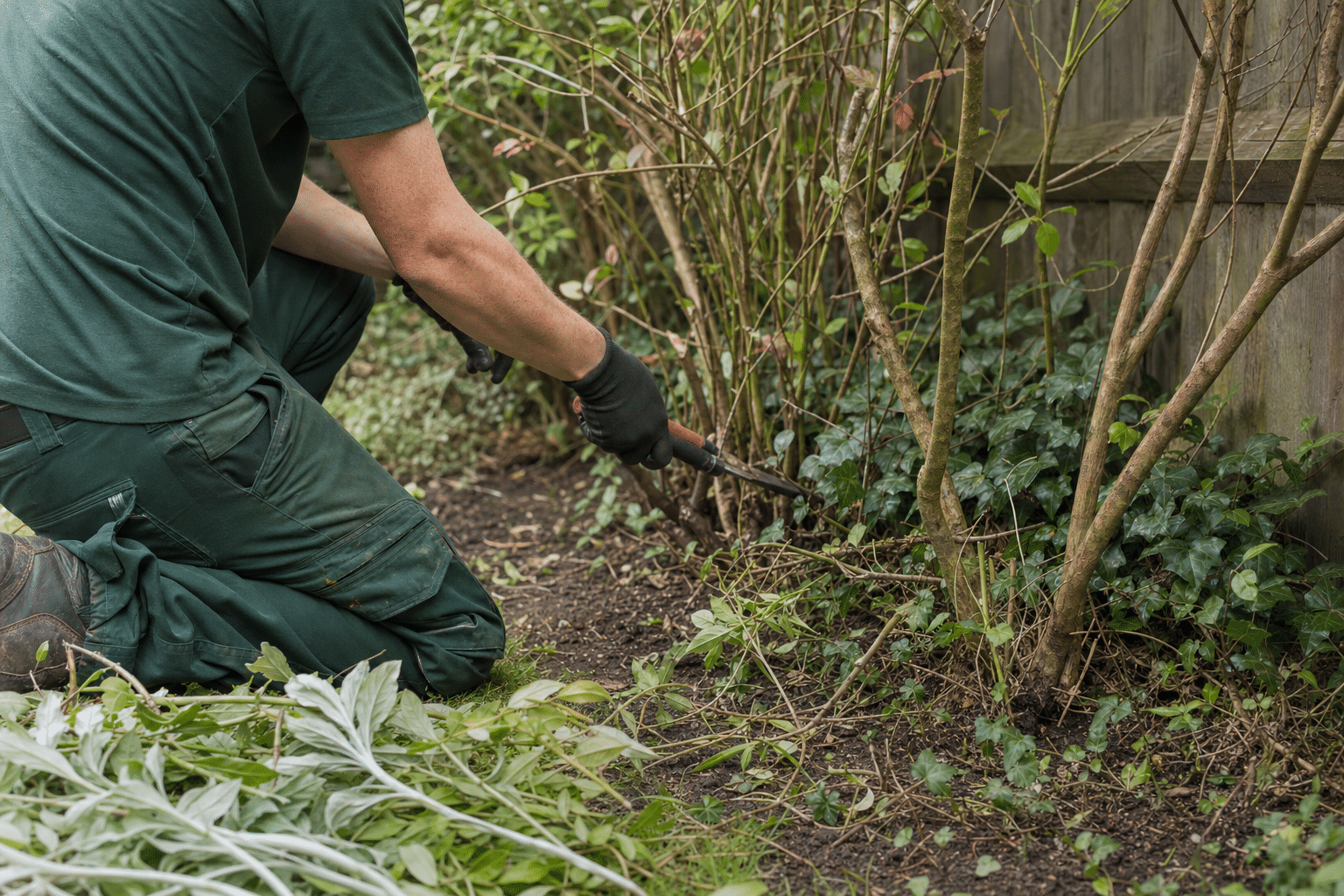
In our garden tidy-up in Catford SE6, two gardeners spent four and a half hours on a first-time client’s front and back gardens. They cleared tall weeds from the beds, shaped the evergreen bushes and small trees, and reduced a bushy front hedge. Three jumbo bags went for recycling, and the client now books us every three weeks.
In Forest Hill SE23, a client who has booked us twice a year since 2019 had nettles and brambles swallowing the shrubs by the shed. The team cut them out, trimmed the hedges along the path and swept the fallen leaves. It took five and a half hours and filled nine jumbo bags.
An autumn border visit starts with a walk round the garden with you, marking what stays standing. Then the soft perennials come down, diseased leaves are bagged separately, the hedge gets its nest check and trim, and lawns and paths are raked last.
In Brockley SE4 and Catford, terraced gardens are small and often have no side access, so a cut back usually fits a 2-hour visit. In Blackheath SE3 and Eltham SE9, larger established gardens have longer boundary hedges and deeper borders, so one visit covers more ground. We’re based in Eltham and cover the postcodes on our areas we cover page.
DIY or Book a Gardener: The Honest Version
Most of an autumn cut back is a good DIY job. You need sharp secateurs, gloves, a rake, a kneeling board and plenty of bags. If you know your plants and have room in your bin, a free weekend will do it.
The hard parts are the hedge and the waste. Trimming above head height from a ladder is one of the most common causes of garden accidents, and soft clay after rain makes a ladder less steady. If you’re sorting this for a parent, read our guide to arranging garden maintenance for an elderly parent.
DIY makes sense for: a small border you know plant by plant, a hedge you can reach from the ground, and a garden waste bin with space in it.
Professional makes sense for: hedges above head height, borders where you can’t tell a penstemon from a phlox, terraces where every bag goes through the house, and anyone who’d rather spend the weekend elsewhere.
Frequently Asked Questions
Should I cut back perennials in autumn or spring?
Both, depending on the plant. Soft perennials like hostas, hardy geraniums and peonies come out in October and November, while seed heads, grasses and penstemons wait until March or April. On South East London clay, doing the soft ones in autumn keeps you off waterlogged borders in late winter.
What plants should you not cut back in autumn?
Penstemons, mophead hydrangeas, ornamental grasses, lavender, and evergreen perennials like red hot pokers and heuchera. Forsythia, lilac and weigela wait until just after they flower. Cutting them now removes next year’s flowers or exposes buds to frost.
Is it too late to cut back the garden in November?
No. November suits perennials, a light rose trim and hedges after a nest check, and dahlias are best cut once frost blackens them. Pick a dry spell, because working on waterlogged or frozen clay damages the soil.
Should I cut back ornamental grasses in autumn?
Mostly no. The RHS advises cutting deciduous grasses like Miscanthus from mid-March to April, before new shoots appear. Evergreen grasses like carex only need the dead leaves combed out.
Can I cut my hedge in October?
Yes, it’s one of the best months. It falls outside the March to August nesting season, though the Wildlife and Countryside Act 1981 protects any nest in use whatever the month, so check before you start.
Should I leave fallen leaves on the borders over winter?
A thin layer under shrubs is fine. Thick wet mats on perennial crowns rot them, and leaves on the lawn cause bare patches and snow mould. Rake the lawn weekly and keep one leaf pile in a quiet corner for hedgehogs.
How much does an autumn garden tidy up cost in South East London?
Our garden maintenance rate is £83 for the first hour and £65 for every hour after, with no minimum charge, so a 2-hour first visit is the £83 first hour plus one £65 hour. Green waste removal is extra and confirmed before collection. A garden left for a year or more is priced as garden clearance at £85 per hour.
How Our Services Can Help
- Garden maintenance for autumn cut backs, hedges and pruning: £83 for the first hour, £65 for every hour after, no minimum charge.
- Clearance for gardens left a year or more: £85 per hour for a 2-person team, minimum 2 hours.
To get a quote, send photos through our contact page and we’ll reply within 24 hours, Monday to Saturday. Read more about our family-run team or browse finished jobs across South East London first.
Ready to hand the autumn cut back to someone local?
Posts You Might Like
- Autumn Gardener in South East London: 9 Jobs We Do Before Winter
- How to Prepare Your Garden for Winter in South East London
Related reading
- Best Ornamental Grasses for SE London Clay Soil: 11 That Thrive (And When to Cut Them Back)
- Neighbour’s Hedge Over 2m in SE London: What You Can Legally Cut, Borough by Borough
- How to Easily Get Rid of Mushrooms in Your Garden (And Stop Them Coming Back)
- How to Control Garden Pests in Autumn
- Autumn Gardener in South East London: 9 Jobs We Do Before Winter (And What a Visit Costs)

0 comments