

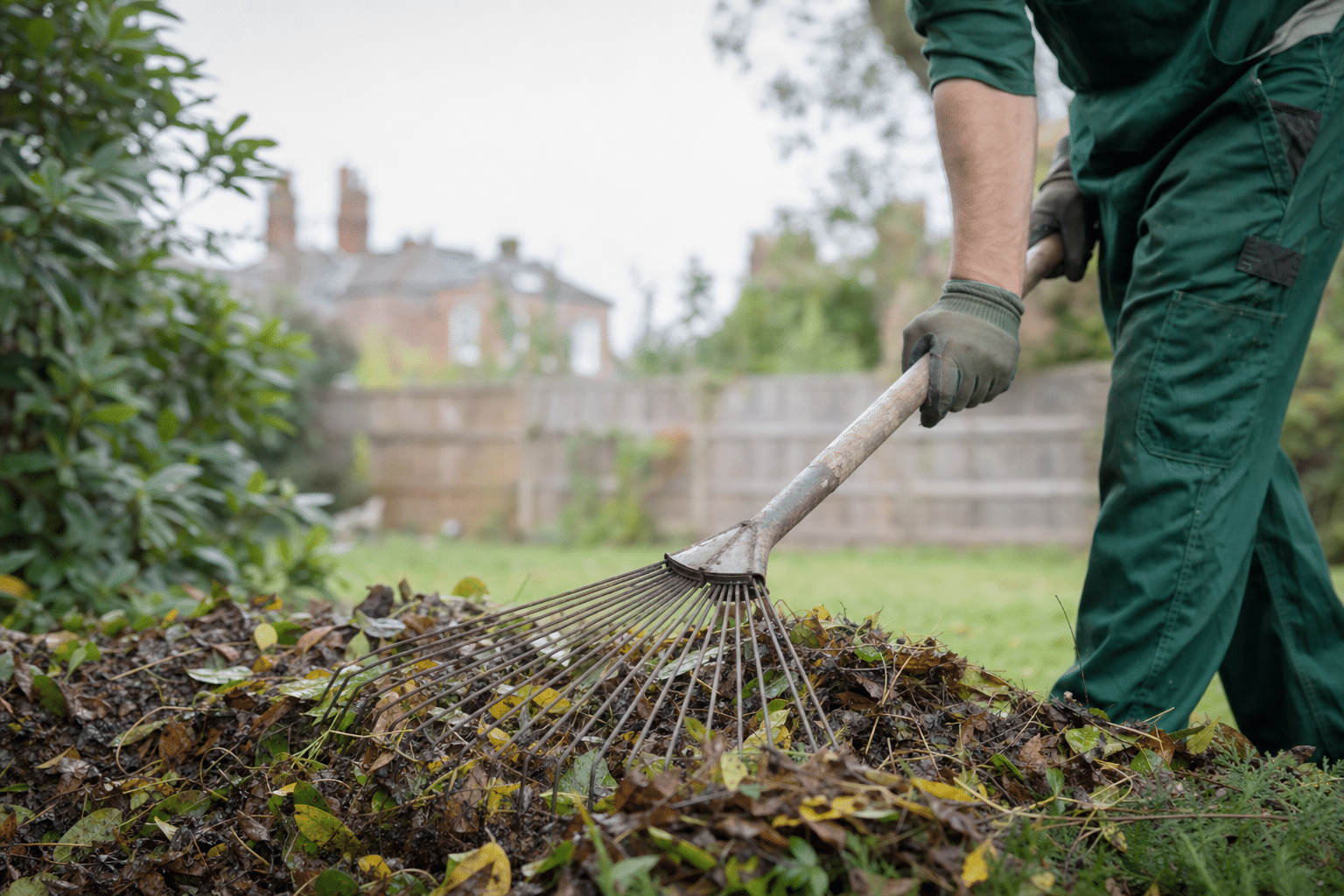
The sycamore next door dropped half its leaves on your lawn in one windy night. The hedge has put on a whole summer’s growth and now brushes your shoulder on the way to the bins. The borders that looked lovely in July are a tangle of brown stems, and the clay underneath turns to glue the minute it rains.
That’s October in a South East London garden. This guide answers what does a gardener do in autumn, with the nine jobs our team does in SE London gardens between September and the first frost. It covers what each job involves on London clay, what a visit costs, and which jobs you can honestly do yourself.
What’s in this guide
- The Quick Version: What an Autumn Gardener Does in SE London
- September, October, November: What Changes Each Month on London Clay
- Job 1: Leaves Off Lawns, Beds, Paths and Drains
- Job 2: Hedge Trimming Now the Bird Nesting Season Is Over
- Job 3: Pruning Shrubs and Small Trees Up to 3-4m
- Job 4: Cutting Back, Weeding and Mulching the Borders
- Job 5: Planting Spring Bulbs and Replacing Drought Losses
- Job 6: The Last Mows and Clean Lawn Edges
- Job 7: Clearing Ivy and Overgrowth Before Rats Move In
- Job 8: Checking Fences, Patios and Paths After the Dry Summer
- Job 9: Green Waste Gone, Not Stacked by the Council Bin
- What an Autumn Garden Visit Costs in South East London
- One Big Autumn Tidy or Two Shorter Visits: How We Book It
- Bigger Than a Gardener: When We Send You to a Tree Surgeon
- A Real Autumn Visit in SE London, Before and After
- Autumn Gardening Across South East London, Area by Area
- DIY or Book Us: The Honest Split
- Frequently Asked Questions
- How to Book Your Autumn Visit
- Posts You Might Like
The Quick Version: What an Autumn Gardener Does in SE London
An autumn gardener gets the garden ready to sit out winter without damage, so spring starts with planting instead of a rescue. In practice that’s nine jobs: leaves, hedges, pruning, borders and mulch, bulbs, the last mows, ivy, a check of fences and paths, and taking the green waste away.
Urban Gardeners prices all of it as garden maintenance in South East London, at £83 for the first hour and £65 for every hour after, for a two-person team with all tools. A typical first autumn visit runs 3 hours: the first hour at £83, then two more at £65 each. Our guide to what a gardener costs in South East London compares it with every other service. A garden untouched since spring is usually clearance work instead, at £85 an hour.
Want all nine autumn jobs done before the first frost?
September, October, November: What Changes Each Month on London Clay
Most of South East London sits on London clay, and with clay the catch is timing. The RHS guide to clay soils warns that clay worked or walked on when wet loses its structure and becomes compacted. After winter rain, it often can’t be worked until mid-spring. So our autumn jobs follow the ground, not the calendar.
| Month | What we prioritise | What the clay is doing |
|---|---|---|
| September | Hedges once nests are clear, replacing summer losses, daffodil bulbs | Still firm after summer, easy to plant into |
| October | Leaves, cutting back borders, mulching, pruning, ivy before rats settle | Wetting up, so we lay boards before wheeling barrows over soft lawns |
| November | Tulip bulbs, the last mows, a second leaf clear, green waste out | Often saturated, so no digging on wet days and mowing only on a firm surface |
Job 1: Leaves Off Lawns, Beds, Paths and Drains
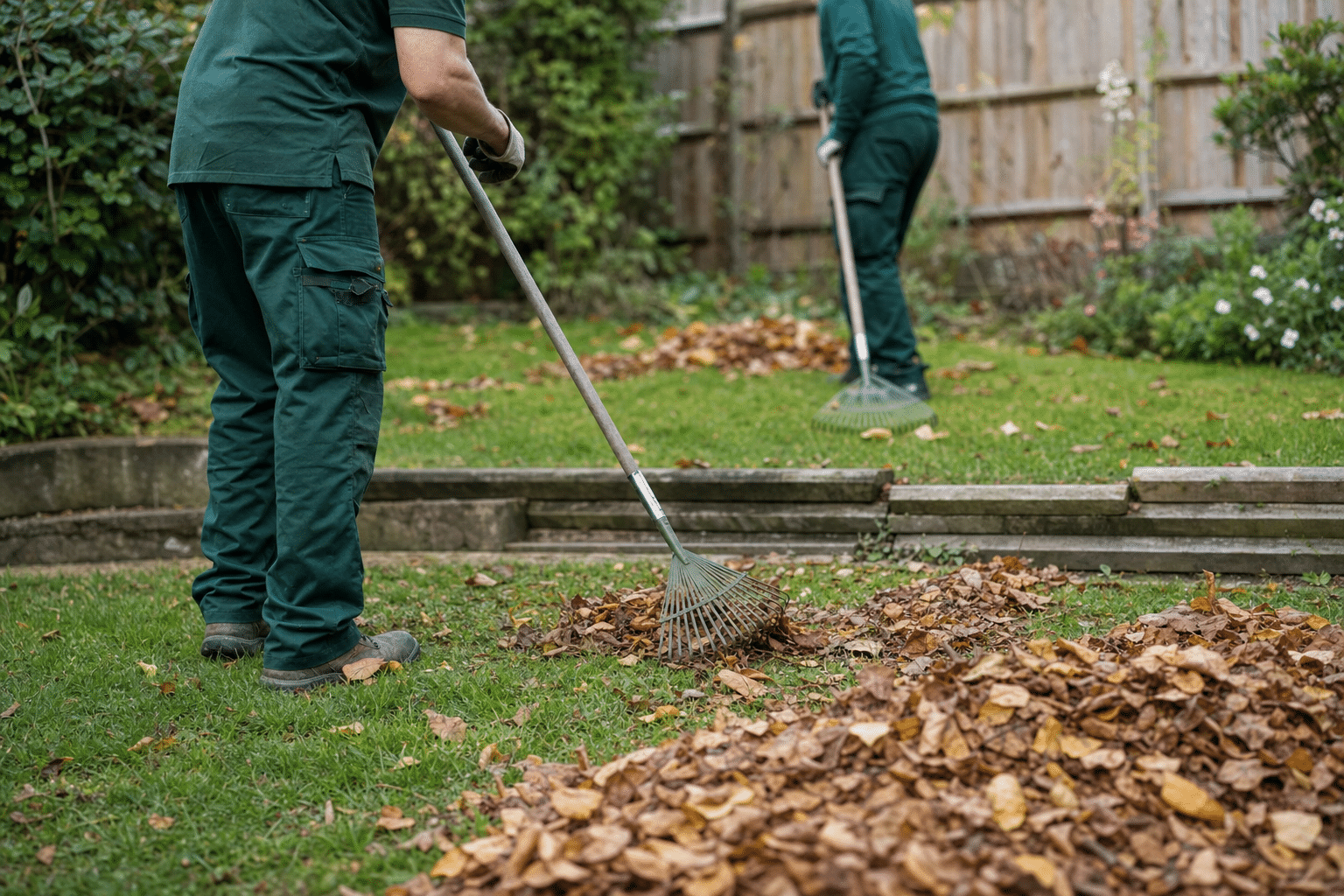
Leaves bring more people to us in October than any other job. A wet mat of leaves blocks the light and holds water against the grass, and on clay that water has nowhere to go. By February you get yellow patches the shape of the pile.
We rake lawns with a spring-tine rake, because a blower only pushes wet leaves around. Paths and steps get blown clear, since wet leaves on stone are slippery, and we clear gullies by hand before the first heavy storm floods the patio. Leaves on borders can mostly stay, as worms pull them into the soil.
Gardens with two mature trees overhanging usually need two clears a fortnight apart. Our leaf clearance cost guide for South East London has a priced example.
Job 2: Hedge Trimming Now the Bird Nesting Season Is Over
The main bird nesting season runs from March to August, so by October most garden hedges are empty. A trim now stays neat right through winter, and privet, laurel, beech, hawthorn and Leylandii all take it well.
The law doesn’t switch off at the end of August, though. Under the Wildlife and Countryside Act 1981 it’s an offence to damage or destroy the nest of any wild bird while it’s in use or being built, in any month. Wood pigeons, in almost every SE London garden, can nest well into autumn. So we look inside the hedge before the trimmer starts, and an active nest means that section waits.
Hedge trimming is part of garden maintenance at the same hourly rate. Our hedge trimming cost guide for South East London shows how long different hedges take.
Job 3: Pruning Shrubs and Small Trees Up to 3-4m
Autumn pruning is mostly about knowing what to leave alone. Garden maintenance covers shrubs and small trees up to 3-4m, and in October that means taking out dead, damaged and crossing branches. Tall bush roses get cut back by about a third, so winter gales don’t rock their roots loose in the clay.
Forsythia and lilac have already set next year’s flower buds, so an autumn cut loses the spring flowers. Hydrangea heads stay on until spring to shelter the new buds from frost. Apples and pears wait for the dormant winter months. Plums and cherries are pruned in summer, because winter cuts let in silver leaf disease.
Job 4: Cutting Back, Weeding and Mulching the Borders
By October a border is half finished business. We pull out the summer bedding and cut down perennials that have collapsed into brown mush. Sedum, echinacea and ornamental grasses stay standing for birds and insects over winter.
Then the weeds come out, roots and all. Bindweed, dandelions and creeping buttercup are the usual ones on SE London clay, and they lift most easily now, while the soil is soft but not yet waterlogged.
The last step is a 5cm layer of bark, garden compost or well-rotted manure over damp soil. On clay it stops the surface setting hard after rain and slows the cracking next summer. Pots of pelargoniums and fuchsias move against a warm house wall, and anything tender in the ground gets wrapped in horticultural fleece.
Job 5: Planting Spring Bulbs and Replacing Drought Losses
The RHS puts daffodils in ideally by the end of September, and tulips in November, when colder soil cuts the risk of tulip fire disease. We plant bulbs at three times their own height, with a handful of grit underneath on heavy clay so they don’t sit in water and rot.
Shaded gardens in Peckham SE15, under next door’s sycamores, suit snowdrops, wood anemones and hardy cyclamen. Sunny, open gardens in Blackheath SE3 can carry tulips and alliums.
Plants lost to the 2026 heat and the Thames Water hosepipe ban that started on 23 July, are best replaced in September and October. The RHS advises planting shrubs on clay in early autumn, while the soil is dry and workable. Our guide to drought-proof planting on SE London clay lists what came through this summer.
Job 6: The Last Mows and Clean Lawn Edges
Grass on London clay keeps growing later than people expect. In most SE London gardens the last cut falls between the first week of November and the first week of December, once days stay below 7°C and frost is still on the lawn at 9am.
The last cut goes at about 4cm, a little higher than summer. We never mow frosted grass, which snaps and browns, or a waterlogged lawn, where our boots would compact the clay. Edges get re-cut with a half-moon edging iron, so the lawn doesn’t creep into the beds over winter. Our post on the last mow of the year in South East London goes area by area.
Job 7: Clearing Ivy and Overgrowth Before Rats Move In
As the nights get colder, rats go looking for shelter. Ivy matted along a back fence suits them, and so do brambles, rubble, bagged waste behind the shed and the gap under old decking. September to November is the window to take that cover away.
We cut ivy back off fences, sheds and the base of walls as part of maintenance, and pick up fallen fruit and spilled bird seed. Our guide to rats moving into overgrown SE London gardens covers the rest.
Ivy that has climbed the house or swallowed a whole fence is priced as ivy removal, at £80-£85 per hour for a two-person team, all tools included. Our ivy removal cost guide for walls, fences and trees has the detail.
Job 8: Checking Fences, Patios and Paths After the Dry Summer
London clay shrinks as it dries and swells when the rain comes back. After a summer like 2026, that movement loosens fence posts, and the first autumn gales find every weak one. On every autumn visit we push each post, check for rot at ground level and tell you what we find. If a post already leans, our screwdriver test for a leaning fence post on London clay tells you whether it needs a repair or a new post.
Paths and patios turn green and slippery once wet leaves sit on them. Patio cleaning in South East London is booked separately, at £4 per square metre with a minimum charge of £140 covering up to 40m², which covers most small terrace patios.
Job 9: Green Waste Gone, Not Stacked by the Council Bin
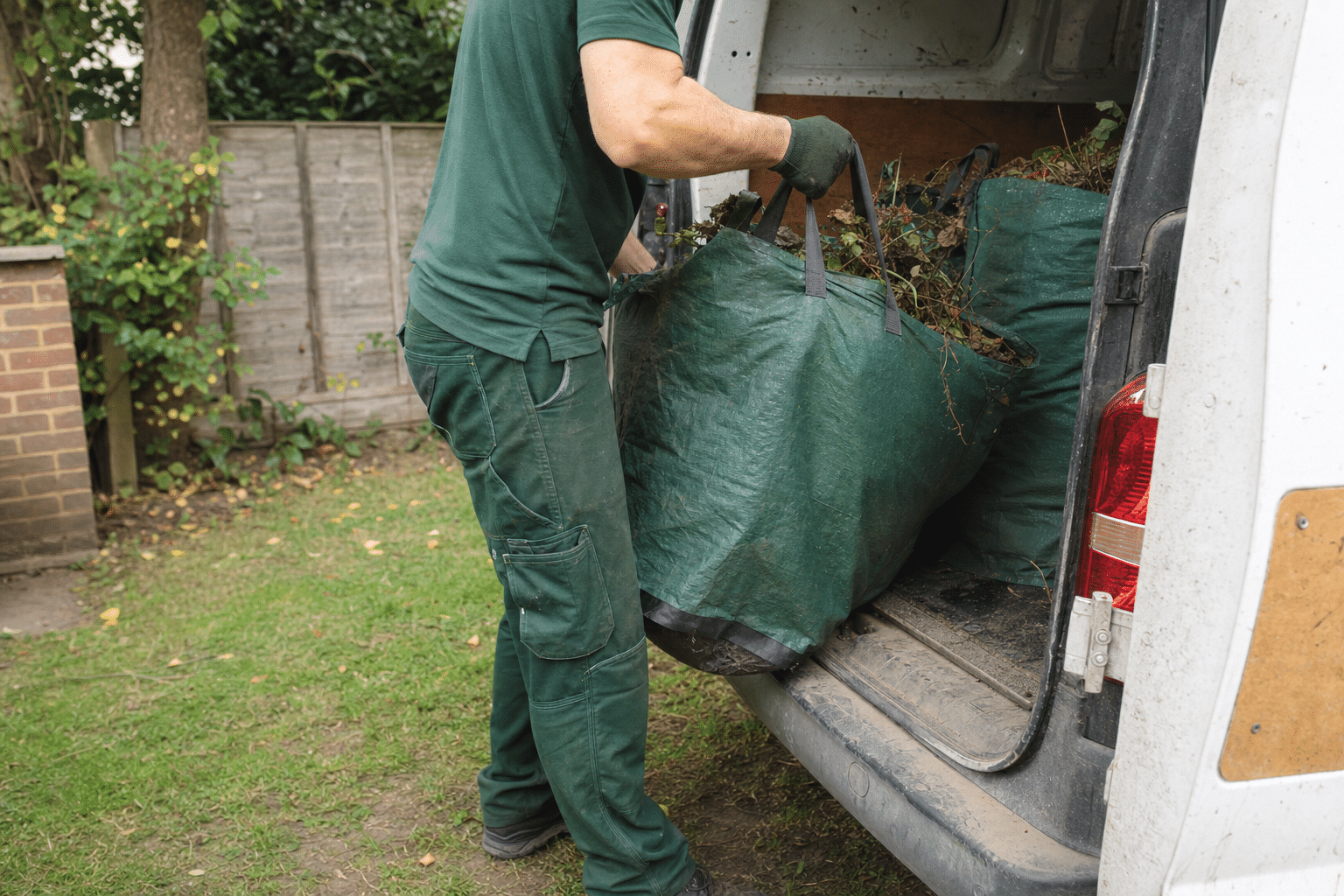
An autumn tidy makes more waste than people expect. One front-and-back tidy we did in Forest Hill SE23 filled nine jumbo bags.
Lewisham Council charges £100.63 a year for its garden waste subscription, which is their price, not our rate. It empties one 240-litre brown bin a week, and branches must be no thicker than 10cm or longer than 50cm.
So we bag the waste and take it away in the van. Waste removal is quoted separately from the hourly rate, by volume, and we confirm the figure with you before anything is loaded.
What an Autumn Garden Visit Costs in South East London
The hourly rate is the same in October as in June: £83 for the first hour and £65 for each hour after, for two gardeners with every tool from mowers to ladders. We recommend at least 2 hours for a first visit, and regular visits can be booked from 1 hour.
An hourly rate has no tiers, so the table shows what changes the hours.
| Garden | What the autumn visit usually covers | Hours | Price |
|---|---|---|---|
| Small terraced garden, Catford SE6 or Brockley SE4 | Leaves, borders, a short hedge, the last mow | 2 | £83 for the first hour, £65 for the second |
| Medium garden with a boundary hedge, Lee SE12 or Charlton SE7 | The above, plus shrub pruning and mulch | 3 | £83 for the first hour, £65 for each of the next two |
| Large established garden, Blackheath SE3 or Eltham SE9 | The above, plus long hedges, bulbs and ivy | 4 | £83 for the first hour, £65 for each of the next three |
| Garden left untouched since spring | Brambles and overgrowth cleared first | By the hour | £85 per hour at our clearance rate, 2-hour minimum |
These figures are a realistic starting point, not a fixed quote. No side return adds time, and so does a hedge that missed last autumn’s trim. Our guide to what garden maintenance costs in South East London has more worked examples.
Included in the hourly rate:
– Two gardeners, with all tools and machinery
– Leaves, hedges, pruning up to 3-4m, borders, mowing, edging and ivy cut-back
Not included:
– Waste removal, quoted separately and confirmed before collection
– Plants, bulbs and mulch, which you supply or we buy from your list
– Parking or congestion charges where they apply, confirmed with you first
If brambles have closed off part of the garden since spring, it’s garden clearance first, at £85 an hour, then maintenance. Send a photo and we’ll tell you honestly which applies, rather than quoting the higher rate by default.
Not sure how many hours your garden needs?
One Big Autumn Tidy or Two Shorter Visits: How We Book It
Most gardens with trees nearby do better with two visits. The first, in late September or October, does hedges, pruning, borders, mulch and bulbs while the clay is workable. The second, in mid to late November, clears the late leaves, does the last mow and takes the waste away. London planes drop late, so gardens near them may need that second visit in early December.
One bigger tidy suits a garden with no overhanging trees, or a rental between tenants. Our post on the simple autumn tidy up that makes spring easier shows what a single visit covers. Book about two weeks ahead in October and November.
Bigger Than a Gardener: When We Send You to a Tree Surgeon
Our pruning stops at small trees up to 3-4m, worked from the ground or a ladder. A large tree that needs reducing, a dead or leaning tree, branches near cables, or a tree that has to come down is a job for a specialist tree surgeon, not us. Look for a firm approved by the Arboricultural Association.
Check whether the tree is protected before anyone cuts it. A Tree Preservation Order or a conservation area means the council has to be told first, and large parts of Blackheath are a conservation area, split between Lewisham and Royal Greenwich.
Once the tree surgeon has gone, we can grind the stump and tidy the ground, priced on request. Our post on when to call a gardener or a tree surgeon in SE London settles the borderline cases.
A Real Autumn Visit in SE London, Before and After
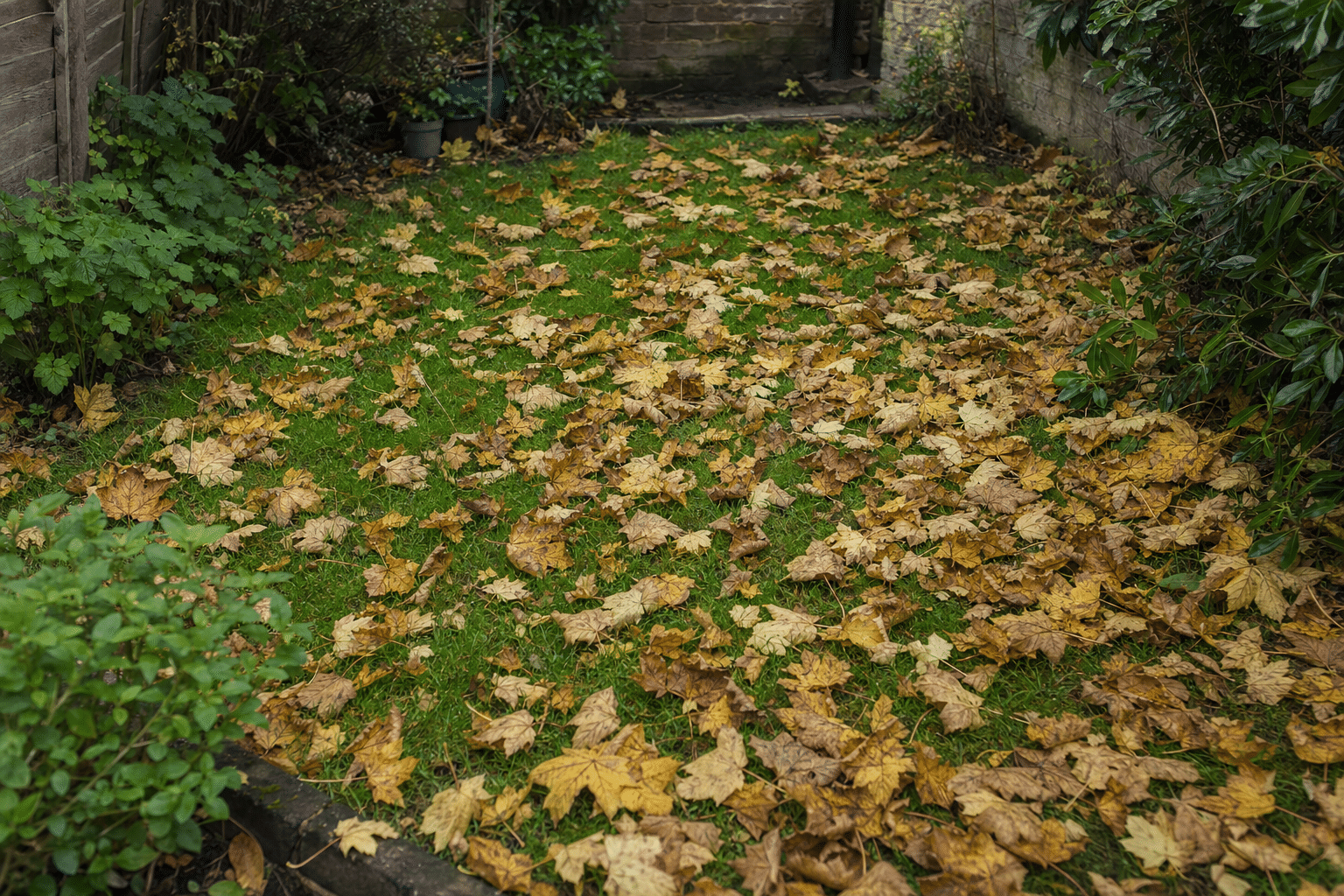
The lawn was a terraced back garden of about 35m² in New Cross SE14, under a neighbour’s sycamore, with the leaves matted flat and banked against the back fence.
Two of us spent two hours raking the lawn with spring-tine rakes, clearing the beds and path, and bagging everything for the van. Priced as garden maintenance, that visit was £83 for the first hour and £65 for the second.
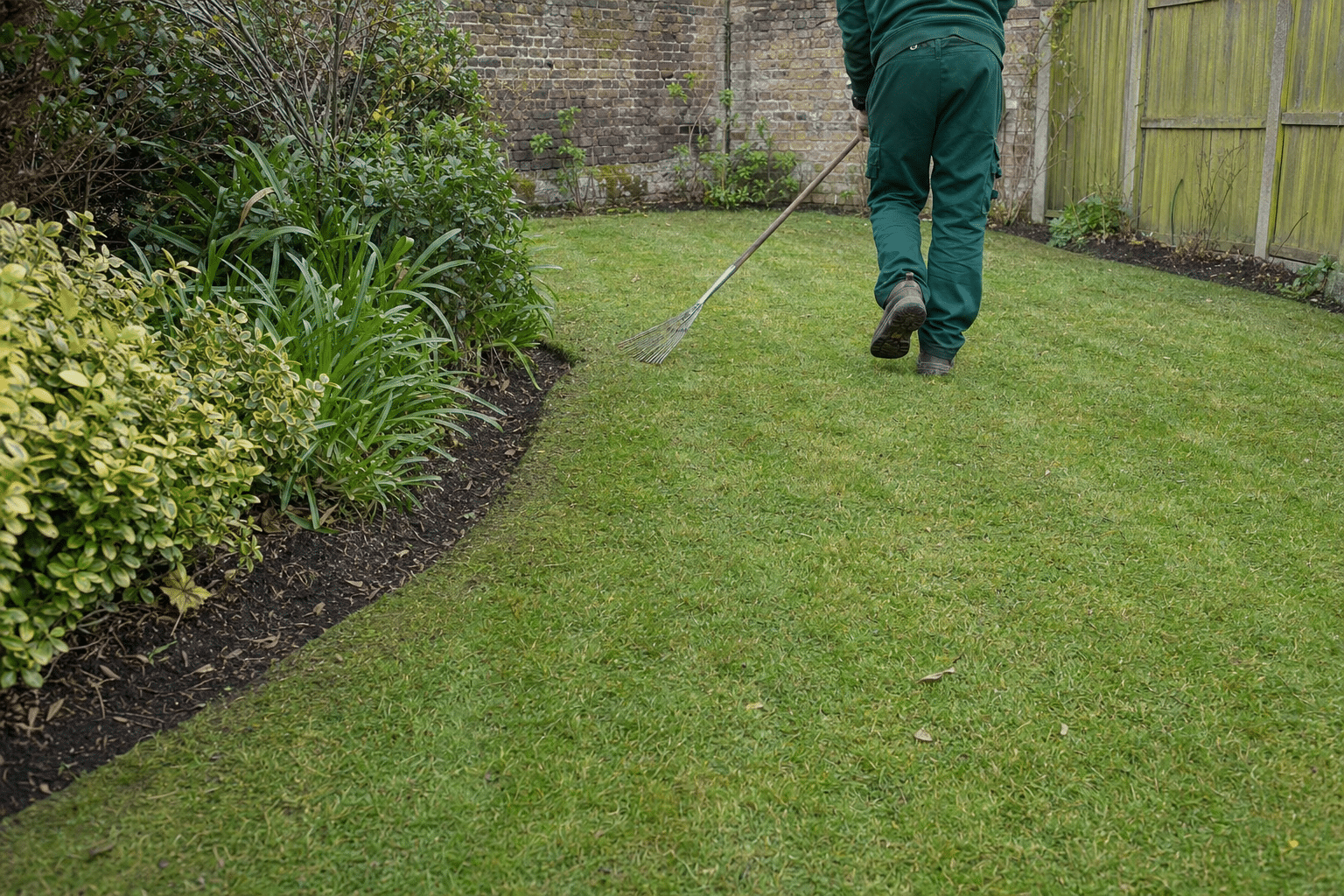
By April the grass was green again, with no yellow patches where the leaves had sat. A fuller front-and-back tidy we did in Catford SE6 took two gardeners four and a half hours, cutting back tall weeds, shaping evergreens and reducing a front hedge, and filled three jumbo bags.
Autumn Gardening Across South East London, Area by Area
In Blackheath SE3 and Eltham SE9, larger established gardens mean longer hedges and good value per hour, since one visit covers a lot of ground. Frost settles early on those open lawns, so the last mow usually falls in the second week of November.
Catford SE6 has smaller terraced gardens, often with no side return, so every bag goes out through the house. In Peckham SE15 and New Cross SE14, shaded gardens hold leaves into early December, while city warmth keeps grass growing into late November.
We cover the whole of South East London, and the full list of areas we cover shows every postcode.
DIY or Book Us: The Honest Split
Plenty of autumn jobs are honestly DIY: raking a small lawn, planting a bag of bulbs, cutting back perennials. A spring-tine rake runs about £12-£25 from UK suppliers, market estimate, not our rate.
The harder parts are height and waste. Hedge trimmer hire is typically £13-£30 a day across UK hire firms, market estimate, not our rate, and using one from a ladder on soft autumn clay is how garden accidents happen. The waste won’t fit a 240-litre bin either.
DIY makes sense for: small lawns with one tree nearby, bulb planting, borders you can reach, and anyone happy to compost the leaves at home.
Professional makes sense for: hedges above head height, ivy on walls, gardens with trees dropping leaves into December, a waste pile bigger than your bin, and anyone who’d rather not spend November weekends on a ladder.
Frequently Asked Questions
What does a gardener do in autumn?
An autumn gardener gets the garden ready for winter: leaves, hedge trimming after the nesting season, pruning, borders and mulch, bulbs, the last mows, ivy and green waste removal. On South East London clay, planting and digging happen in September and October while the ground is workable.
Is autumn a good time to hire a gardener in London?
Yes, and September and October are the best of it. Hedges are past the main nesting season, the clay is still workable for planting, and a tidy now saves a bigger clearance in March.
How much does an autumn garden tidy up cost in South East London?
Garden maintenance is £83 for the first hour and £65 for every hour after, and most autumn tidies take 2-4 hours for a two-person team. Waste removal is quoted separately, and a garden left since spring is usually clearance at £85 an hour.
Can you cut hedges in October and November?
Yes, because the main nesting season of March to August is over and a cut now stays neat through winter. The Wildlife and Countryside Act 1981 still protects any active nest in any month, so check before you cut.
Should I leave fallen leaves on my lawn over winter?
No. Wet leaves block the light and hold water against the grass, leaving yellow patches by February on London clay. Leaves on borders can stay, but rake the lawn by late November.
When is the last mow of the year in South East London?
In most SE London gardens it falls between the first week of November and the first week of December. Stop once days stay below 7°C, and leave the last cut at about 4cm.
Do gardeners take the garden waste away?
We do: everything is bagged and taken away in our van, so nothing ends up stacked by your council bin. Waste removal is quoted separately from the hourly rate and confirmed with you before collection.
How to Book Your Autumn Visit
Urban Gardeners is a family-run team based in Eltham SE9 since 2016, with 111 Google reviews. Read more about our team and how we work, or browse our finished garden jobs across SE London.
To get a price, send photos of your garden to our team and we’ll reply within 24 hours, Monday to Saturday.
Ready to get the garden closed down properly for winter?
See what our garden maintenance service in South East London includes →
Posts You Might Like
- How to prepare your garden for winter in South East London
- What you can and cannot do in your garden during the SE London hosepipe ban
Related reading
- How Much Does a Gardener Cost in South East London in 2026?
- Garden Makeover South East London | Transform Your Garden | Urban Gardeners
- How to Control Garden Pests in Autumn
- Why Autumn Is the Best Time to Install Fencing and Decking
- The Ultimate Autumn Garden Makeover: 5 Projects That Upgrade Your Space Fast

0 comments