Why Walworth Gardens Are a Specific Challenge
Walworth SE17 looks like simple, small-garden territory from the outside. In practice, the combination of dense terraced housing, no rear access, heavy shade, old made ground, and a patchwork of conservation areas and estate regeneration creates a specific set of problems you don't get in the leafier or more suburban SE postcodes.
Access Is the Real Constraint
This is the single biggest factor in SE17. Most Walworth terraced houses have no rear vehicle access, and many have no side passage either. That means everything, clearance waste out, turf and topsoil in, paving slabs, decking timber, fence panels, all has to be carried through the house or along a narrow shared alley.
Practically, this affects cost and planning more than the actual gardening. A clearance that would take an afternoon in a suburban garden takes longer when every bag of waste goes through a hallway. We plan access before we quote, protect floors and doorways when we carry through the house, and confirm exactly how materials and waste will move before we start. No mess left behind, and no surprises on the day.
Shade From Terraces and Estate Blocks
Walworth gardens are boxed in. Three-storey Georgian and Victorian terraces, and taller estate blocks around the Aylesbury regeneration and Elephant Park, throw long shadows across small gardens for much of the day. For a lot of SE17 gardens, light is the limiting factor, not soil or space.
Shaded gardens struggle with the same recurring issues: moss taking over grass, damp corners where nothing productive grows, and green film building up on every hard surface. The fix is working with the shade rather than against it, shade-tolerant planting, the right ground surface, good drainage, and realistic expectations about what a low-light garden can be. A north-facing Walworth courtyard will never be a sun trap, but it can be a clean, green, genuinely usable space.
Made Ground, Clay and Old Rubble
Walworth sits on London clay, but the bigger issue in SE17 is what's been added on top over the last 150 years. This is dense, long-developed inner-city ground, much of it built up, cleared, bombed, and rebuilt across the Victorian era, the war, and post-war reconstruction. Dig down in a Walworth garden and you'll frequently hit old brick, builder's rubble, buried hardcore, and made ground rather than clean soil.
That matters for anything that goes into the ground, turf, planting, fence posts, deck footings. We assess what's actually under the surface as part of any survey and factor real ground conditions into the quote, rather than pricing for ideal soil and hitting rubble on day one.
New-Build and Estate Regeneration Gardens
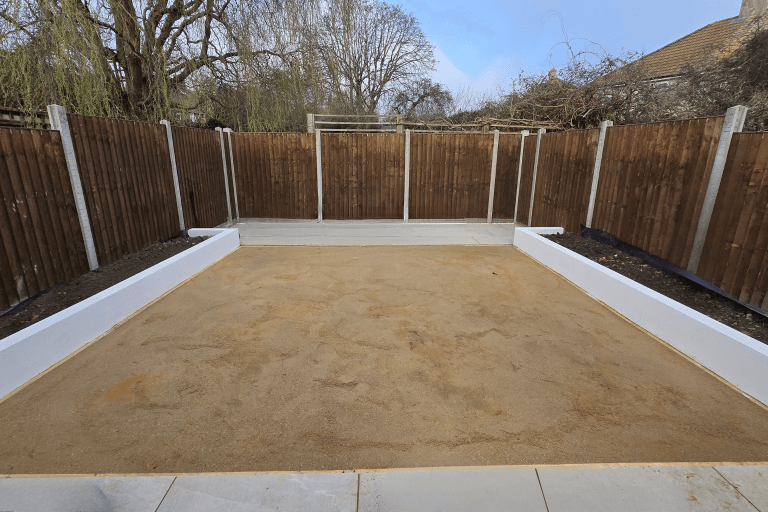
The Aylesbury Estate regeneration and the developments around Elephant Park have created a lot of new outdoor space in SE17: private courtyards, communal gardens, balcony terraces, and small plots handed over as bare, compacted builder's finish. New-build gardens here share the usual problem, the developer focused on the building, not the garden, so what's left is thin topsoil over compacted ground and a layout that was never really designed to be used.
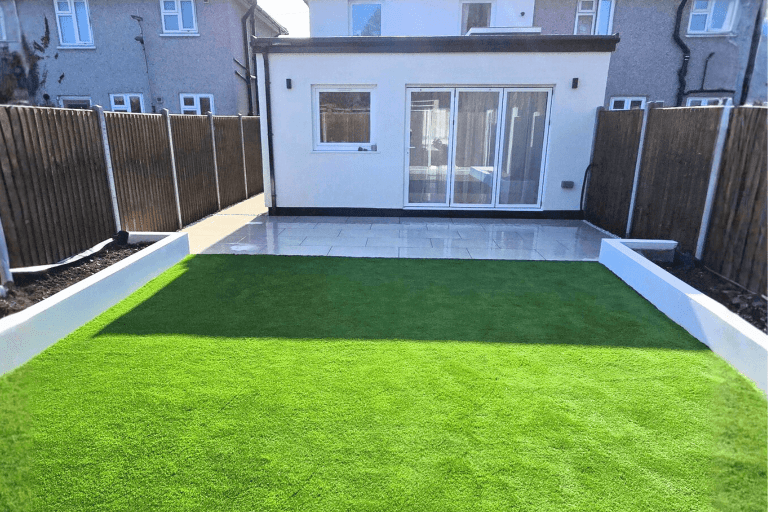
We do a lot of setting these up properly from scratch, sorting the ground, choosing planting and surfaces suited to a small shaded plot, and turning a bare handover space into something that actually works. If you've moved into a new build or regenerated flat in Walworth and the garden or courtyard is a blank, struggling space, this is worth sorting before another season passes.